



Niu Huang (Calculus Bovis)
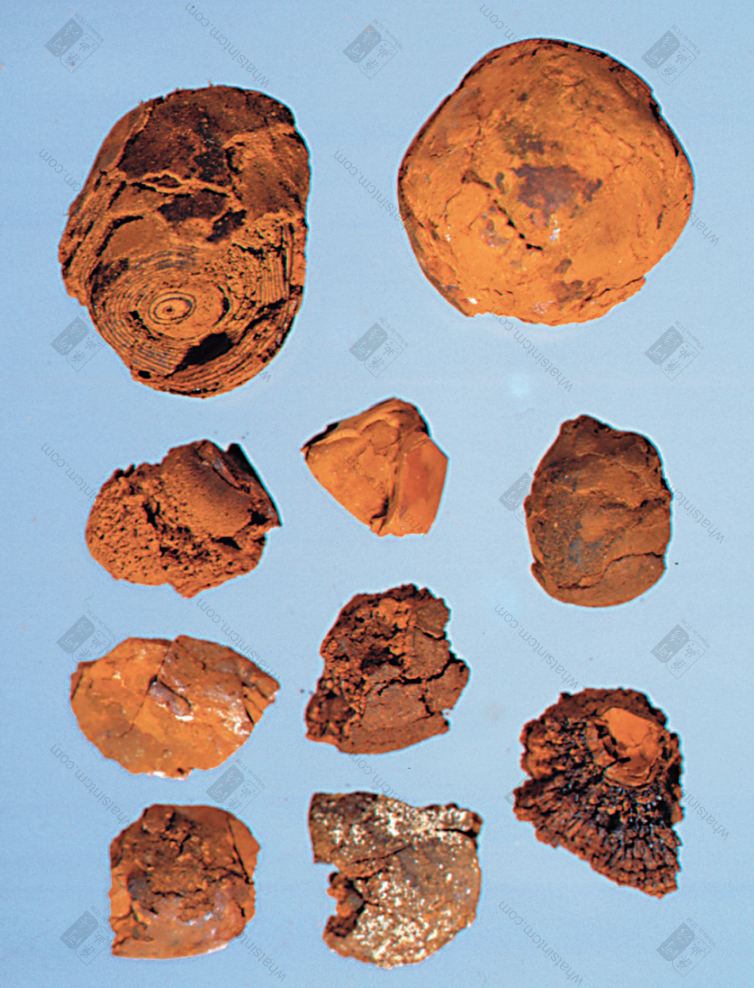 Jinshan Niu Huang (Calculus Bovis) (Oval, square, triangular, golden yellow, brownish-yellow, a layer of shiny black film, ‘crow-gold garment’, concentric ring-like layers, heavily overlapping, cooling sensation)
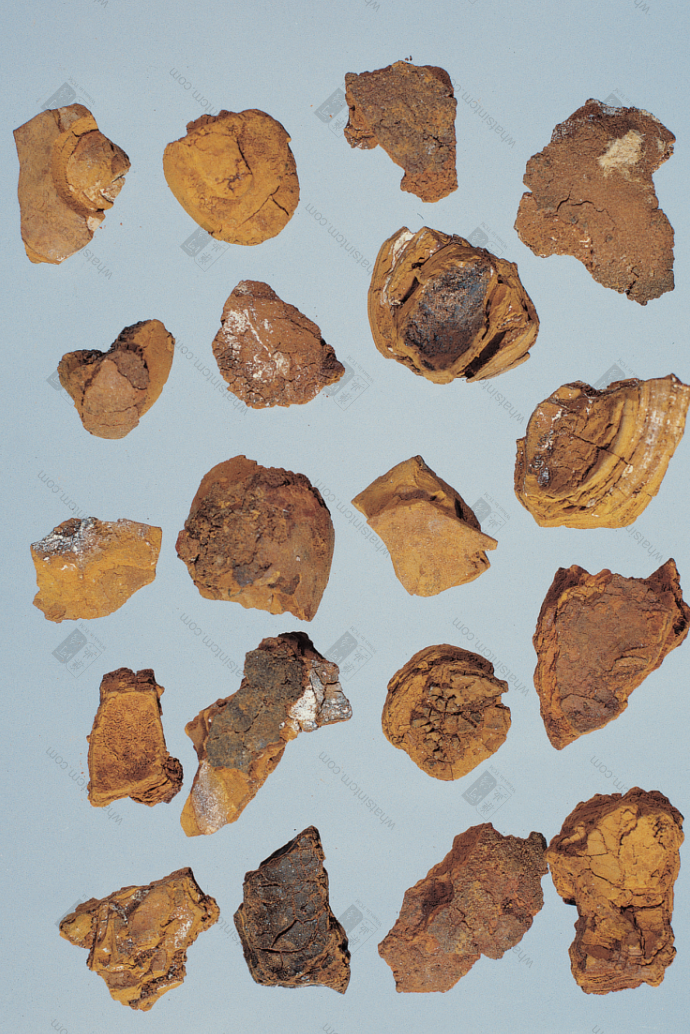 Jinshan Niu Huang (Calculus Bovis) (Crow-gold garment, ‘gua jia’ – adheres to the nail, ‘tou jia’ – penetrates the nail, layered texture)
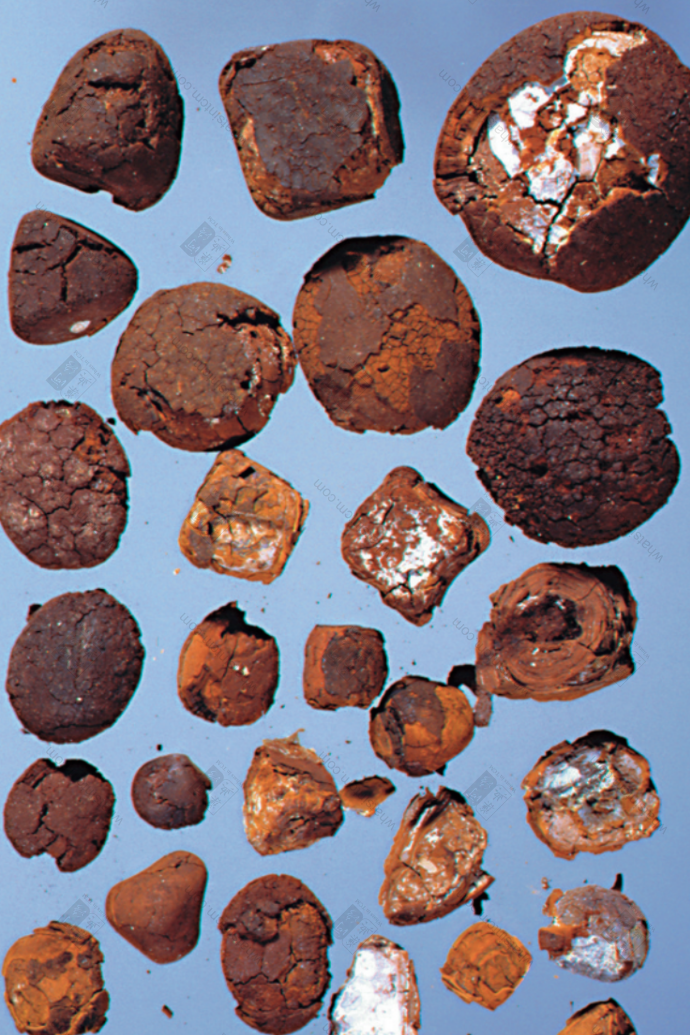 South American Niu Huang (Calculus Bovis) (Diagonal cut showing white spots)
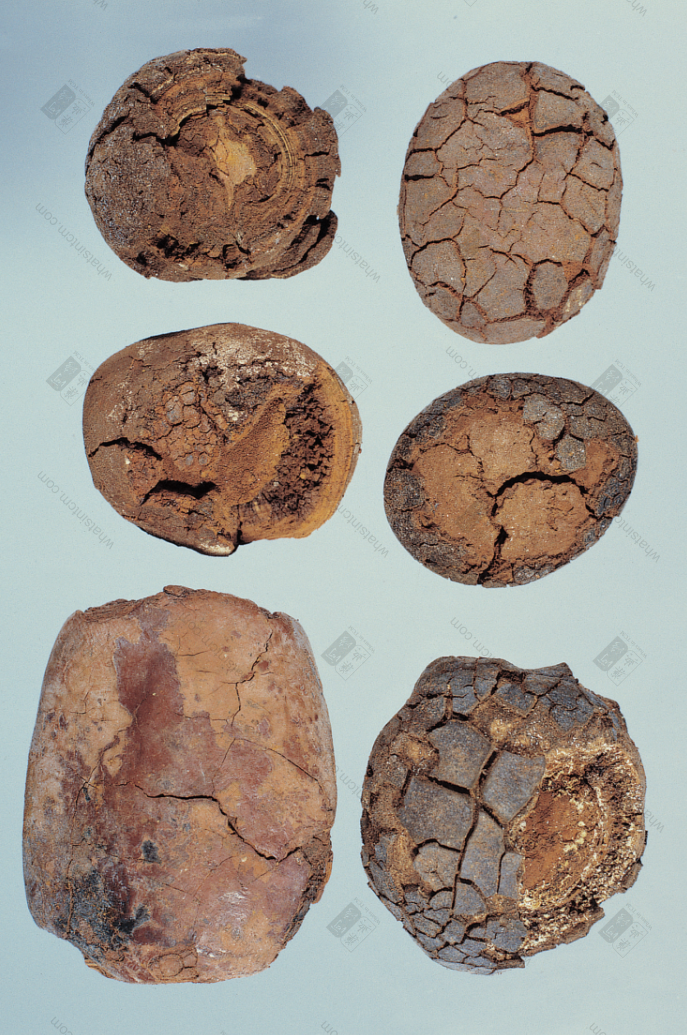 Argentinian Niu Huang (Calculus Bovis)
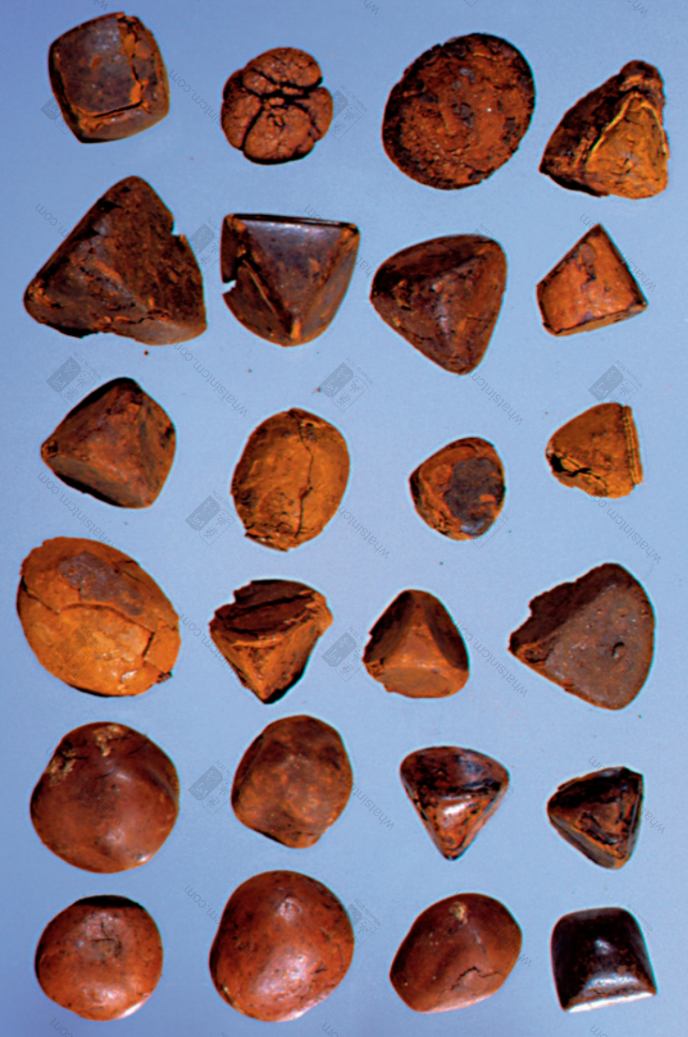 South African Niu Huang (Calculus Bovis) (Smooth, glossy surface)
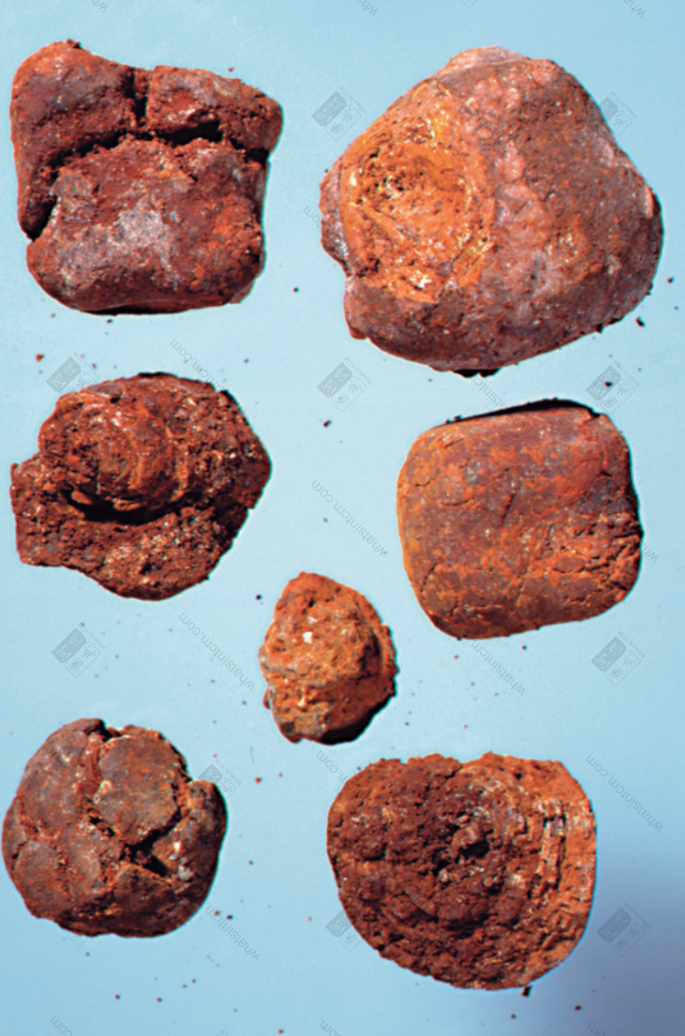 Indian Niu Huang (Calculus Bovis)
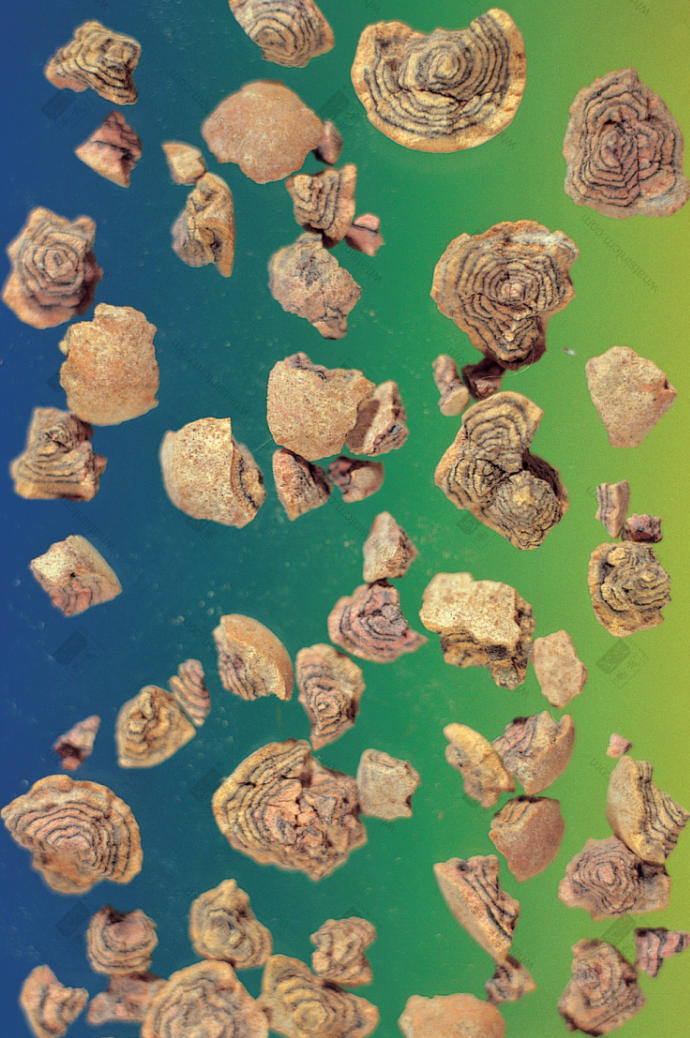 Jing Niu Huang (Calculus Bovis)
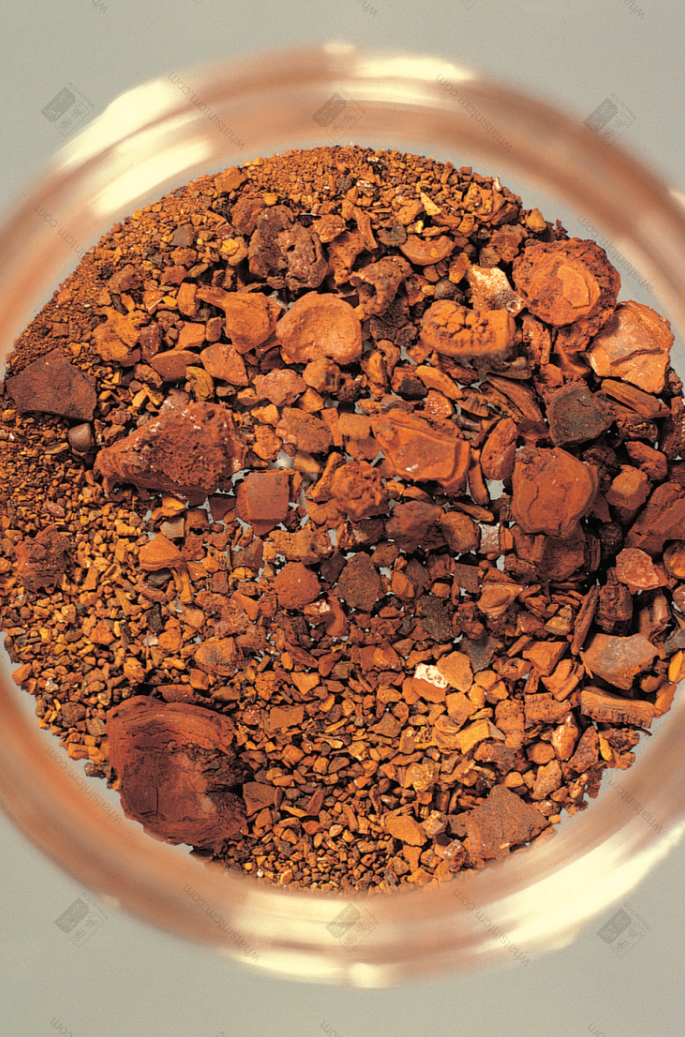 Niu Huang (Calculus Bovis) Slices
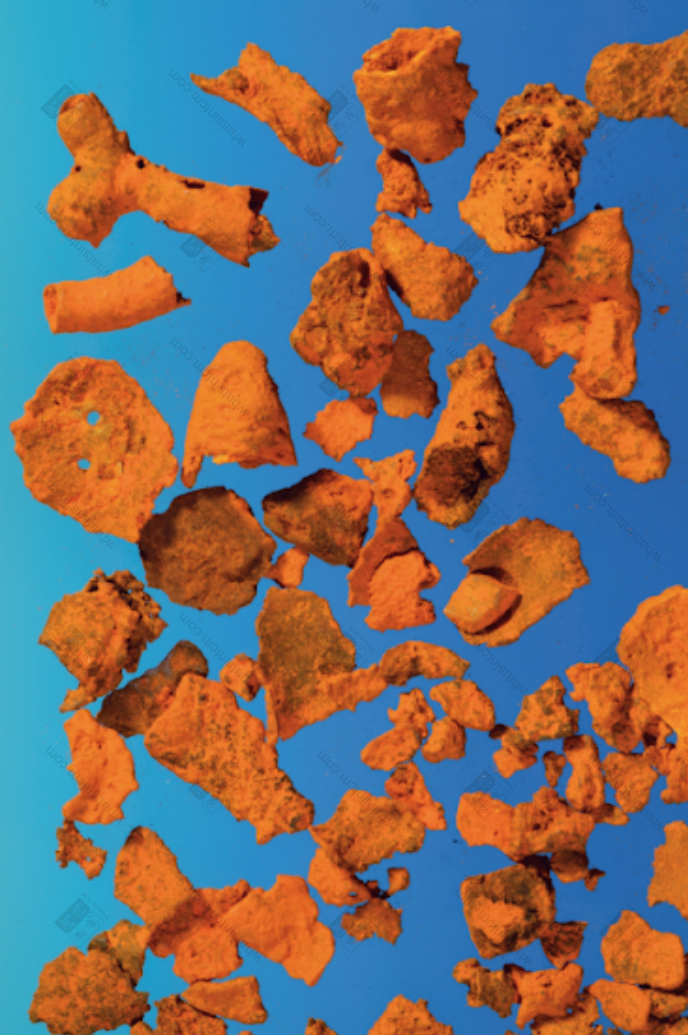 Guan Huang (Tubular Calculus Bovis)
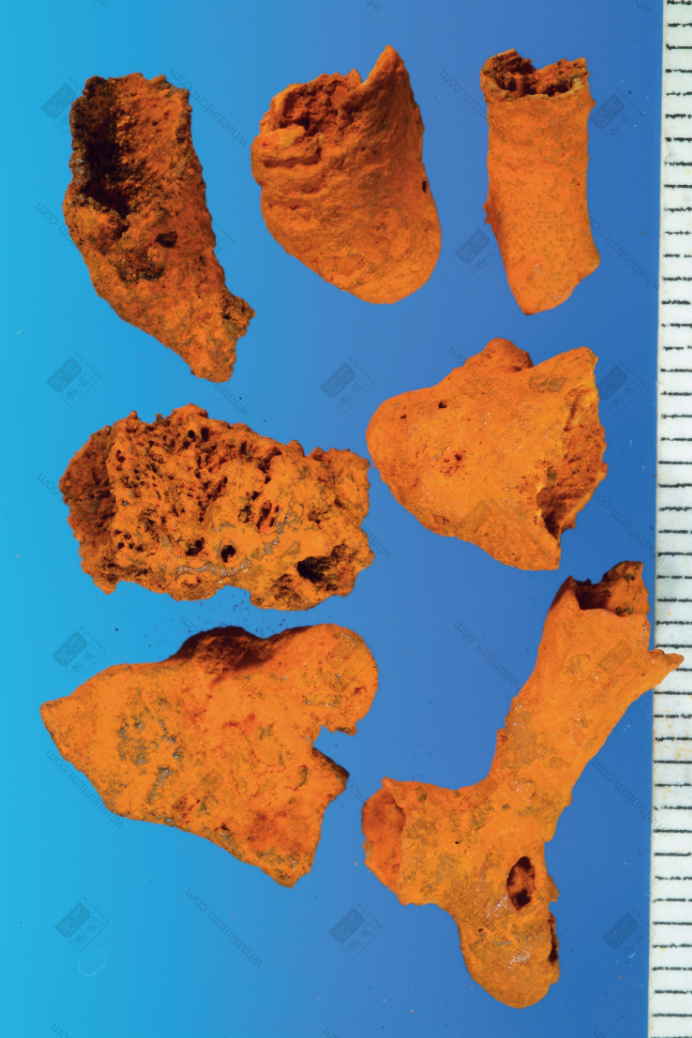 Guan Huang (Tubular Calculus Bovis)
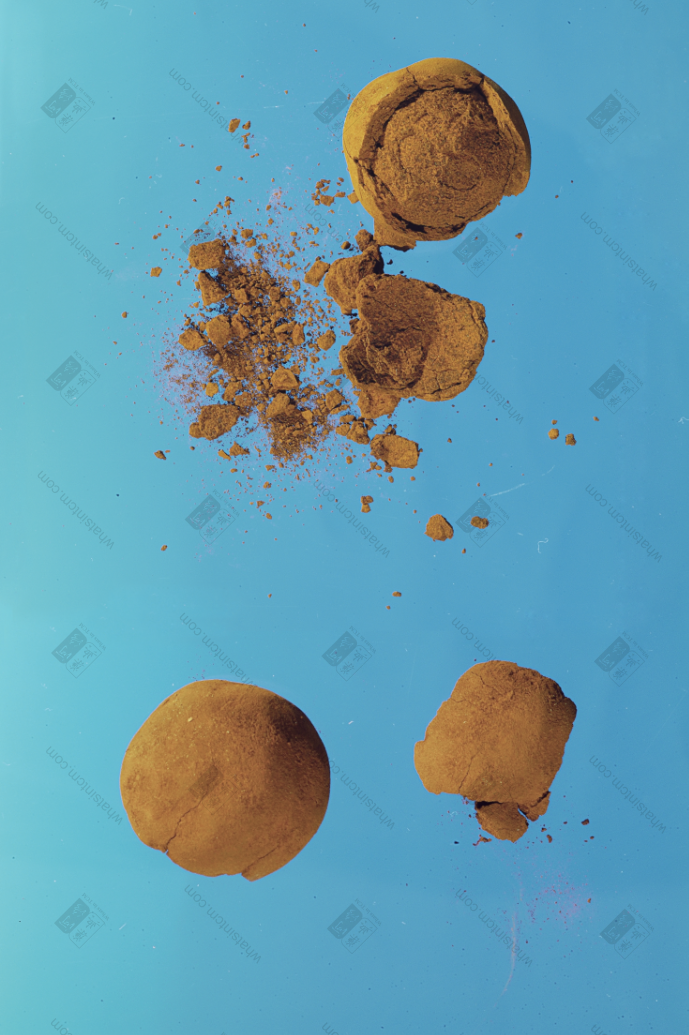 Artificial Niu Huang (Calculus Bovis)
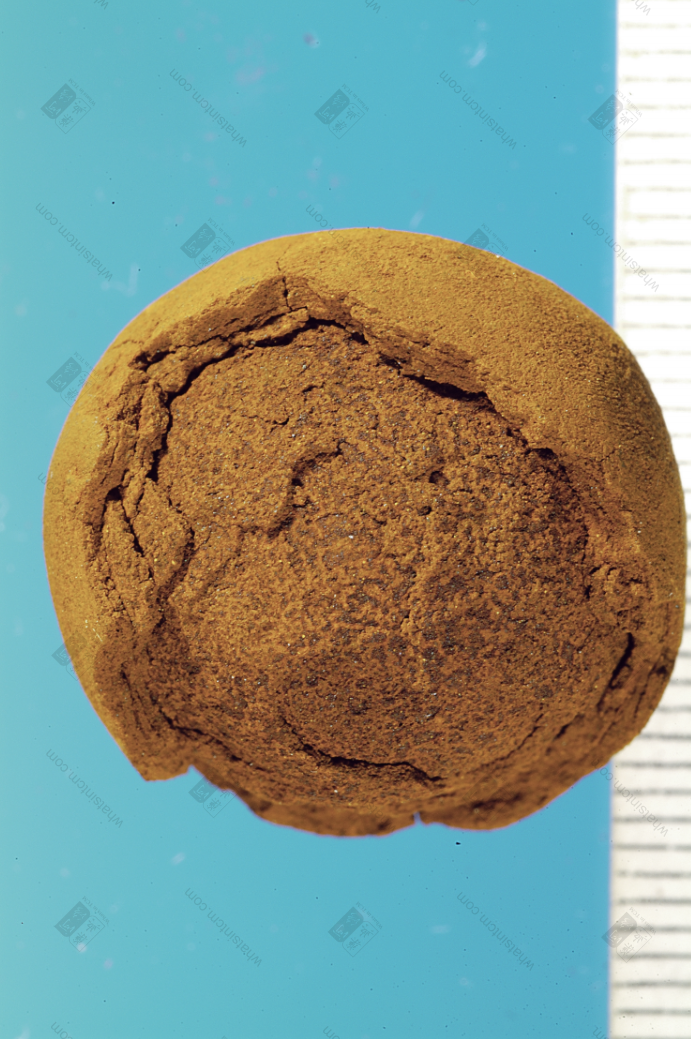 Artificial Niu Huang (Calculus Bovis)
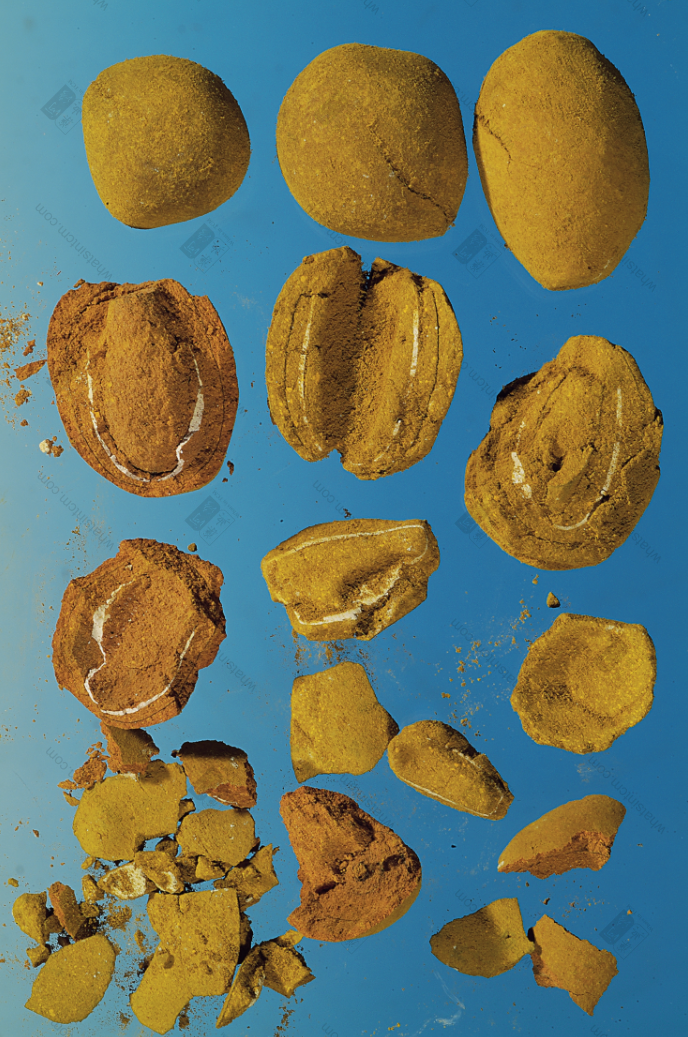 Fake Niu Huang (Calculus Bovis)
【Naming】
【Source】
Shen Nong’s Classic of Materia Medica, Upper Grade
【Common Usage Level】
C
【Botanical Origin】
Gallstones found in the gallbladder, bile ducts, or hepatic ducts of the bovine species *Bos Taurus var. domesticus* Gmelin or the water buffalo *Bubalus bubalis* L.
【Characteristics】
Complete pieces are oval, square-round, or triangular, with a diameter of 0.5-3 cm. The surface is golden yellow or brownish-yellow, varying in shade, delicate and slightly shiny. Sometimes, the outside has a layer of shiny black film, commonly known as “crow-gold garment.” Some surfaces have cracks, and some are rough and not smooth. The texture is light, brittle, and easily broken. The cross-section is brownish-yellow or golden yellow, varying in shade and slightly shiny, with neatly arranged ring-like layers that overlap. It has a clear, fragrant odor and tastes slightly bitter at first, then slightly sweet. It has a fragrant and cool sensation in the mouth, does not stick to the teeth when chewed, and can slowly dissolve. A small amount of powder mixed with clean water can be applied to the fingernails to dye them yellow, which lasts for a long time, commonly known as “tou jia” (penetrates the nail) or “gua jia” (adheres to the nail).
【Identification】
Shen Nong’s Classic of Materia Medica: “Grows in cattle, should be obtained and dried in the shade for one hundred days, kept dry, and not exposed to sunlight or moonlight.” Zheng Lei Ben Cao: “All should be rubbed on the fingernails, and the one that penetrates the nail and turns it yellow is genuine,” “The one that is light, airy, and fragrant is good.” Ben Cao Gang Mu: “Generally, naturally produced calculus bovis is superior.” Ben Cao Xin Bian: “Calculus bovis from water buffalo is not as good as that from yellow cattle.” Jing Yan Dan Fang Hui Bian: “Calculus bovis should be tender yellow, light and airy, with overlapping layers that can be peeled off, a slightly fragrant odor, and able to penetrate the fingernail completely to be considered genuine.” Hui Zhi Tang Jing Yan Fang: “Calculus bovis that is obtained alive is best.” Zeng Yao Bian: “Genuine calculus bovis is as large as a chicken egg yolk, or as small as a longan seed, with overlapping layers that can be peeled off, a light and airy texture, a fragrant odor, and a treasure-like color is good.” Liang Lie Jian Bie: “Put a small amount in the mouth and crush it. After it is softened by saliva, swallow it. If it has a very strong urge to vomit, it is of superior quality. Also, the one with a lighter weight is a good product.”
Mainland Chinese calculus bovis is best when it is dry, the surface is glossy and delicate, the texture is light and brittle, the cross-sectional layers are thin and neat, there are no white spots, the taste is bitter followed by sweet, the odor is clear and fragrant with no impurities, and there are no blood clots. The one with a crow-gold garment is even better. Imported calculus bovis is best when it has a light, brittle texture, no black lumps, and a stronger odor. If it has an earthy smell, it is inferior. Taking calculus bovis powder, mixing it with water, and applying it to the fingernails will also dye them yellow. The odor is slightly clear and fragrant, with a slightly fishy smell, and the taste is slightly sweet and bitter, without a cooling sensation after entering the mouth.
Shen Nong’s Classic of Materia Medica: “Dried in the shade for one hundred days.” These four words seem inconspicuous, but they are based on experience. The calculus bovis is genuine, but it is bubbly and appears scorched yellow, which is caused by drying it with fire, instead of the traditional method of drying it in the shade for one hundred days.
【Identification Terminology】
1. Chi Dan Niu Huang (Eaten by Bile Calculus Bovis): Refers to substandard calculus bovis caused by improper processing. Its appearance is mostly dark reddish-brown, hard in texture, and the cross-section looks like jelly, appearing black or dark green. The concentric layers are not obvious, and it has no clear fragrant odor.
2. Zhu Jie Huang (Bamboo Joint Calculus Bovis): Calculus bovis is mostly tubular, like a little finger, shaped like a bamboo joint.
3. Luan Huang (Oval Calculus Bovis): The shape of calculus bovis is oval.
4. Wu Jin Yi (Crow-gold Garment): A shiny black film that is sometimes visible on the surface of calculus bovis.
5. Fen Mo (Powder Film): The cross-section of calculus bovis is layered and wrapped, like the annual rings of a tree, with white ash-like layer on each ring.
6. Gua Jia (Adheres to the Nail), Tou Jia (Penetrates the Nail): Gua Jia refers to the extremely small pigment molecules of natural calculus bovis, which can be incorporated into the bones and nails; Tou Jia refers to the fact that natural calculus bovis, when mixed with water and applied to the fingernails, is not easily rubbed off for a long time, and there is a cooling sensation under the fingernail that penetrates into the nail.
7. Dan Huang (Egg Yolk Calculus Bovis): Refers to calculus bovis that is oval, square-cornered, irregularly spherical, or triangular in shape, with a diameter of about 0.6-3.3 cm, a golden yellow or brownish-yellow surface, varying in shade, delicate and slightly shiny, and of good quality.
8. Guan Huang (Tubular Calculus Bovis): Refers to tubular, transversely curved, broken small pieces, or various lumpy calculus bovis with bile infiltration. The length and size vary, the surface is yellowish-brown or brownish-brown, not smooth, some are hollow, and the texture is firm. Its quality is relatively inferior.
9. Ceng Wen (Layered Texture): The layers naturally formed in the gallbladder of calculus bovis.
【Section】
Vertebrate Category