



Trichosanthes Root, Commonly Used in Qingguan Formula, is Also a Traditional Chinese Medicine for Clearing Lung Heat
Trichosanthes root, commonly used in the Qingguan formula, is also a traditional Chinese medicine for clearing lung heat.
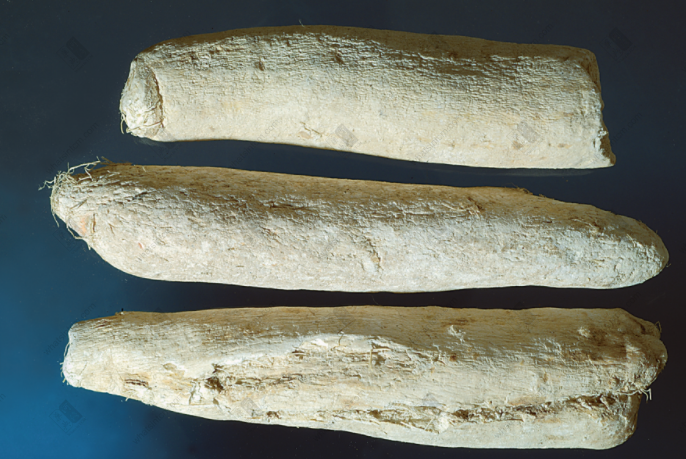
Tianhuafen: From Ruan, Henan, it is quite viscous.
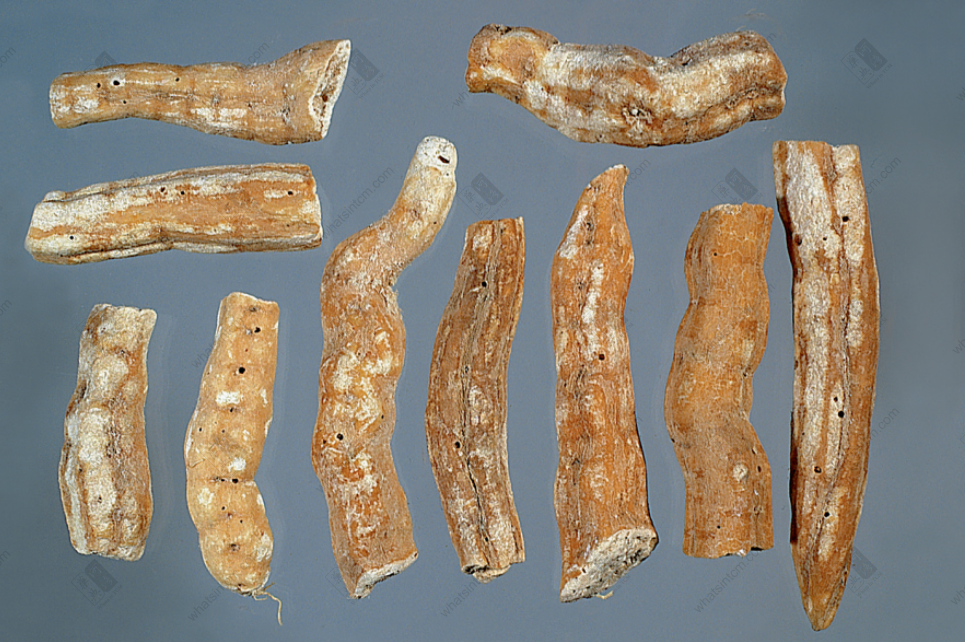 Tianhuafen: Grade three product.
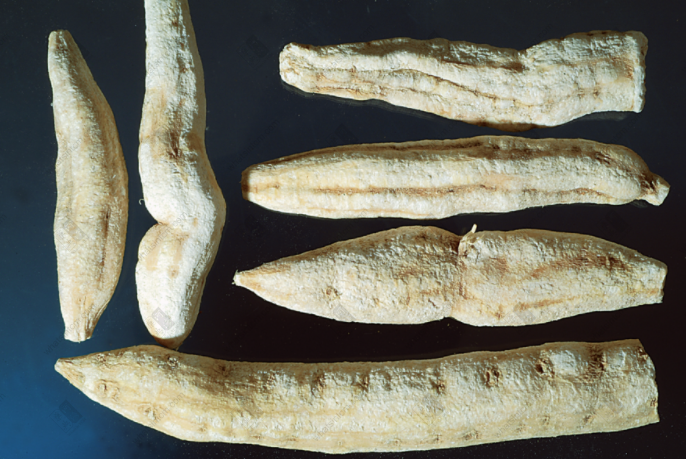
Western Tianhuafen.
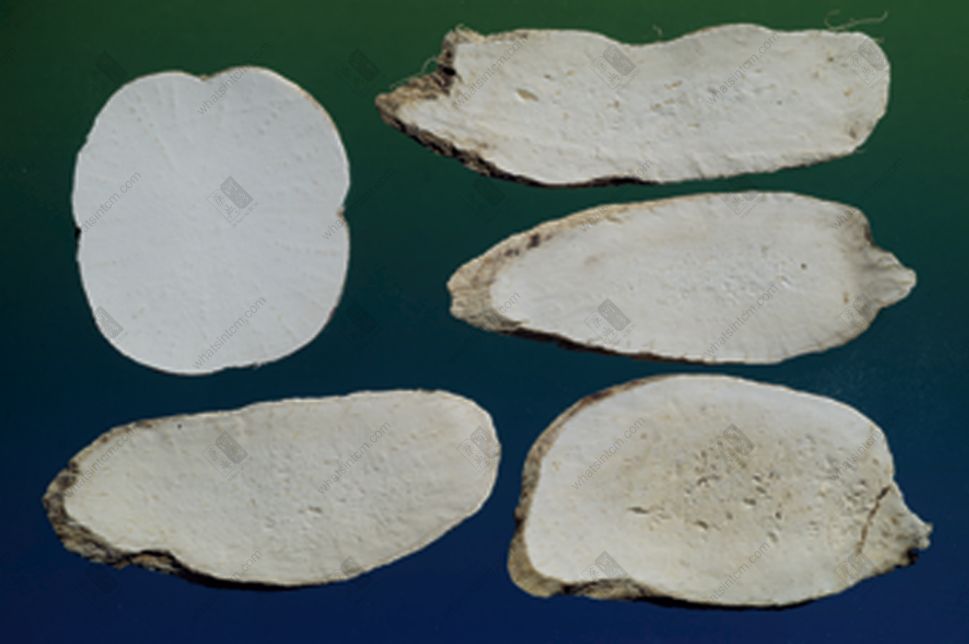 Tianhuafen slices: The upper left is sulfur-smoked; the rest are normal.
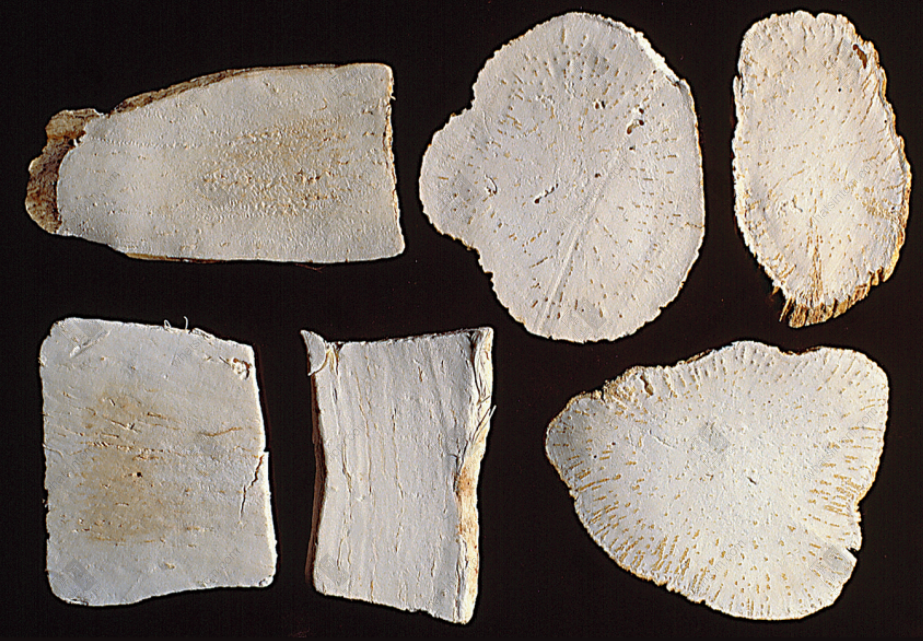 Tianhuafen slices: Powdery, with vascular bundle points, radiating yellow pores, and fibers.
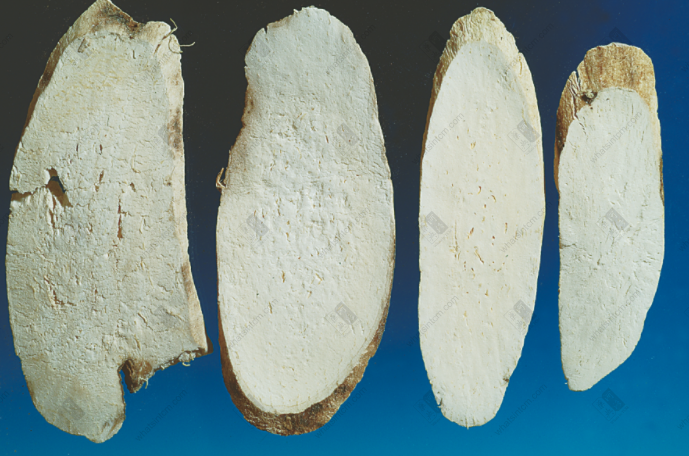
Tianhuafen: Not sulfur-smoked.
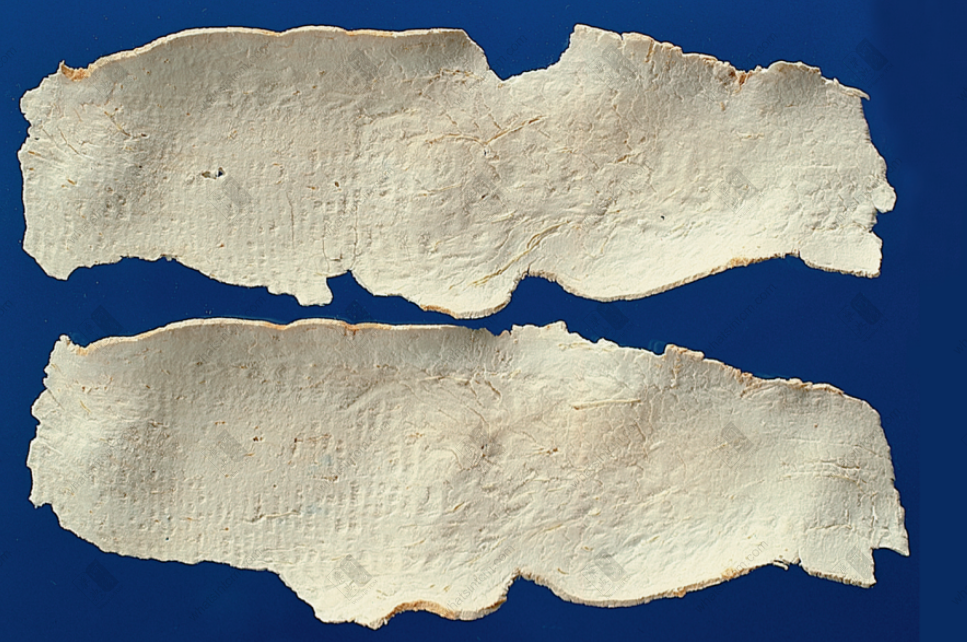 Tianhuafen slices: Rich in powder.
“I went to the eastern mountains, lingering and not returning. I came from the east, and the rain was drizzling. The fruit of the vine, also spread over the walls.
Spiders in the room, silkworms at the door. The deer are in their pastures, and the night-flying insects glow. They are not to be feared, but to be cherished.”
From “Dongshan” in the “Book of Songs”
One interpretation is that “guo luo” in the Book of Songs refers to Trichosanthes. The text describes returning home after a long time away fighting in the eastern mountains, and how much the home has changed. The vines have climbed the walls, and gourds hang under the eaves, evoking a strong sense of homesickness.
According to the Fourth Edition of the Taiwanese Pharmacopoeia, Tianhuafen (https://reurl.cc/ErL2om) is the dried root of the Cucurbitaceae family plants *Trichosanthes kirilowii* Maxim. or *Trichosanthes rosthornii* Harms. It is commonly known as “Tianhuafen.” It was first recorded in the *Shennong Ben Cao Jing* from the Han Dynasty, where it was classified as a medium-grade herb. Because the part used is the root, it is named Trichosanthes root, also known as “Di Lou.” The term “Tianhuafen” has various origins. The root of Trichosanthes is white, resembling white snow, and has a strong powdery texture, hence the name “Tianhuafen.” Other names include Huafen, Baiyao, Ruixue, Tianguafen, and Guolougen. It is primarily produced in Shandong, Hebei, Shanxi, Shaanxi, and other regions. Taiwan also has scattered cultivation. It is usually harvested in autumn and winter, washed, peeled, cut into sections or longitudinally split into slices, and then dried for use. The raw material is irregularly cylindrical or spindle-shaped. The surface of the herb is yellowish-white or light brown with longitudinal wrinkles, firm in texture, and powdery in cross-section. For quality, the best are those with large, white roots, firm texture, good powdery feel, and few “vascular bundle points” in the cross-section. “Vascular bundle points” refer to the vascular bundles within the plant’s tissues. When broken, the vascular bundles appear uneven and thread-like, similar to human tendons, hence the name “jin” (tendon). The dot-like marks appearing on the neat cut surface are called “dian” (points). Its primary processing method involves removing impurities from the raw material, sorting by size, soaking in clear water until fifty to sixty percent saturation, then covering to allow for even moisture penetration, slicing, and drying for use. The *Shennong Ben Cao Jing* records: “It is bitter and cold, and treats thirst, fever, distension, and great heat, replenishes deficiency and stabilizes the middle, and heals broken injuries.” This clearly indicates its significant heat-clearing efficacy.
When purchasing Tianhuafen, adulterations are usually rare. However, it is best to confirm through a few methods. First, examine the slices. If the edges are too rounded or there is a protruding pith in the center, it may be cassava rather than Tianhuafen. Alternatively, wipe the cut surface with a damp cloth to check for radiating yellow pores. If none are visible, it may be an adulterated product. Also, if the texture is not very obvious, you may need to check if other substances have been mixed in. Second, feel the surface. If it is too smooth, it may be mixed with talc. The herb slices should break easily with a light snap. If there is no trace when squeezed hard, or if it is difficult to break, there may be a problem. Third, smell it for any sourness. Normally, there should be no sourness. If there is sourness, it may have been smoked with sulfur. Finally, taste it. It should have a slightly bitter taste. If the bitterness is very strong, there is a problem. The source plant of this herb is dioecious, with female plants generally having thinner, smaller roots with more fibers, while male plants usually have thicker, larger roots with stronger powdery texture. This can also be used as a basis for identification.
Tianhuafen is a commonly used Chinese medicine by the general public. To ensure public safety, the Taiwanese authorities have set limits for heavy metals such as arsenic, cadmium, mercury, and lead in the herb, as well as limits for sulfur dioxide. Therefore, the public can use it with peace of mind.
【Image provided by】 Professor Zhang Xian-zhe, *Illustrated Guide to Authentic Medicinal Herbs* https://whatsintcm.com