

During Epidemics, This Herb Thrives and Helps People Overcome Hardships
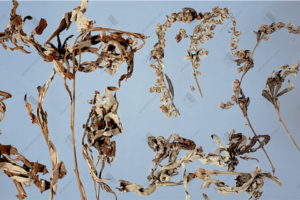
Mugwort Leaf: Ash-green in color, with shriveled and broken leaf blades, pinnately lobed, with short petioles. It is soft in texture, with a bitter and aromatic smell. The underside is densely covered with gray-white hairs.
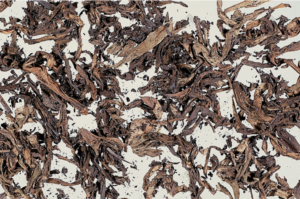
Vinegar-processed Mugwort Leaf
“Though the world values gold, I alone cherish my verse. Life and death are but the same, with fleeting concerns of gain and loss. The efficacy of decoctions is not shallow, though the illness runs deep. Yet, I still use mugwort moxibustion to comfort the hearts of my friends.” From “Answering Questions About Illness” by Shao Yong of the Song Dynasty
This work by Shao Yong illustrates how even when a friend’s illness is deep-seated, the power of mugwort moxibustion is still used to help them overcome difficulties, highlighting the extraordinary efficacy of mugwort. Another idiom, “灼艾分痛” (zhuó ài fēn tòng), originates from “History of Song – Volume 3 – Annals of Emperor Taizu III.” During that time, when Emperor Taizong was ill, Emperor Taizu personally performed moxibustion on him. When Taizong felt pain, Taizu would also burn mugwort on himself. This later came to symbolize brotherly affection. “Zhuo Ai” refers to the “moxibustion” technique in acupuncture, where a common method involves igniting mugwort floss and placing it on acupoints to stimulate them, which has the effect of relaxing tendons and promoting circulation.
According to the third edition of the Taiwan Chinese Herbal Pharmacopoeia, Mugwort Leaf (Artemisia argyi H. Lev. et Vaniot) is the dried leaf of the Asteraceae plant. It is also known as wild mugwort, grassland weed, white mugwort, and scorched grass. Because it is used for moxibustion therapy, it is also called “medical grass.” Furthermore, because its leaves resemble a chicken’s foot, it is also known as “chicken foot mugwort.” It is cultivated throughout mainland China, with major production in Anhui, Shandong, Hubei, and Hebei provinces. Traditionally, mugwort leaves from Qizhou, Hubei, are considered of higher quality and are specifically called “Qi Ai.” Taiwan also has large-scale cultivation due to suitable geographical conditions, producing mugwort for food and medicinal use. It is usually harvested around the Dragon Boat Festival. In particular, mugwort leaves harvested during the Dragon Boat Festival are considered the best as they absorb the pure yang energy of heaven and earth. After harvesting, impurities are removed, and the leaves are dried for storage. The history of mugwort can be traced back to the 11th century BC in the “Book of Songs”: “There I pluck mugwort, a day without seeing you feels like three years.” This was used to express feelings of longing. The “Mingyi Bielu” (Classified Records of Famous Physicians) records: “Mugwort leaf, bitter in taste, slightly warm, hot when cooked, pure yang in nature, capable of restoring failing yang, connecting the twelve meridians, acting on the three yin channels to regulate qi and blood, dispelling cold and warming, warming the uterus. When used for moxibustion, it can penetrate all meridians and cure a hundred diseases.” When selecting mugwort, those that are green in color, grayish-white on the back, with abundant downy hairs, thick leaves, soft and tough texture, and a strong aroma are preferred.
When purchasing, consumers may mistakenly buy confused products like Hibiscus leaf. This is because it is also called “Qi Ai,” leading to confusion. The main distinguishing feature of Hibiscus leaf is that it is densely covered with fine white downy hairs, is grayish-white, and has a narrow spoon shape or narrow obovate shape. Mugwort leaf, on the other hand, is mainly pinnately deeply lobed, with ovate-lanceolate lobes and irregular serrated edges. Due to the different leaf shapes, it is easy to distinguish. Depending on clinical usage, there are different processing methods. These include vinegar-processed mugwort leaf, where the mugwort leaves are washed clean, mixed with vinegar, stir-fried over low heat, then removed and dried. There is also mugwort charcoal, where the mugwort leaves are washed clean and rubbed apart, then stir-fried in a pot over medium heat until completely blackish-brown. A small amount of water is then sprayed to extinguish any sparks, and after drying, it is spread out to dry. Another form is mugwort floss, where the dried mugwort leaves are washed clean and then pounded in a mortar or iron grinding boat until they become floss-like. Leaf veins and coarse stems are removed, and fine powder is sifted out, leaving only the clean floss for use. Mugwort floss is a commonly used medicinal material in traditional Chinese moxibustion. Some commercially available products are based on mugwort floss mixed with other medicinal ingredients such as sulfur, musk, frankincense, myrrh, pine resin, cinnamon twig, eucommia, immature bitter orange, soap bean, asarum, Sichuan lovage, white atractylodes, and angelica, all ground into a fine powder and mixed evenly. This mixture is then spread evenly on a piece of mulberry paper. First, the mugwort floss is spread evenly on the paper, followed by the medicinal powder, which is evenly interspersed within the mugwort floss. It is then rolled tightly into a rod shape and sealed with egg white. When lit, it is moved back and forth over acupoints to provide a warming sensation.
Besides containing a large amount of volatile oil, mugwort leaf is also rich in tannic acid. According to research by President Hong Ming-chi of China Medical University, tannic acid has been found to inhibit the novel coronavirus. This research was published in the “Journal of the American Association for Cancer Research” and received widespread acclaim from academic and medical circles. Due to the diverse applications of mugwort leaf, it can be taken internally or used externally. Therefore, the third edition of the Taiwan Chinese Herbal Pharmacopoeia not only has standard specifications for sulfur dioxide but also sets limits for heavy metals such as arsenic, cadmium, mercury, and lead to ensure the safety of public medication.
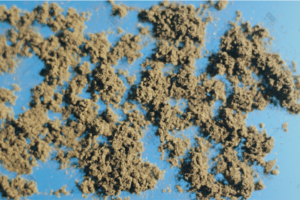
Mugwort Floss
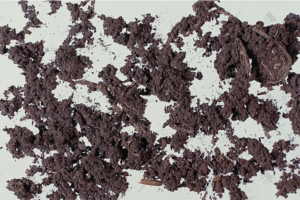
Vinegar-fried Mugwort Floss
【Image Provided by】Professor Chang Hsien-cheh, “Illustrated Guide to Authentic Medicinal Herbs” https://whatsintcm.com
【Author Introduction】Chen Ta-chen
Education: Ph.D. in Chinese Medicine, China Medical University
Current Position: Assistant Researcher, Center for Medical Intelligence, Taichung Hospital, China Medical University Hospital
Editor, Chinese Medicine Subject Committee, National Common Textbook Compilation Committee for Chinese Medicine Schools
Distinguished Lecturer, Industrial Technology Research Institute
Part-time Lecturer, Graduate Institute of Post-Baccalaureate Chinese Medicine, China Medical University
Part-time Assistant Professor, Department of Pharmacy, Kaohsiung Medical University
Co-founder of Heluo Pharmacopoeia www.whatsinTCM.com
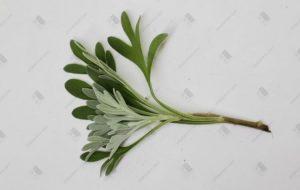
Hibiscus Leaf Provided by Dr. Chen Ta-chen