Winter Wellness: He Shou Wu Aids Kidney Qi
【Image provided by】Professor Zhang Xian-zhe, Illustrated Guide to Authentic Medicinal Materials https://whatsintcm.com
【Author】Chen Da-zhen
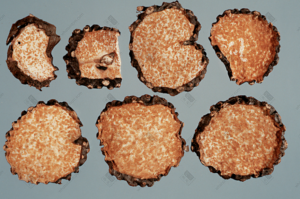
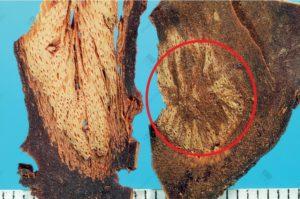
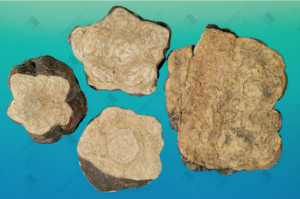
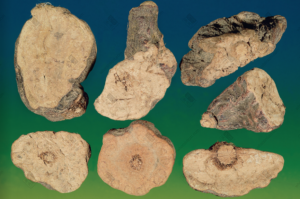
Slices of He Shou Wu clearly showing the cloud-brocade pattern
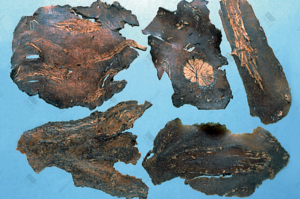
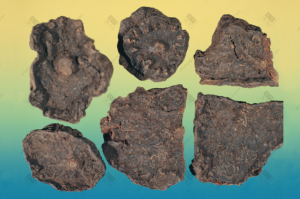
Slices of He Shou Wu prepared with black beans – glossy and bright
As winter approaches, all things in nature change, and the methods of health preservation also evolve. The Yellow Emperor’s Inner Canon states: “The three months of winter are called the period of ‘closed storage.’ Water freezes, the earth cracks. Do not disturb the Yang. Go to bed early and rise late, waiting for the sunlight. Let your will be like hiding or concealing, like having a private intention, or like having achieved something. Stay away from cold and seek warmth. Do not allow the skin to leak (sweat excessively), causing qi to be rapidly depleted. This is the response to the winter qi and the way to preserve and store.” In winter, daylight hours begin to shorten, the duration of sunlight gradually decreases, plants wither, and all life activities tend towards cessation. Therefore, cultivating ‘storage’ (藏, zàng) is the most crucial key to winter wellness. Daily routines should involve going to bed early and waking up late, waiting until the sun has risen and the Yang qi between heaven and earth has emerged before getting up. This differs from the other three seasons: spring, summer, and autumn. Another important point is not to get too close to fire in winter, because getting too close to fire can lead to “disturbing the Yang.” After all, the essence of winter wellness lies in the character “藏” (storage/conservation), so one should try to avoid letting qi dissipate.
In addition to paying attention to daily routines, winter diets should also focus on nourishing the kidneys. There are many types of Chinese medicinal herbs that nourish the kidneys, including Euryale Seed (Qian Shi), Glossy Privet Fruit (Nu Zhen Zi), Cuscuta Seed (Tu Si Zi), Eucommia Bark (Du Zhong), and He Shou Wu. Among these, He Shou Wu (https://whatsintcm.com/en/dt_articles/he-shou-wu-fleeceflower-root/), also known as Fleeceflower Root, is also called Yemiao, Jiaoteng, Yehe, Dijing, Shou Wu, Maganshi, Jiuxianteng, etc. According to the third edition of the Taiwan Herbal Pharmacopoeia, its main source is the dried tuberous root of the Polygonaceae plant Polygonum multiflorum Thunb. It is mainly produced in Shaanxi, Gansu, Central China, Southern China, and other regions, and due to suitable climatic conditions, it is also cultivated in Taiwan. Its efficacy varies depending on the processing method. Raw He Shou Wu is prepared by removing impurities after harvesting, washing it with clean water, soaking it until it is 60-70% permeable, then taking it out to cool and moisten until fully permeable, and finally drying it for use. Those that are firm and rich in starch are preferred. It has better effects in moistening the intestines, detoxifying sores, and acting as a laxative and anti-inflammatory. Furthermore, processed He Shou Wu is mainly prepared with black bean juice. Black bean juice is mixed evenly with slices of He Shou Wu. After the medicinal material has fully absorbed the black bean juice, it is taken out and placed in a steamer, heated with high heat until steam is generated, then steamed for 8-12 hours, followed by simmering for about 12 hours. It is then removed and sun-dried. This process is repeated several times, and finally sun-dried, to obtain processed He Shou Wu, whose effects of nourishing Yin and tonifying the kidneys are more pronounced.
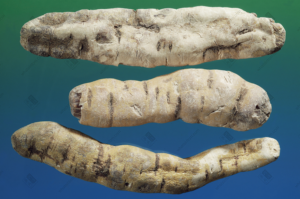
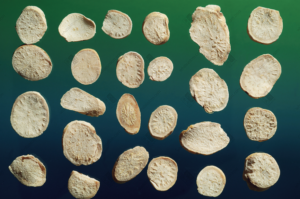
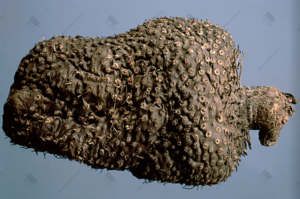
In addition, there is another medicinal material commonly known as Bai Shou Wu.
Its source is the tuberous root of the Asclepiadaceae plant Cynanchum auriculatum Royle ex Wight. Its surface is yellowish-brown or light yellowish-brown, and the cross-section is relatively flat and whitish. Its effects are slightly different from those of He Shou Wu, so there should be a distinction in its usage. Furthermore, in Taiwanese folk medicine, the underground rhizome of the Dioscoreaceae plant Dioscorea bulbifera LINNE. (Huang Yao Zi) is also called Shou Wu or Ben Shou Wu. Its aliases include Huang Du and Huang Yao. It tastes bitter and has hemostatic, anti-inflammatory, and detoxifying effects. It also has a certain ameliorating effect on various types of goiter. Additionally, because Huang Yao Zi is toxic, taking too much or using it improperly can lead to poisoning. Symptoms include burning pain in the mouth, tongue, throat, etc., salivation, vomiting, abdominal pain, and diarrhea. Therefore, if any of the above symptoms occur, seek medical attention immediately.
In addition to the aforementioned daily routines and diet, one should also pay attention to keeping warm, maintain a cheerful mood, and ensure indoor air circulation for clean air. One can also consume more hot porridges to accumulate more strength for the coming spring.
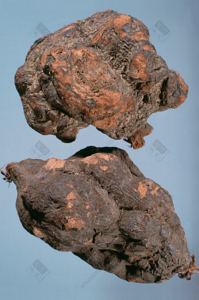
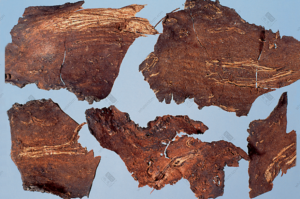
Raw He Shou Wu medicinal material: reddish-brown, shriveled, lumpy, with root scars