


Can You Have Shiquan Dabu Tang Anytime in Winter? A Few Times When It’s Not Recommended
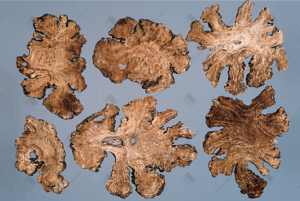
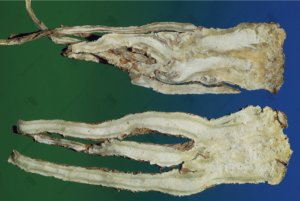
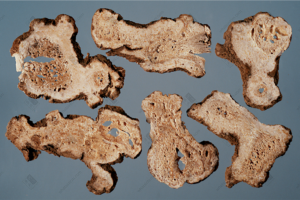
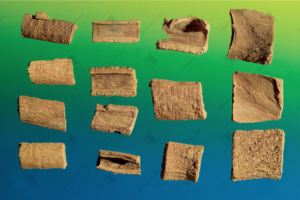
[Image Source] Professor Chang Hsien-che “Illustrated Guide to Authentic Medicinal Herbs” https://whatsintcm.com
[Author] Chen Ta-chen
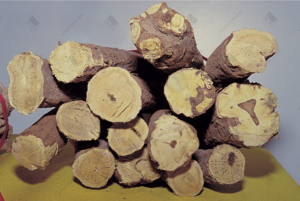
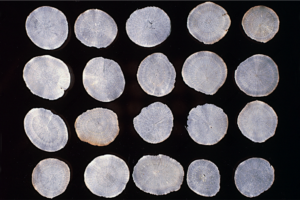
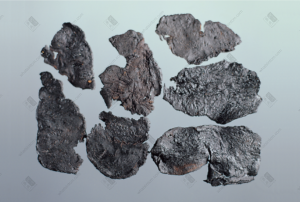
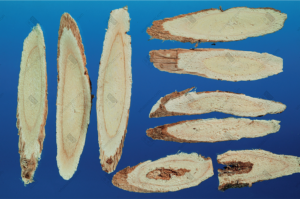
As winter approaches and the weather gradually turns cold, many people may experience cold limbs. Everyone will likely turn to warm medicated diets to warm themselves up, and Shiquan Dabu Tang (Ten-Ingredient Great Tonifying Soup) is probably the first choice for many. Today, the author will discuss Shiquan Dabu Tang.
According to research, Shiquan Dabu Tang primarily originates from the Song Dynasty’s “Taiping Huimin Heji Ju Fang” (Official Prescriptions of the Taiping Era for Benevolent Relief). This book primarily compiled various folk remedies of the time, which were then officially promulgated by the government for public use. The book consists of 10 volumes, with 3 additional volumes of “Guide General Discourses,” divided into 14 categories, recording 788 prescriptions. The Shiquan Dabu Tang we know today is said by some to come from the chapter “Shiquan Dabu Tang” and by others from the chapter “Shiquan Yin.” Although both are found in Volume 5 of the book, their described functions and indications are not exactly the same. While the medicinal ingredients used are identical, there are differences in individual dosages and preparation methods. Let’s compare the original texts from the Jinling edition of the imperially commissioned “Siku Quanshu” (Complete Library in Four Sections) to see the differences:
Chapter Title: “Shiquan Dabu Tang”. Its recorded functions and indications state: “Treats various deficiencies and insufficiencies in men and women, Five Taxations and Seven Injuries, poor appetite, chronic illness with emaciation, intermittent tidal fever, qi pain, nocturnal emissions, sallow complexion, weakness in legs and knees, all conditions where qi is not as before after illness, weakness of spleen and kidney qi due to worry and overthinking, and vexation in the five centers (palms, soles, chest). This medicine is warm yet not hot in nature, effective for balanced tonification, nourishes qi and cultivates spirit, expels evil, warms the spleen and kidneys, its efficacy is beyond full description.”
Chapter Title: “Shiquan Yin”. Its recorded functions and indications state: “Treats various deficiencies and hundreds of damages, disharmony between Ying and Wei (nutritive and defensive qi), emaciated physique, sallow complexion, aching legs and knees, sore and tired back, dizziness, dry ears and tongue, bone-steaming fever and internal vexation, palpitations with excessive sweating, fluctuating appetite, alternating chills and fever, asthma, cough, vomiting of blood, nosebleeds, seminal emission, and blood loss. For women, treats irregular menstruation and uterine bleeding. Most suitable for those who have not recovered after illness, and those with qi and blood damage due to worry and overthinking. This medicine is effective for balanced tonification.”
The composition of both formulas combines Siwu Tang (Four-Ingredient Decoction), which primarily nourishes blood, with Sijunzi Tang (Four Gentlemen Decoction), which primarily tonifies qi, to form Bazhen Tang (Eight-Treasure Decoction), which tonifies both qi and blood. Adding Huang Qi (Astragalus) to this then creates what is known as Shiquan Dabu Tang.
The medicinal ingredients in the formula are Dang Gui (Angelica Sinensis), Chuan Xiong (Sichuan Lovage Rhizome), Bai Shao (White Peony Root), Shu Di Huang (Prepared Rehmannia Root), Ren Shen (Ginseng), Fu Ling (Poria), Bai Zhu (White Atractylodes Rhizome), Gan Cao (Licorice), Huang Qi (Astragalus), and Rou Gui (Cinnamon Bark). Among these, Di Huang (Rehmannia Root) is further divided into Sheng Di Huang (Unprepared Rehmannia Root) and Shu Di Huang (Prepared Rehmannia Root) based on its processing method. Sheng Di Huang is better for clearing heat, while Shu Di Huang is primarily superior for tonifying. However, their appearances are similar, so caution should be exercised when purchasing. Additionally, the book states that three slices of fresh ginger and two Hong Zao (Red Dates) should be added to enhance their effects.
According to the Department of Chinese Medicine and Pharmacy of Taiwan’s Ministry of Health and Welfare, Shiquan Dabu Tang is used to nourish blood and invigorate qi. It is suitable for individuals with deficiency of both qi and blood, and those experiencing limb fatigue. However, it should be consumed with caution by individuals with yin deficiency with exuberant fire or hyperactive liver yang (hypertension). Generally, the medicinal ingredients in this formula are “warm” in nature, so individuals prone to acne or dry mouth and throat may experience mouth ulcers or sore throats after consumption. Furthermore, the Dang Gui it contains has volatile oils with a laxative effect, which might cause diarrhea in those with sensitive digestive systems. For women, it is best not to consume it during menstruation if blood flow is heavy, to avoid affecting the cycle. Finally, individuals with high blood pressure, impaired cardiac function, or poor kidney function are not suitable for long-term consumption. We hope everyone can enjoy the right medicated diet at the right time this winter to maintain health and be fully prepared for the arrival of spring next year.
[Author Biography]
Chen Ta-chen
Education: Ph.D. in Chinese Medicine, China Medical University
Current Position: Assistant Research Fellow, Medical Intelligence Center, China Medical University Hospital
Compiling Committee Member, Materia Medica Department, National Committee for Common Textbooks for Chinese Medicine Colleges and Universities
Distinguished Lecturer, Industrial Technology Research Institute (ITRI)
Adjunct Lecturer, Post-Baccalaureate Chinese Medicine Department, China Medical University
Adjunct Assistant Professor, Department of Pharmacy, Chia Nan University of Pharmacy and Science
Co-founder, Heluo Yaodian (Heluo Materia Medica) www.whatsinTCM.com