



Chuanxiong, a Common Herb in Siwu Tang: Be Careful Not to Buy the Wrong One
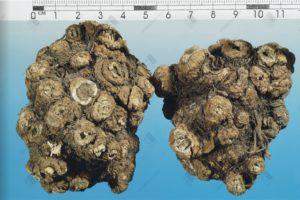
Chuanxiong: Wuji Qiong
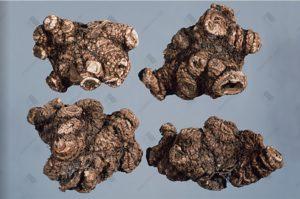
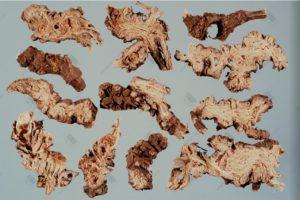
Chuanxiong: Irregular nodular lumps, yellowish-brown, hard texture
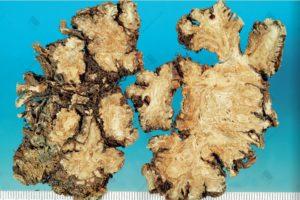
Wuji Qiong Decoction Pieces
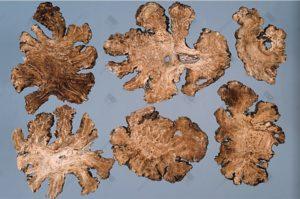
Chuanxiong Slices: Shaped like butterflies, hence also called ‘Butterfly Slices,’ whitish-gray, strong aroma, bitter and pungent taste
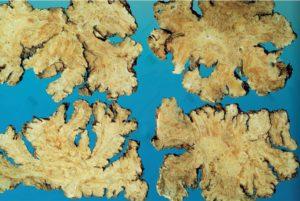
New Batch of Chuanxiong Slices
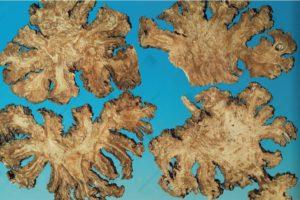
Old Batch of Chuanxiong Slices
“Chuanqiong grows in the Shu Dao, Angelica dahurica comes from Jiangnan. Drifting to Guanfu, it still retains its fragrant sweetness. Lush green stems are full, silently permeated by clear dew. Before it flowers and fruits, it can fill baskets. The autumn season quickly wanes, severe cold is unbearable. Digging up its roots for their substance, I feel ashamed before this tiny thing.” Su Dongpo, “Harmonizing Ziyou’s Records of Plants in the Garden, Eleven Poems”
The first line of this five-character-per-line poem, written by the great Song Dynasty literatus Su Dongpo, indicates that Chuanqiong (芎窮) originates from the Shu Dao, which is now known as Sichuan. Hence, Chuanqiong is also called Chuanxiong (川芎). Chuanxiong was documented as a medicinal herb very early. In the “Shennong Ben Cao Jing” (The Divine Farmer’s Materia Medica), it is listed in the ‘Mid-Grade Herbs’ section with the text: “Chuanqiong (芎窮), pungent and warm in taste, non-toxic. It mainly treats headaches due to apoplexy entering the brain, cold bi syndrome with muscle spasms and tension, traumatic injuries, and infertility in women due to blood stagnation. It grows in river valleys.” This explains Chuanqiong’s medicinal properties, efficacy, indications, and origin.
According to the third edition of the Taiwan Herbal Pharmacopoeia, the botanical origin of Chuanxiong (https://whatsintcm.com/en/dt_articles/rhizoma-chuanxiong/) is the dried rhizome of *Ligusticum chuanxiong* Hort. from the Apiaceae (Umbelliferae) family. Its main producing areas include Sichuan, Hubei, Hunan, and Jiangxi, and it is currently also cultivated and produced in Japan. Due to its origin in the East, it is also known as ‘Dongqiong’ (Eastern Chuanxiong). It is usually harvested in summer when the stem nodes are noticeably prominent and slightly purplish. After harvesting, mud and sand are removed, it is sun-dried, and then the fibrous roots are trimmed. High-quality Chuanxiong is typically hard to break, firm in texture, plump, yellowish-white on the cross-section, rich in oil, and has a strong aroma. On the market, there is another Chinese herb called ‘Xixiong’ (Western Chuanxiong), which is easily confused due to its similar name. However, Xixiong’s other name is Gaoben (藁本). According to the third edition of the Taiwan Herbal Pharmacopoeia, Gaoben (https://whatsintcm.com/en/dt_articles/ligusticum-sinense/) is the dried rhizome and root of *Ligusticum sinense* Oliv. or *Ligusticum jeholense* (Nakai et Kitag.) Nakai et Kitag., both from the Apiaceae family. Both plants belong to the Apiaceae family and possess an aromatic scent, leading to easy accidental misuse in the market. However, there are three ways to distinguish them: First, by appearance, Chuanxiong often appears as irregular, nodular, fist-shaped lumps with small yellow oil spots, while Gaoben tends to be irregular, nodular cylindrical shapes with fewer oil spots. Second, by smell, Chuanxiong contains volatile oils and has a unique refreshing aroma, while Gaoben usually has a lighter, milder fragrance without Chuanxiong’s distinctive scent. Third, by taste, Chuanxiong usually tastes bitter, while Gaoben is bitter with a slightly pungent (spicy) aftertaste. Therefore, by observing the appearance, smelling with the nose, and tasting with the mouth, one should be able to differentiate between the two, thus avoiding misuse or confusion. Generally, there are few counterfeit Chuanxiong products on the market, but high-quality, premium medicinal materials are relatively rare. Top-grade medicinal materials are primarily judged by their color and aroma. Furthermore, regarding the part of the Chinese medicinal material used, if the ‘lingzi’ portion constitutes too much, there may be concerns. ‘Lingzi’ refers to the stem nodes at the base of Chuanxiong, which is where it propagates and grows. However, according to the third edition of the Taiwan Herbal Pharmacopoeia, its medicinal part is the dried rhizome of Chuanxiong. Therefore, a distinction should be made during use. Additionally, Chuanxiong has different processing methods (*paozhi*) depending on its clinical purpose. Besides sun-drying and slicing, the most common methods include stir-frying Chuanxiong (Qingchao Chuanxiong) and wine-processed Chuanxiong (Jiu Zhi Chuanxiong). For stir-fried Chuanxiong, it is typically stir-fried over low heat until the surface color darkens and shows a slight scorch, then removed and cooled. For wine-processed Chuanxiong, it is usually mixed with yellow wine (rice wine) at a ratio of approximately 1 part yellow wine to 10 parts Chuanxiong. It is then sealed and moistened until the yellow wine is completely absorbed, after which it is stir-fried over low heat until the surface shows a slight scorch, then removed and cooled. This process is done to enhance its efficacy in guiding medicinal effects upwards.
Chuanxiong is a commonly used Chinese medicinal herb, particularly effective for headaches caused by wind-cold. Therefore, it has been an essential herb frequently used by physicians throughout history. However, due to its strong dispersing and moving nature, prolonged use might deplete the body’s vital energy (*zhengqi*). Hence, it is crucial to consult a qualified Chinese medicine practitioner before use to ensure its health-promoting benefits.
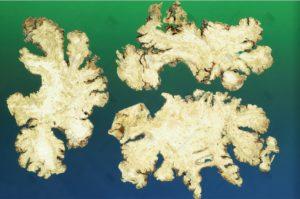
Chuanxiong Slices Sulfured (Smoked with Sulfur)
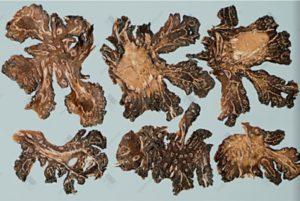
Wine-Processed Chuanxiong Slices
【Images Provided by】Professor Zhang Xian-zhe, “Illustrated Guide to Authentic Medicinal Materials” https://whatsintcm.com
【About the Author】
Chen Ta-chen (David Chen). Education: Ph.D. in Traditional Chinese Medicine, China Medical University.
Current Position: Assistant Research Fellow, Medical Intelligence Center, China Medical University Hospital.
Editorial Board Member, Pharmacognosy Discipline, National Committee for Common Teaching Materials in Traditional Chinese Medicine Colleges and Universities.
Distinguished Lecturer, Industrial Technology Research Institute (ITRI).
Adjunct Lecturer, Post-Baccalaureate Program in Traditional Chinese Medicine, China Medical University.
Adjunct Assistant Professor, Department of Pharmacy, Chia Nan University of Pharmacy and Science.
Co-founder, Heluo Pharmacopoeia www.whatsinTCM.com.
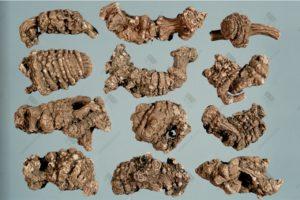
Chuan Gaoben: Shows cracks, fibers, and residual roots
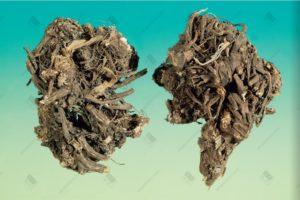
Chuan Gaoben: Nodular cylindrical shape, hollow at the base, brownish
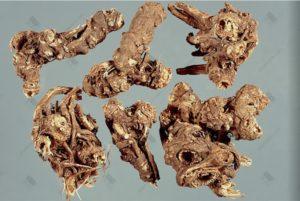
Badong Gaoben
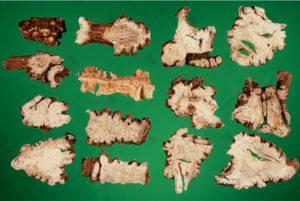
Chuan Gaoben Slices: Aromatic, pungent, bitter, and spicy taste, relatively flat and solid in appearance
Badong Gaoben: Numerous cracks