



Climbing Mountains and Wearing Eucommia on the Double Ninth Festival: ‘Shan Zhu Yu’ or ‘Wu Zhu Yu’?
“Alone, a stranger in a foreign land, I feel twice as homesick on every festive occasion. I know from afar my brothers are climbing mountains, wearing dogwood, with one less person.”
“Remembering My Shandong Brothers on the Ninth Day of the Ninth Month” by Wang Wei of the Tang Dynasty.
The Double Ninth Festival is also known as the “Dogwood Festival.” The number nine is the largest odd number, and the ninth day of the ninth lunar month, with two nines coinciding, is called Chongyang (Double Ninth). In ancient times, the Double Ninth Festival was considered an unlucky day, so people would “climb high” on this day to get closer to the yang energy and then wear dogwood to ward off evil. According to the “Xu Qi Xie Ji” from the Southern Dynasties, it is recorded that: “Huan Jing of Runan, having studied with Fei Changfang for many years, was told by Changfang: ‘On the ninth day of the ninth month, your family will face disaster. You should leave immediately and have your family members each make a red pouch, fill it with dogwood, and tie it to your arm. Climb high and drink chrysanthemum wine to avert this misfortune.’ Jing followed his advice and took his whole family to the mountains. Upon returning home in the evening, he found that all his chickens, dogs, cattle, and sheep had died suddenly… This is why people today climb mountains and drink chrysanthemum wine on the ninth day, and women wear dogwood pouches.” Thus, the custom of climbing high on the Double Ninth Festival to ward off evil originated. By the Tang Dynasty, the imperial court would also bestow dogwood upon officials on the Double Ninth Festival to ensure peace and safety. So, which “dogwood” is it? Let us introduce them one by one below:
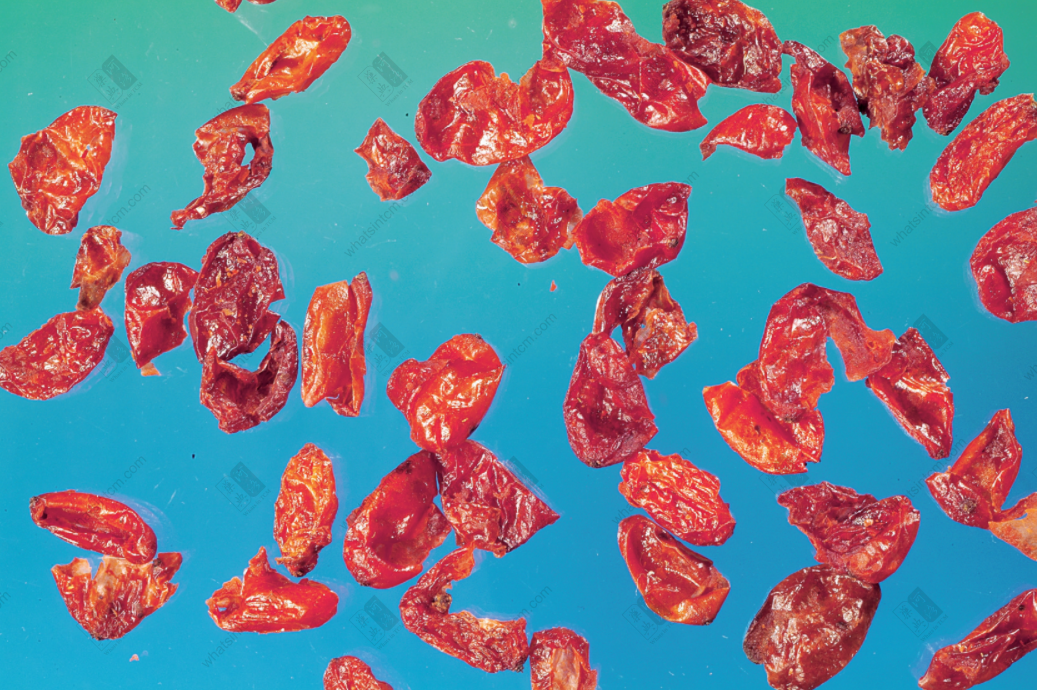
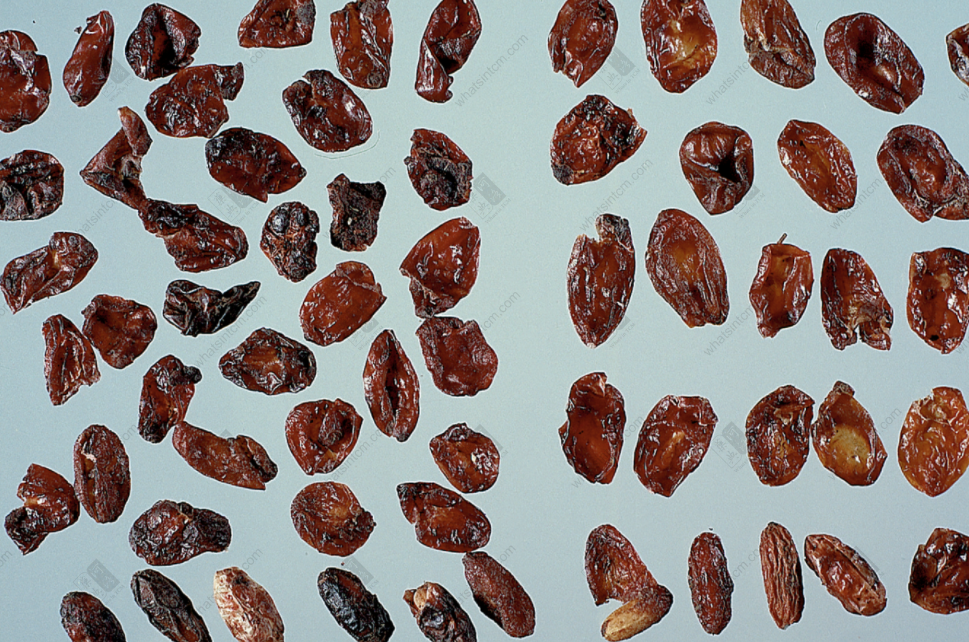
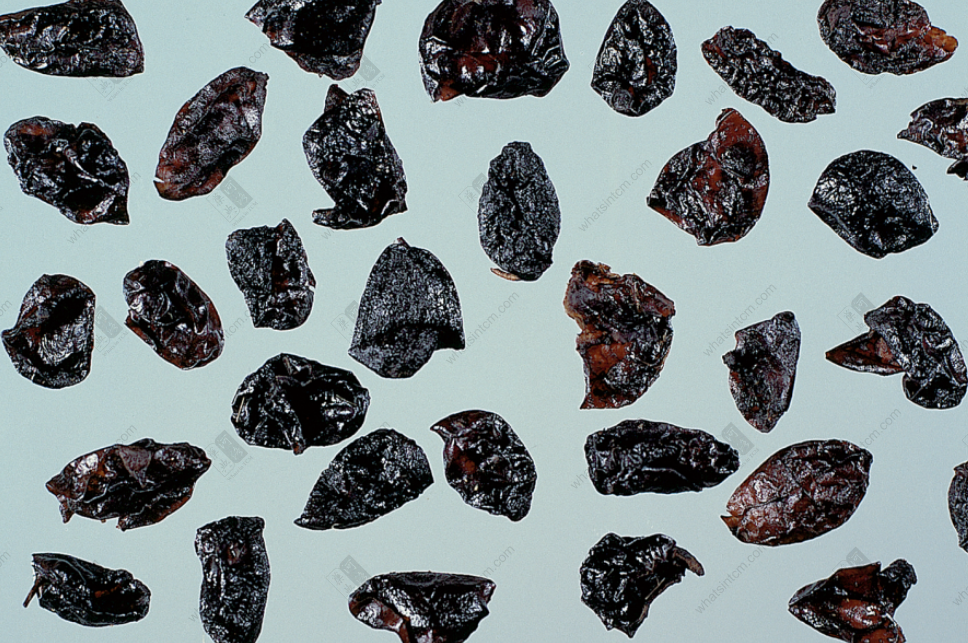
According to the fourth edition of the Taiwan Chinese Materia Medica, Shan Zhu Yu (https://whatsintcm.com/dt_articles/%e5%b1%b1%e8%8c%b1%e8%90%b8/) is the dried mature flesh of the Cornus officinalis Siebold & Zucc. plant, belonging to the Cornaceae family. It is mainly produced in Henan, Zhejiang, Anhui, Shaanxi, and other places. Currently, there are standardized planting bases in Xixia, Henan, Lin’an, Zhejiang, and Foping, Shaanxi. It is usually harvested in late autumn to early winter when the fruit turns red, then dried slowly or blanched in boiling water, the pits removed, and then dried and stored. Because its medicinal appearance is similar to the skin of red dates, it is also called “zao pi” (date skin). The medicinal material is usually irregularly shaped flakes, with a wrinkled and lustrous surface, and a fruit stalk scar at the base. Fresh products are purplish-red, turning purplish-black after a long time. Generally, those that are large, thick-fleshed, soft, and taste sour and slightly bitter are considered superior. When purchasing, be aware of potential mix-ups. To identify it, soak the medicinal material in water and observe its shape. The genuine product is flattened and sac-like with a split at one end, indicating where the pit was squeezed out, while mixed products are rolled-up with the intact pericarp. Another identification method is to peel it open and examine the flesh. The authentic product has several slightly raised longitudinal veins, corresponding to longitudinal grooves on the pit. Finally, taste it to check for a sour, astringent, slightly bitter flavor. These identification methods are for your reference.
However, depending on clinical use, there is a prepared form called “jiu shan yu rou” (wine-steamed Shan Zhu Yu). Typically, the ratio of Shan Zhu Yu flesh to yellow wine is 5:1. The Shan Zhu Yu flesh is first mixed evenly with yellow wine and allowed to moisten until the wine is absorbed by the herb. It is then placed in a steamer, heated with strong fire until steam rises, then cooked with gentle fire. After it turns purplish-black, turn off the heat and let it sit overnight before taking it out to dry. The prepared medicinal material is purplish-black and has a wine aroma when smelled. Previously, some vendors used dyes from grape skins or sour date skins to color them purplish-black like wine-steamed Shan Zhu Yu, so be extra cautious when purchasing. In the “Ming Yi Bie Lu,” it is recorded that: “Shan Zhu Yu is mildly warm and non-toxic. It mainly treats wind evil in the stomach and intestines, cold and heat in the abdomen, … lowering qi, inducing sweating, benefiting essence, calming the five organs, opening the nine orifices, and stopping frequent urination.” From this, its efficacy can be seen. It is warm but not drying, replenishing yang and consolidating yin, and is an important herb for tonifying the liver and kidneys. The commonly used “Liu Wei Di Huang Wan” (Pill of Six Ingredients to Restore the Kidneys) and “Jin Gui Shen Qi Wan” (Pill of Kidney Qi from the Golden Chamber) in Taiwan, used to treat dizziness and vertigo, and sore waist and knees, both contain this herb.
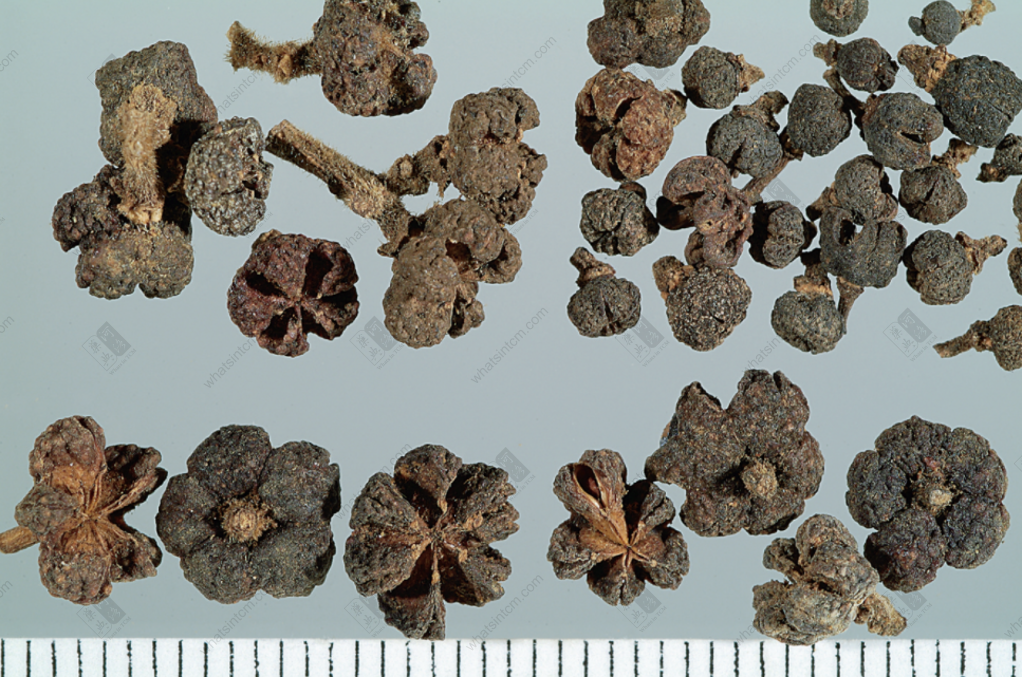
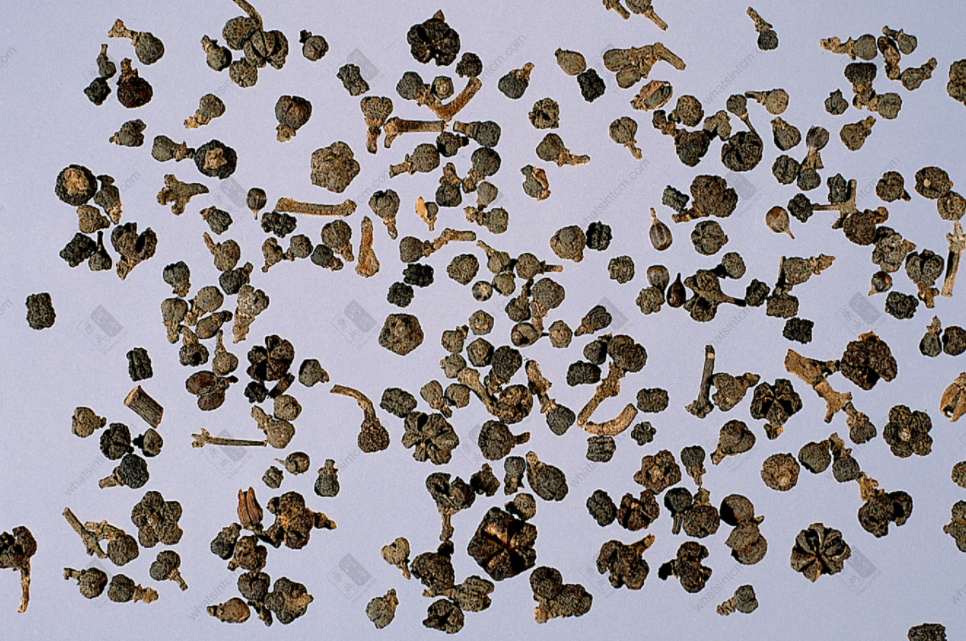
Furthermore, according to the fourth edition of the Taiwan Chinese Materia Medica, Wu Zhu Yu (https://whatsintcm.com/en/dt_articles/evodia-rutaecarpa/) is the dried, nearly mature fruit of plants in the Rutaceae family, including Evodia ruticarpa (A.Juss. Benth.), Evodia ruticarpa (A.Juss.) Benth. var. officinalis (Dode) C.C.Huang, or Evodia ruticarpa (A.Juss.) Benth. var. bodinieri (Dode) C.C.Huang. Plants in the Rutaceae family usually have an aroma. Its main production areas are Guizhou, Guangxi, Yunnan, and Sichuan. Typically, the fruit branches are cut in August-October before the fruit splits, then dried or low-temperature dried, and impurities such as branches, leaves, and fruit stalks are removed. The medicinal material is usually spherical, yellowish-green to brown on the surface, hard and brittle in texture, with a rich and strong aromatic odor. Generally, small, plump, firm, green, and strongly aromatic grains are considered superior. Clinically, depending on its use, there are prepared forms such as “Zhi Wu Zhu Yu” (processed with licorice), “Yan Wu Zhu Yu” (processed with brine), and “Lian Wu Zhu Yu” (processed with Coptis chinensis). After processing, the surface of all these forms darkens, and their taste changes accordingly. Wu Zhu Yu is less commonly mixed up in the market, but it is important to ensure that the purchased medicinal part is correct, meaning it should not primarily consist of too many non-medicinal parts like branches and stalks. According to the “Shen Nong Ben Cao Jing,” it is recorded that: “It is pungent in taste and warm. It mainly treats warming the middle and lowering qi, stopping pain, cough and reversal, cold and heat, removing dampness and blood stasis, expelling wind evil, and opening the pores.” The pain-relieving effect is a common clinical application today. The commonly used formula “Si Shen Wan” (Pill of Four Gods), for treating spleen and kidney yang deficiency, and five-watch diarrhea, and deficient cold diarrhea, uses this herb.
In summary, Wu Zhu Yu, being a plant of the Rutaceae family, possesses an aroma. Directly inserting it into the hair bun or wrapping the stem, leaves, or fruit of dogwood in a purple cloth bag and tying it to the arm can ward off misfortune. Therefore, on the Double Ninth Festival, besides climbing high to enjoy the scenery and connect with nature, it is also important to wear the correct dogwood to effectively ward off disasters and avoid misfortune.
【Image provided by】Professor Zhang Xianzhe, “Illustrated Guide to Authentic Medicinal Materials” https://whatsintcm.com