

Common Cough-Relieving Traditional Chinese Medicine Loquat Leaf: What to Note When Purchasing
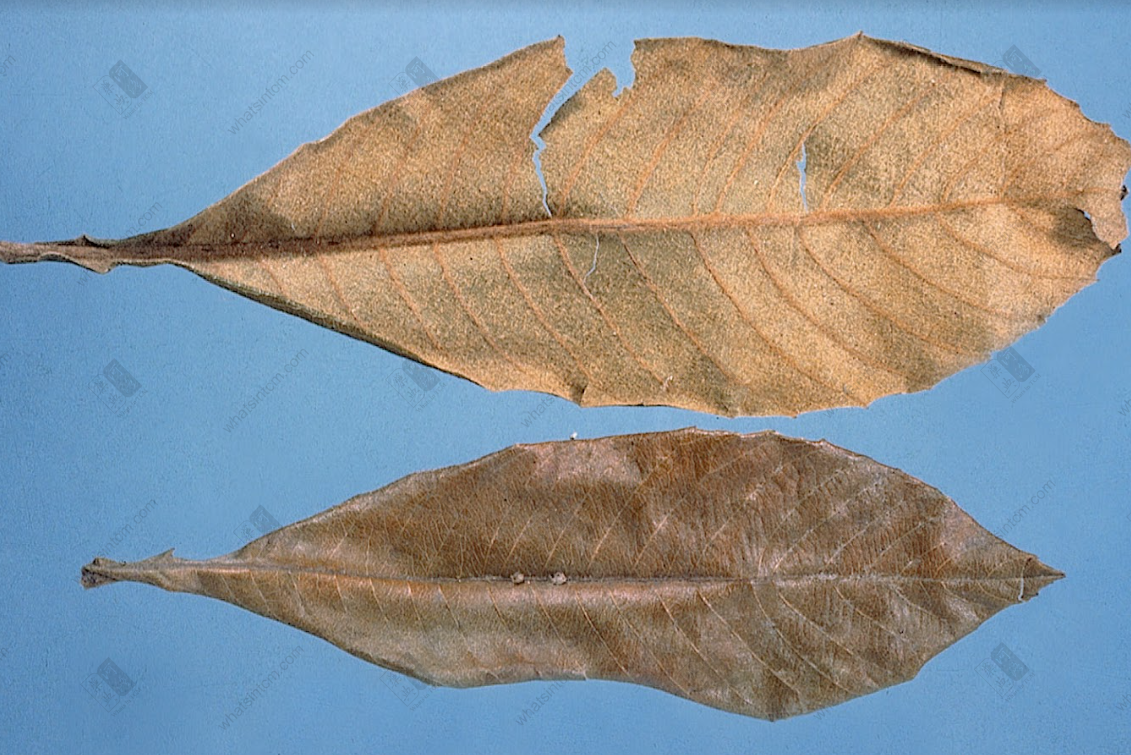 Loquat Leaf: Shaped like a pipa, the upper surface is grey-green to reddish-brown and lustrous. The lower surface is densely covered with yellow villi. The midrib is prominent with pinnate reticulate veins. It is leathery, brittle, and easily broken.
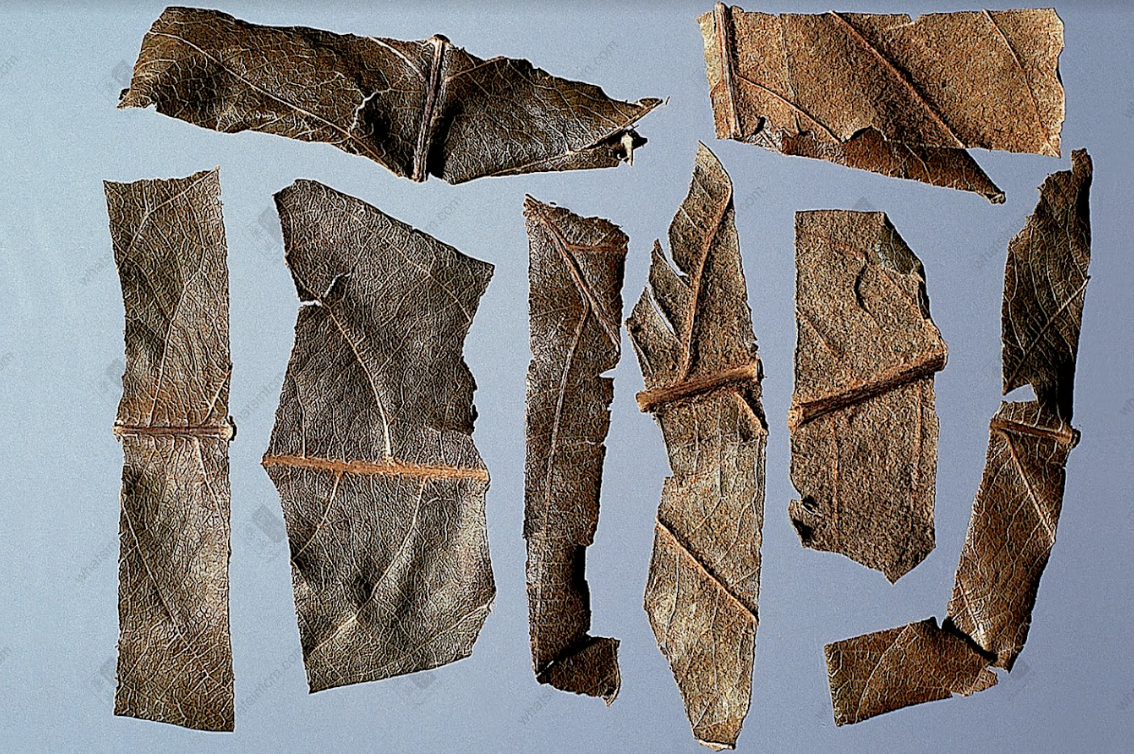 Loquat Leaf: Filamentous pieces
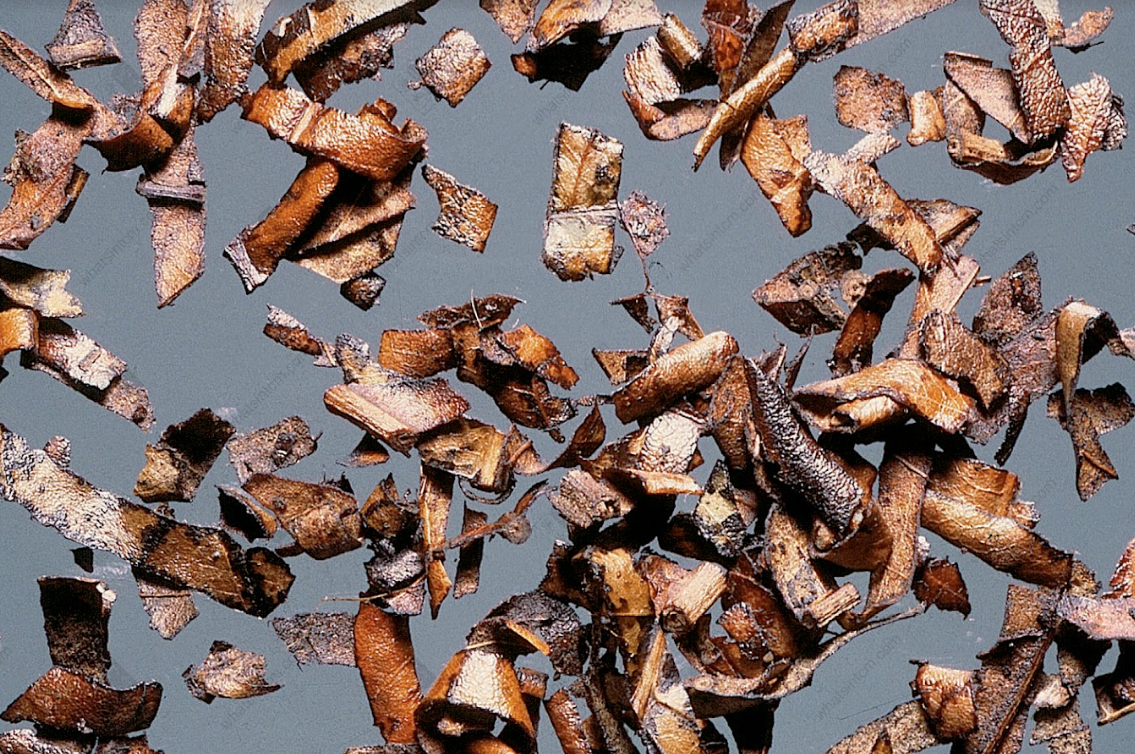 Honey-prepared Loquat Leaf
Video Introduction: “Dr. Da Zhen Talks About Traditional Chinese Medicine”
“Large leaves resemble long ears, one branch can fill a plate. Lychees are divided with their seeds, but golden oranges have no sourness. Rain weighs down the low branches, and the flowing juice chills the teeth. If Changqing is still alive, do not make him a garden official.”
—-Yang Wanli of the Song Dynasty, “Loquat”
According to the Fourth Edition of the Taiwan Pharmacopoeia, loquat leaf (https://reurl.cc/9p5R5V) is the dried leaf of the Rosaceae plant *Eriobotrya japonica* (Thunb.) Lindl. Loquat leaf began to be used as medicine in the *Ming Yi Bie Lu* (Classified Records of Famous Physicians) from the Wei, Jin, and Southern and Northern Dynasties period. According to the book *Pu Wu Ming Shi Tu Kao* (Illustrated Record of Plants and Their Uses) written by the Qing Dynasty botanist Wu Qijun: “Those produced in Zhejiang are large in fruit and have few seeds.” Based on the above records and the accompanying illustration of the loquat, it is named loquat because its leaves resemble a pipa. This medicinal material is used in common Traditional Chinese Medicine formulas such as Gan Lu Yin, Chuan Bei Pi Pa Gao, and Qing Zao Jiu Fei Tang. Loquat is native to China and has a long history of cultivation. Li Shizhen’s *Bencao Gangmu* (Compendium of Materia Medica) from the Ming Dynasty records: “Seedless ones are called Jiaozi and come from Guangzhou. Those produced in Zhejiang have large fruits and few seeds.” Currently, it is cultivated in Gansu, Shaanxi, Jiangsu, Anhui, Zhejiang, Jiangxi, Hubei, Sichuan, Yunnan, and Fujian provinces. Loquat leaves produced in Guangdong and Fujian are specially called “Guang Ba Ye.” Their leaves are large and thick, with fewer villi, and are of better quality. There is also large-scale cultivation in central Taiwan. Additionally, it is cultivated in countries such as Japan, India, Myanmar, Thailand, and Indonesia. Loquat leaves can generally be harvested throughout the year. After harvesting, they are sun-dried until about 80% dry, then tied into small bundles and sun-dried again for storage. Generally, those that are dry, large, green or reddish-brown in color, unbroken, and not yellowed, with a faint odor and a slightly bitter taste, are of better quality. It also has other names such as “Ba Ye,” “Lu Ju Ye,” “Lu Ju,” and “Wu You Shan” (Fan of No Worries). This medicinal material has the functions of clearing the lungs and relieving cough, and descending rebellious qi to stop vomiting. It is mainly used for symptoms such as lung heat cough, rebellious qi and panting, stomach heat vomiting, and thirst due to internal heat.
The commonly seen processed pieces in the market are usually cut into filaments, about 1 cm wide. The cross-section of the main vein shows a ring of vascular bundles. The upper surface of the leaf is smooth and lustrous. The villi on the back of the leaf are usually removed, and the main vein is prominent, with lateral veins extending obliquely. The leaf margin has sparse serrations, and is entire near the base. The leaf is leathery and brittle, thus easily broken. It has a faint odor and a slightly bitter taste. According to clinical use, there are different preparation methods. In classic formulas, it is usually noted that the hairs should be brushed off, or brushed off and honey-prepared, or brushed off, coated with honey, and fried until yellow. However, the hairs of the loquat leaf must be removed; if the hairs are not completely removed, it will cause coughing. Modern research has compared the chemical components of the villi and the leaves of the loquat. The results show that the chemical components of both are basically the same. The villi do not contain components that can cause coughing or other side effects. Therefore, the ancient materia medica books stating “incomplete removal of hair, inhaled into the lungs causing continuous coughing” are mainly because the villi are directly inhaled into the respiratory tract, stimulating the pharyngeal mucosa and causing coughing. During the decoction of loquat leaf in soup medicine, the villi are not easily detached, so filtration should be strengthened to avoid irritation from the villi. Therefore, some scholars believe that when loquat leaf is used in decoctions, enhanced filtration can be done without brushing off the hairs. If used as raw drug material or in pills and powders, the villi should be brushed off to avoid direct irritation of the throat and causing cough. The production process of honey-prepared loquat leaf involves first diluting refined honey with an appropriate amount of boiling water, mixing it with loquat leaf filaments, covering and steaming, then stir-frying in a hot pan over low heat until dark yellow. When it does not stick to the hand, remove, spread out to cool, and store promptly after cooling. The processed medicinal material should be in the shape of loquat leaf filaments and have a dark brownish-yellow surface. Additionally, it is easily confused with the dried leaves of *Garcinia multiflora* (Hook.f.) Hu, whose leaves are obovate, with a rounded apex and sparse small teeth on the margin. The upper surface is dark brownish-red, the lower surface is brown, and it is covered with short, rusty hairs. It has a faint odor and a slightly astringent taste. Another confusing item is the leaf of *Magnolia grandiflora*, characterized by its thick, leathery, elliptical shape, broadly wedge-shaped base, deep green color throughout, lustrous upper surface, and rusty short hairs on the lower surface. These features can be used for differentiation.
Loquat leaf is a commonly used formula in Traditional Chinese Medicine. Chuan Bei Pi Pa Gao, invented by the famous Qing Dynasty physician Ye Tian Shi, is a household staple. Therefore, the Department of Traditional Chinese Medicine of the Ministry of Health and Welfare has stipulated in the pharmacopoeia the standard amount of sulfur dioxide it contains, as well as the limits for heavy metals such as arsenic, cadmium, mercury, and lead. Furthermore, as it is a leaf-based medicinal material, specific standards for pesticide residues are also regulated, allowing the public to use it with confidence. It can also have a good effect in improving symptoms of long COVID.
【Images provided by】Professor Chang Xian Zhe, “Illustrated Guide to Authentic Medicinal Materials” https://whatsintcm.com