

Death of a US Congresswoman’s Wife and Mulberry Leaf in “Taiwan Ching Guan No. 1”
The incident originated when Lori, the wife of US Congressman Tom McClintock from Northern California, passed away from gastroenteritis and dehydration last year after consuming white mulberry leaf, a plant considered safe. Her death certificate was dated December 20, 2021. The plant is believed to be dried leaves of the mulberry family plant *Morus alba L.*, widely used in the US as an herbal remedy for conditions such as diabetes, obesity, and high cholesterol.
The widely used “Taiwan Ching Guan No. 1 Concentrated Formula” for combating the pandemic is composed of ten Traditional Chinese Medicine (TCM) ingredients: Scutellaria baicalensis, Houttuynia cordata, Isatis indigotica root, Trichosanthes kirilowii fruit, Schizonepeta tenuifolia, Mentha haplocalyx, Mulberry leaf, Magnolia officinalis, prepared Glycyrrhiza uralensis, and Saposhnikovia divaricata. Mulberry leaf is also included in this formula. According to the fourth edition of the 2021 “Taiwan Herbal Pharmacopoeia” (https://reurl.cc/AOMqb8), mulberry leaf is the dried leaf of the mulberry family plant *Morus alba L.*. This indicates that the mulberry leaf commonly used in TCM and the white mulberry leaf in the American dietary supplement are the same plant, sharing the same scientific name.
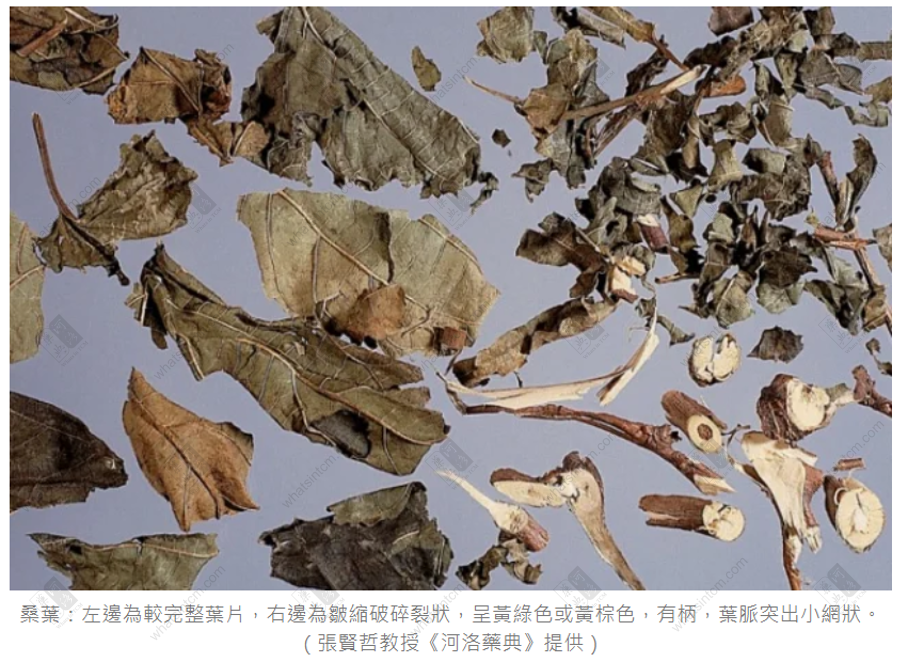
The dried mulberry leaf used as a medicinal ingredient is typically shriveled and fragmented. Whole leaves, when present, have a petiole, and when unfolded, are broadly ovate. They measure 8-15 cm long and 7-13 cm wide, with an acuminate apex, and a truncate, rounded, or cordate base. The margin is usually serrated or obtusely serrated, with irregular lobes. The upper surface of the leaf is yellowish-green, while the lower surface is slightly lighter in color. The veins are prominent and sparsely hairy, with tufts of hair at the vein bases. The texture is brittle, with a faint smell and a slightly bitter and astringent taste. While misidentification is less common, poplar leaves are sometimes found as substitutes. The primary distinguishing feature is the areolae, which are small areas enclosed by veinlets. Mulberry leaf have uniform areolae where the longitudinal and transverse diameters are nearly equal. In contrast, poplar leaves have areolae of varying shapes and sizes, with significant differences between their longitudinal and transverse diameters, allowing for differentiation. Additionally, mulberry leaves are harvested after frost, so their surface should be yellow or light yellow. If both sides are green, or if the leaves are dark, caution should be exercised.
A review of mulberry leaf research published in 2022 indicates that mulberry leaf has beneficial effects in areas such as antioxidation, blood glucose lowering, cholesterol reduction, weight loss, anti-inflammation, and anti-cancer (https://reurl.cc/RXY42D). In clinical TCM practice, it is commonly used for conditions such as wind-heat common cold or dizziness caused by excessive liver yang.
In summary, mulberry leaf is a relatively safe TCM ingredient or foodstuff when used in general dosages. Some countries have developed it into single-ingredient dietary supplements due to its beneficial effects on weight loss and blood glucose lowering. However, consumers should verify the source of raw materials when purchasing such products, ensure that their manufacturing processes comply with food hygiene and safety regulations, and finally, confirm the correct usage time and dosage to avoid exceeding the recommended amount, thereby ensuring safety.
“Taiwan Ching Guan No. 1 Concentrated Formula” contains ten medicinal ingredients, with mulberry leaf being one of them. The source of the medicinal materials must comply with the relevant regulations of the Ministry of Health and Welfare’s “Taiwan Herbal Pharmacopoeia.” In addition to testing for heavy metals such as arsenic, cadmium, mercury, and lead, sulfur dioxide testing is also conducted before they can be used as raw materials for TCM factories. Taiwanese TCM factories also comply with government regulations for pharmaceutical factories during manufacturing, with some even having obtained international pharmaceutical standards (PIC/S GMP). The compatibility of these ten TCMs is based on TCM’s syndrome differentiation and treatment principles, as well as the rules of TCM compatibility. These are supported by clinical trials and have been published in international journals for corroboration. Therefore, the public can use it with confidence.
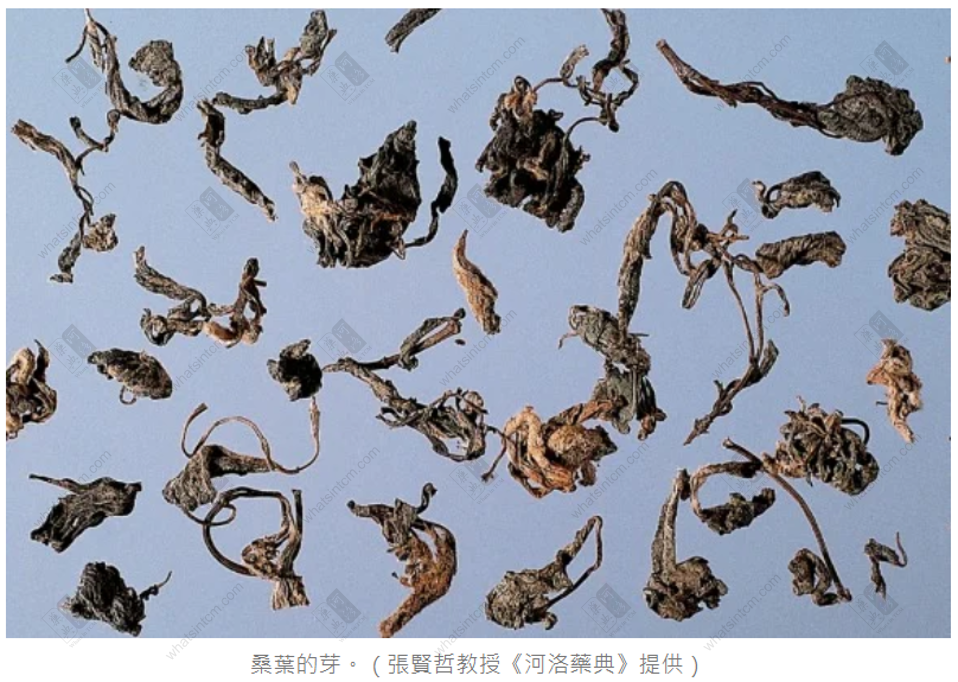
【Image provided by】Professor Chang Hsien-cheh, “Authentic Chinese Medicinal Material Atlas,” https://whatsintcm.com