



Da Huang (Rhubarb)
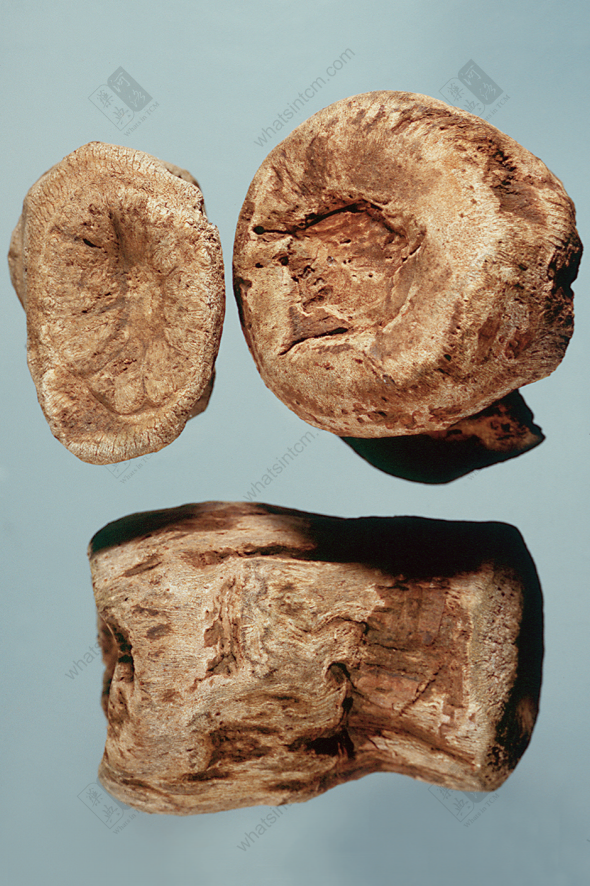 Brocade Pattern Da Huang (Conical lobed pieces, yellowish-brown-red)
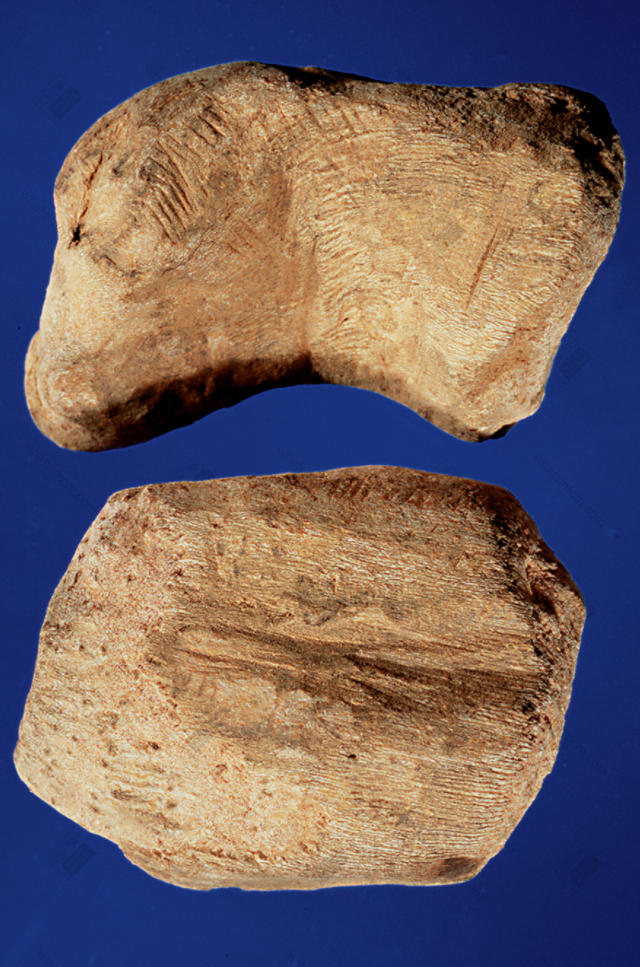 Brocade Pattern Da Huang (Dan Ji – Egg Shaped)
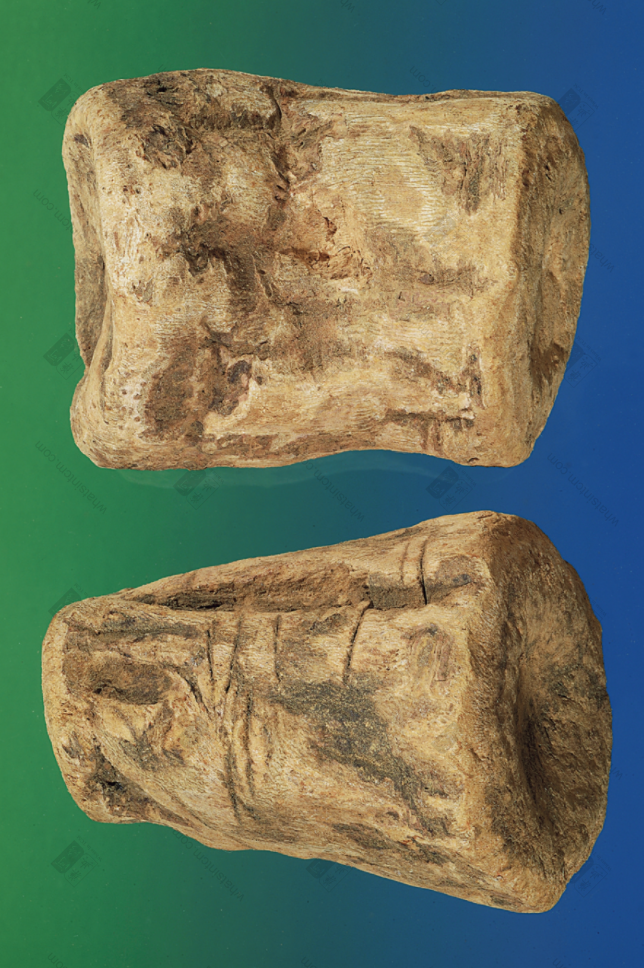 Gansu Brocade Pattern Da Huang
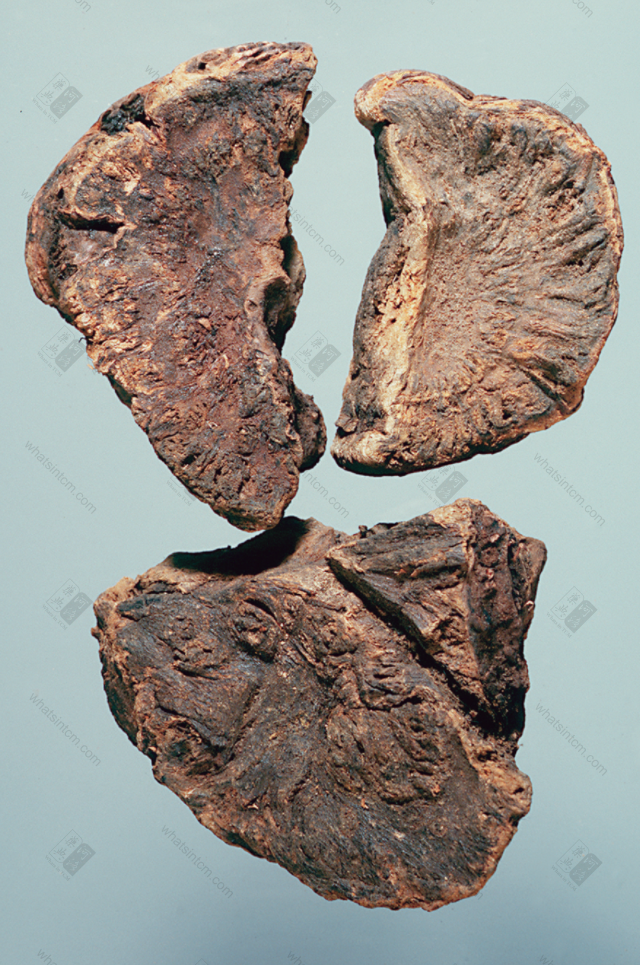 Horseshoe Da Huang (Pithy)
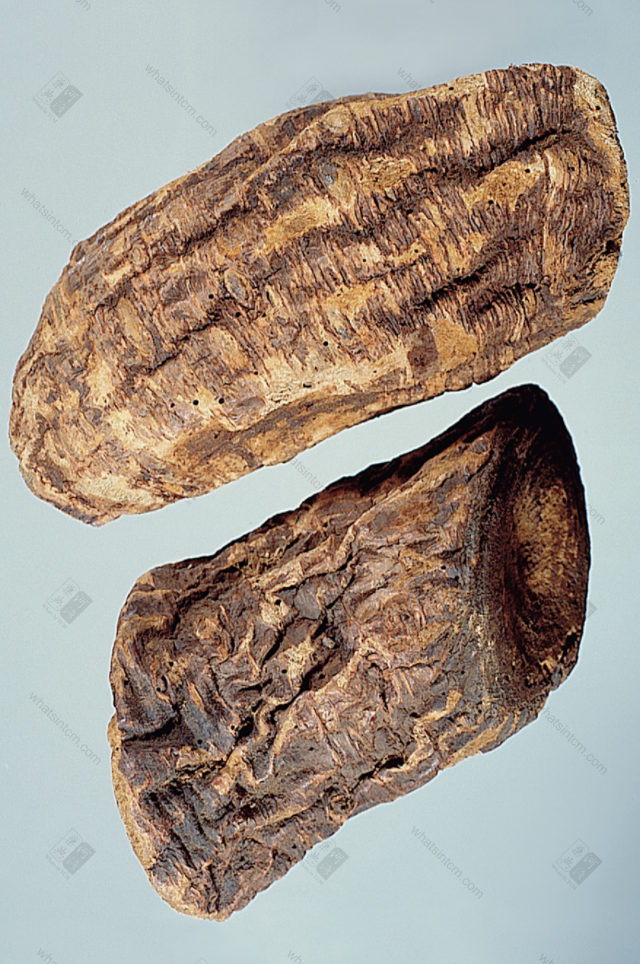 Ya Huang (Nine out of ten are pithy)
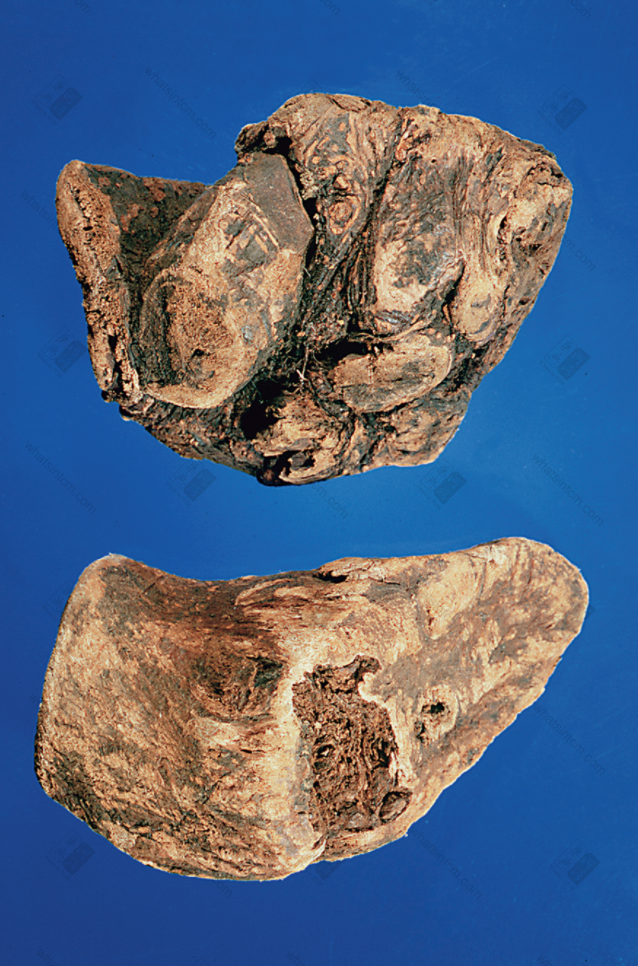 Ya Huang
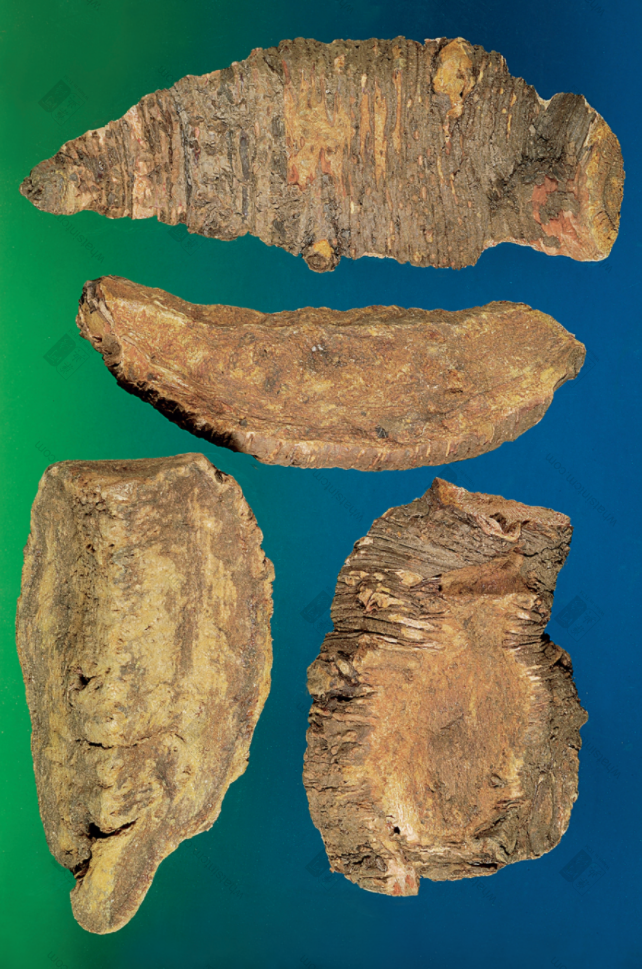 Xi Da Huang (Botanical name: Rheum tanguticum)
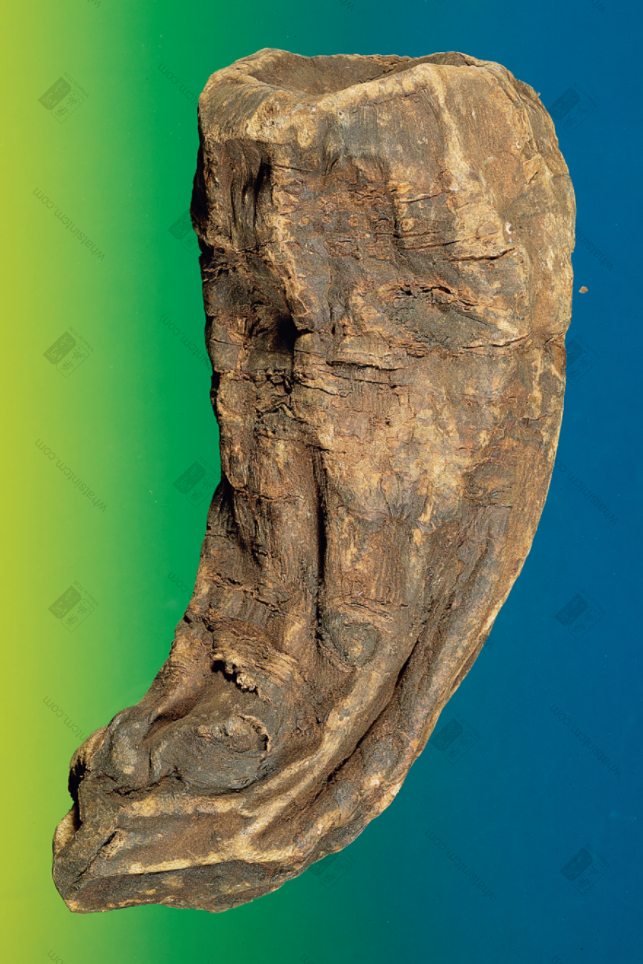 Xi Da Huang (Botanical name: Rheum palmatum)
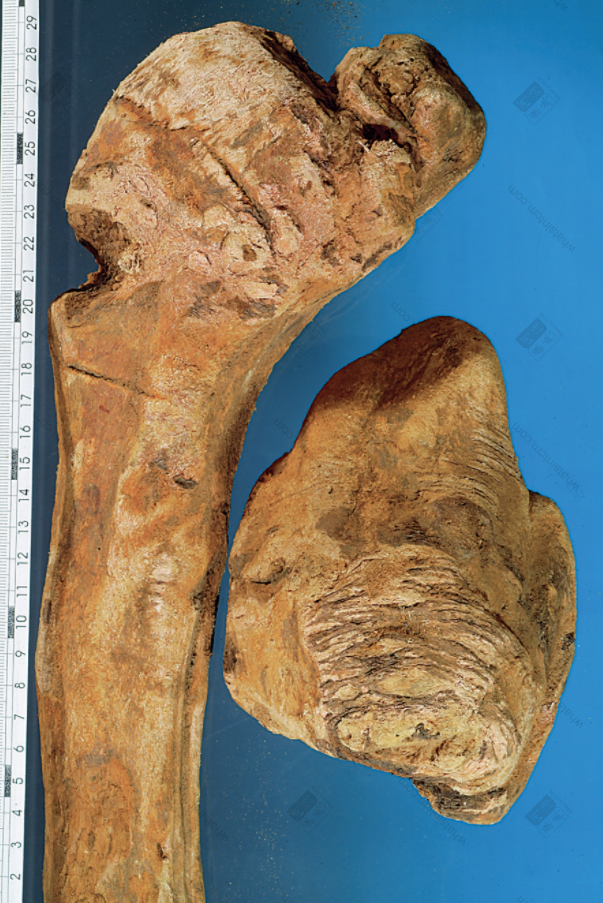 Chuan Da Huang
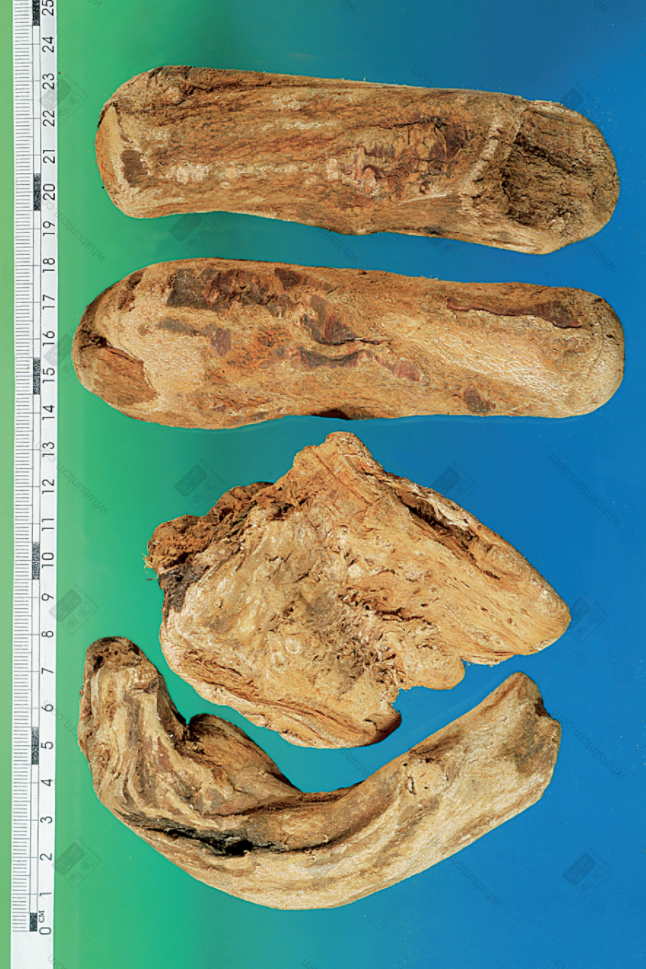 Chuan Da Huang
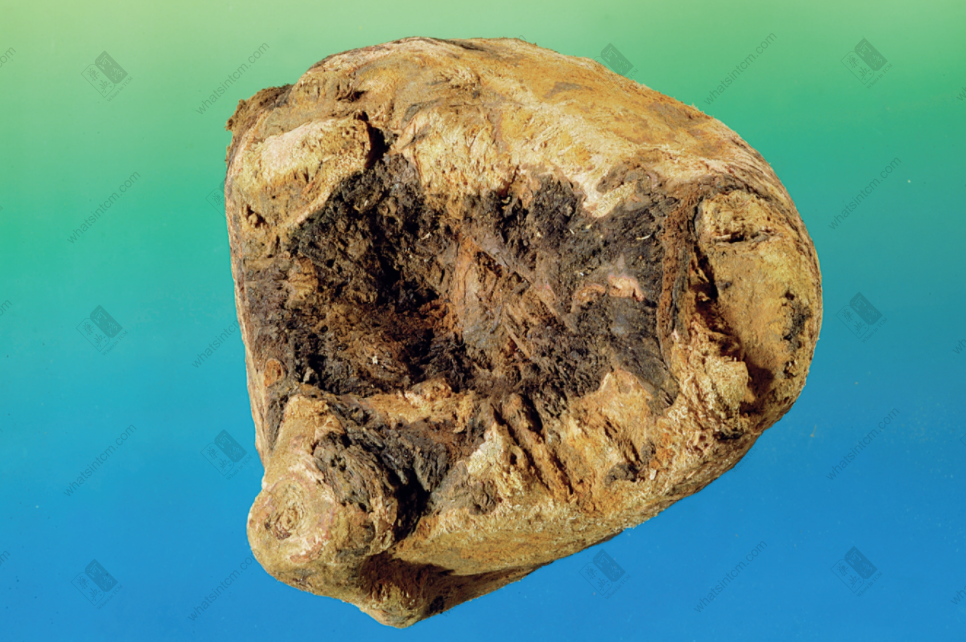 Da Huang Groove Pit
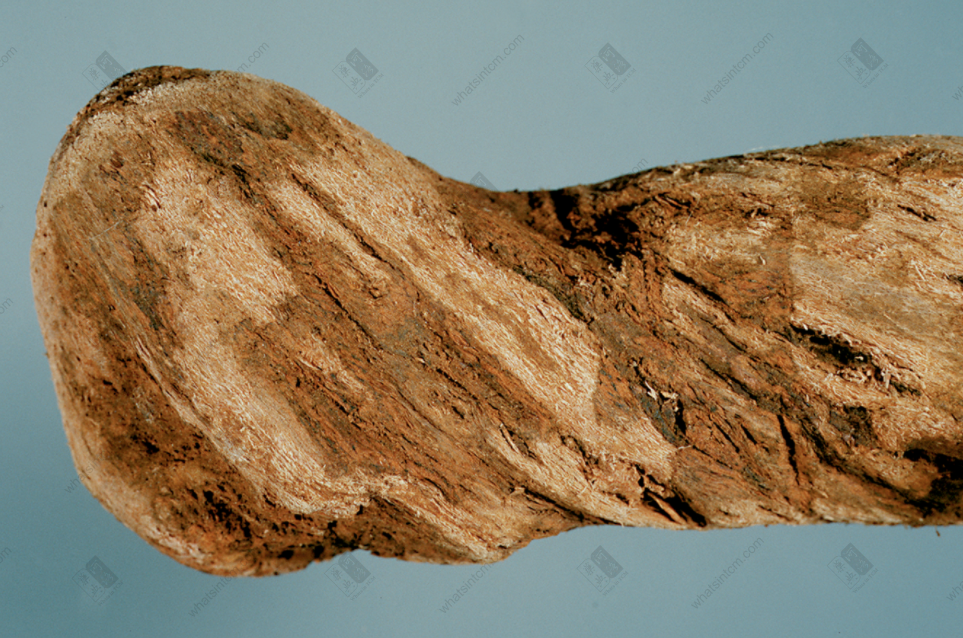 Chuan Da Huang
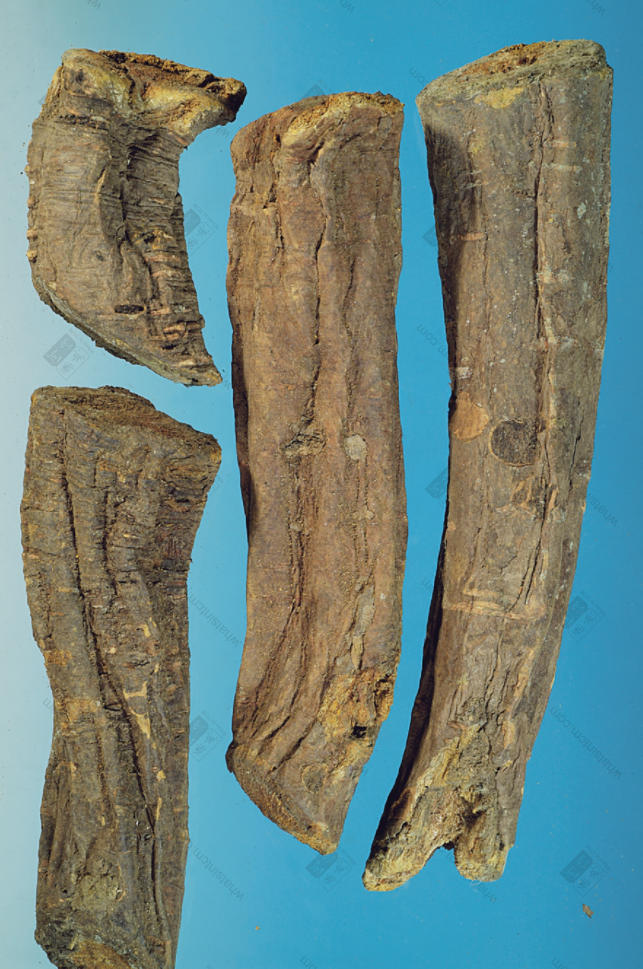 Sichuan Root Da Huang
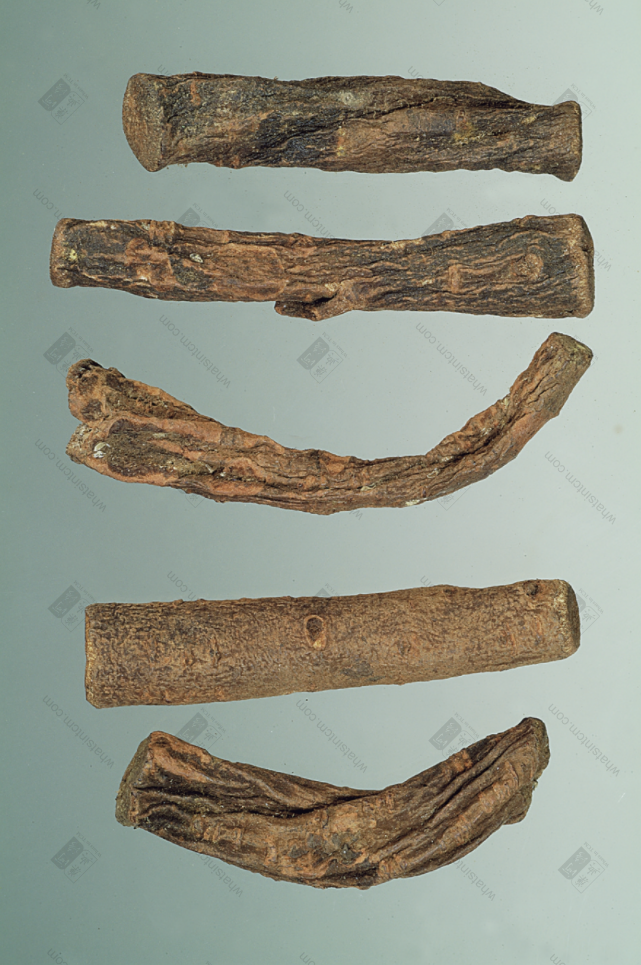 Water Root Da Huang (Small strips)
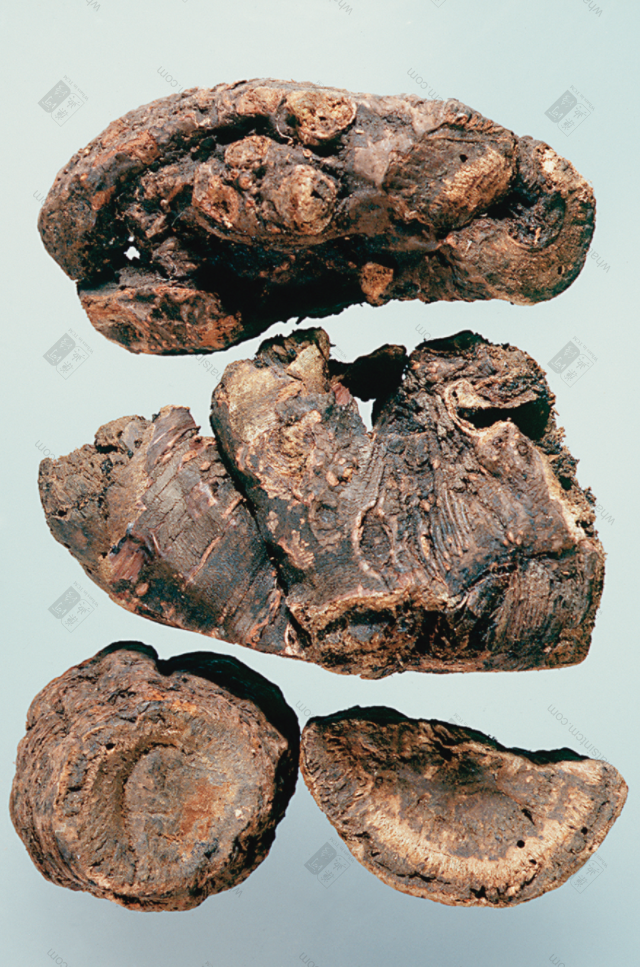 Substandard Da Huang
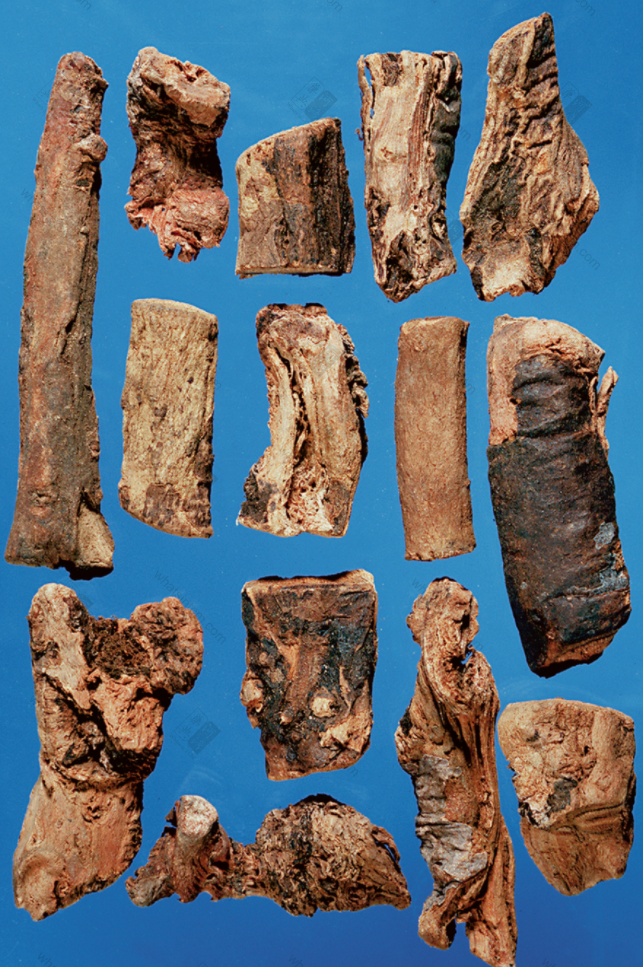 Zi Huang
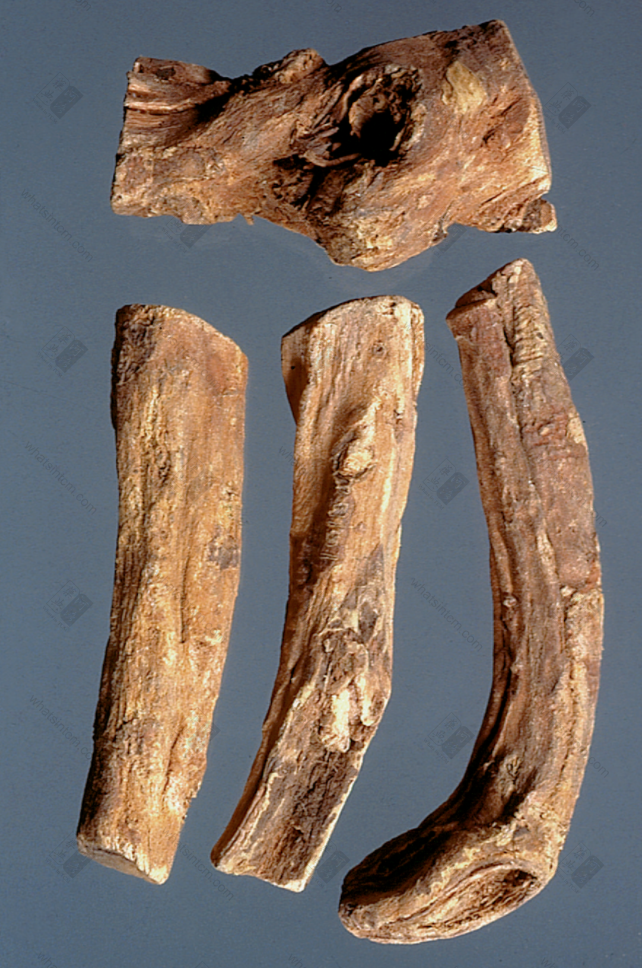 Jin Da Huang
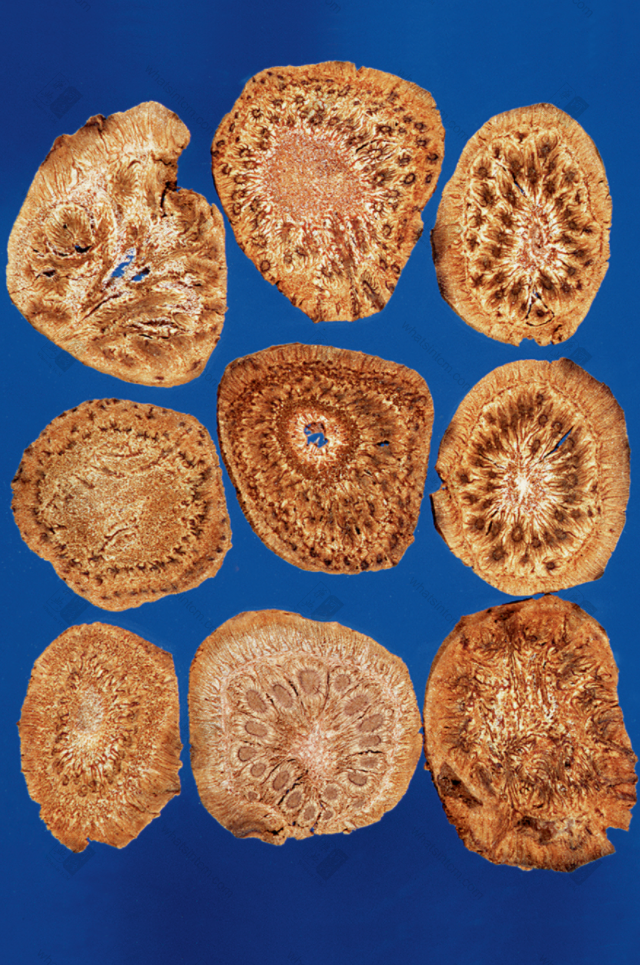 Brocade Pattern Da Huang Slices (Star spots)
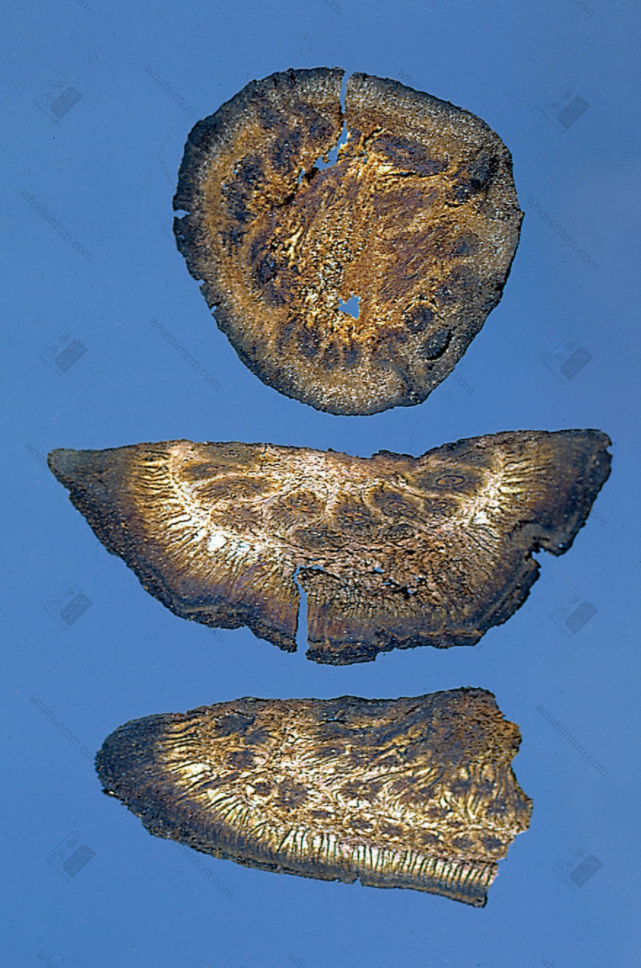 Brocade Pattern Da Huang Slices
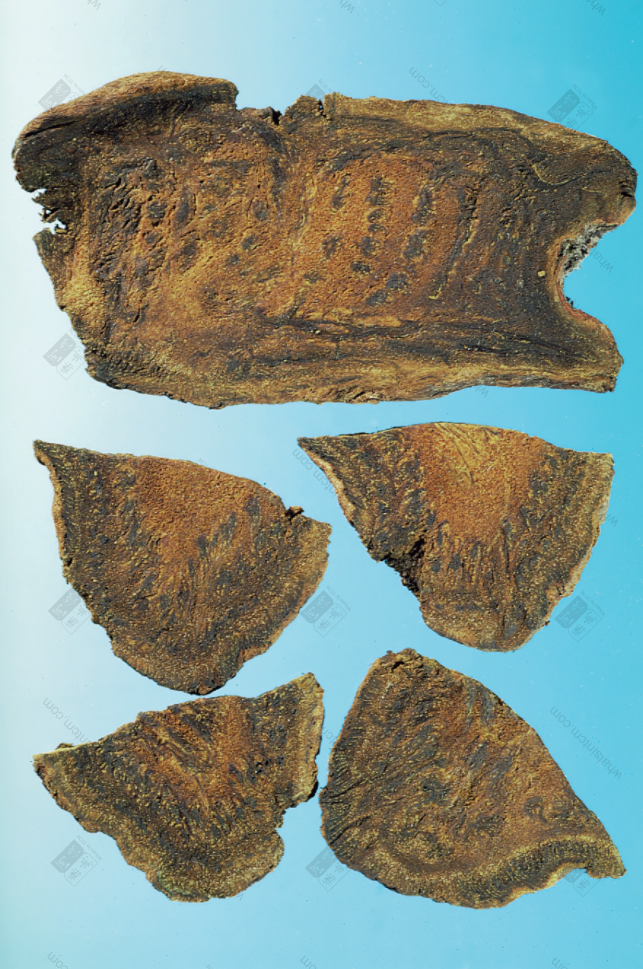 Gansu Brocade Pattern Da Huang Slices
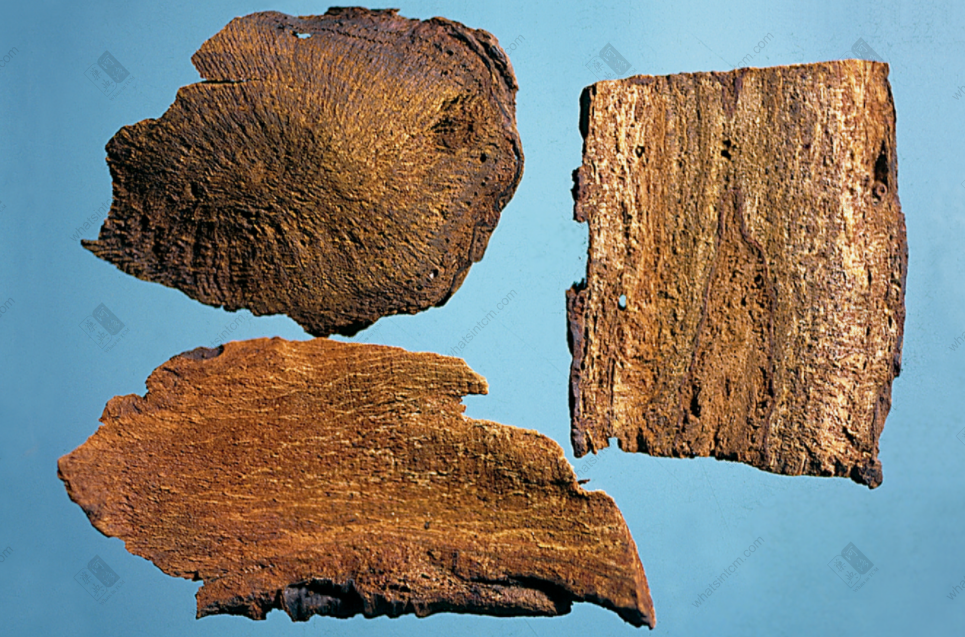 Chuan Da Huang Slices
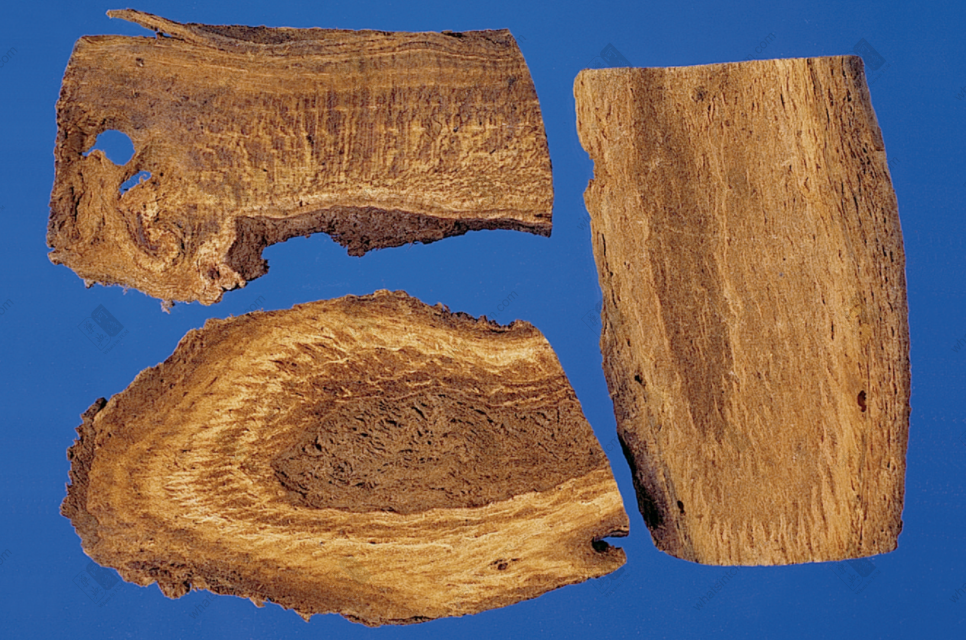 Chuan Da Huang Slices
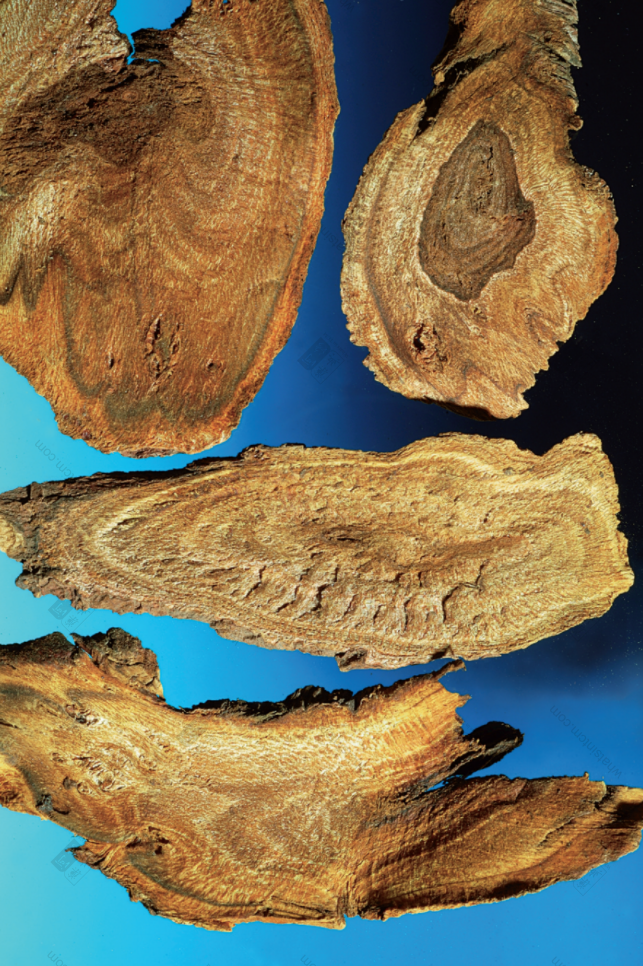 Da Huang Slices (Gritty when chewed, sticky, bitter, radial pattern)
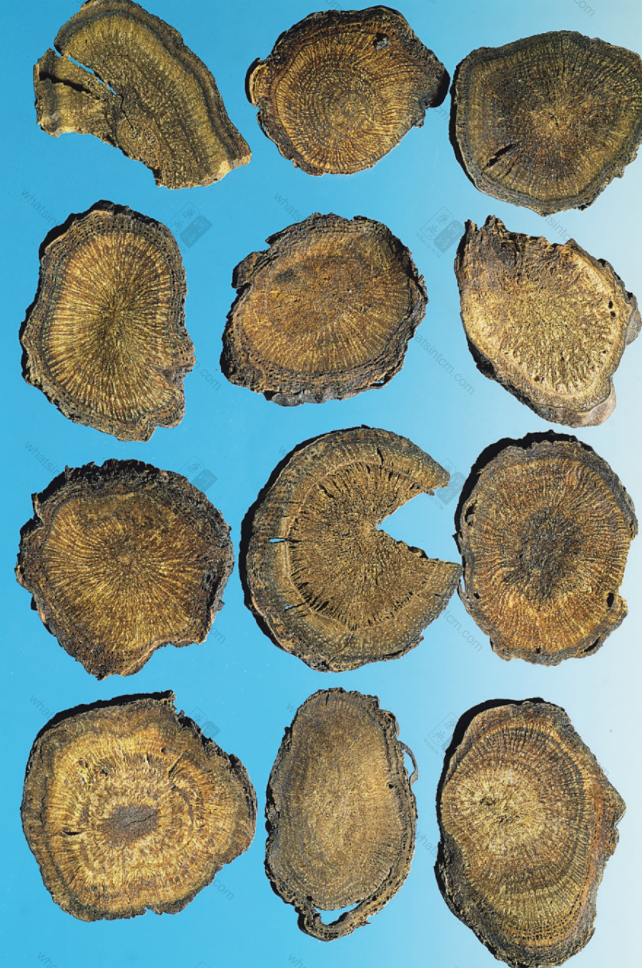 Wine-Prepared Da Huang
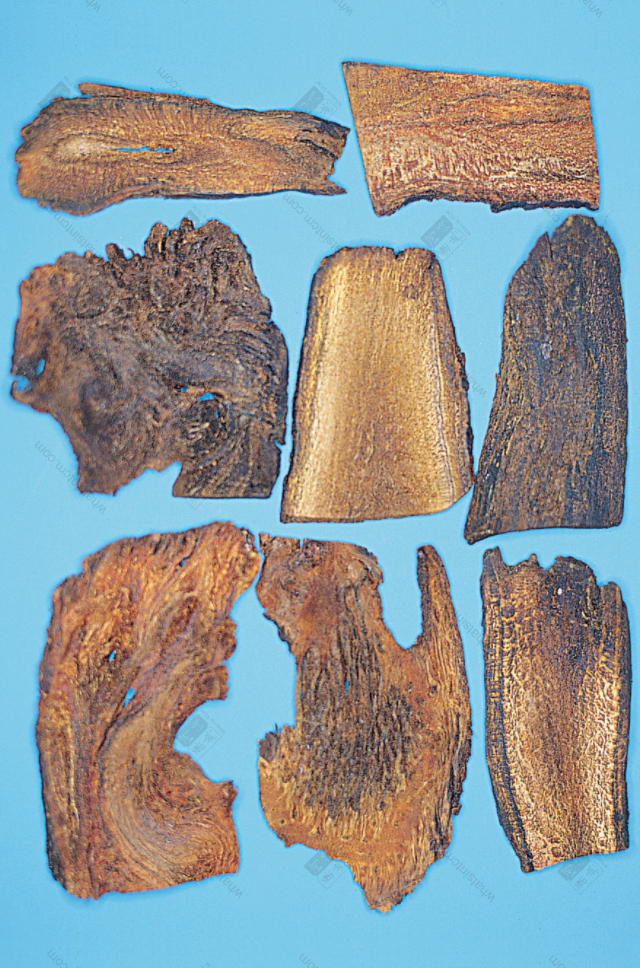 Wine-Processed Da Huang
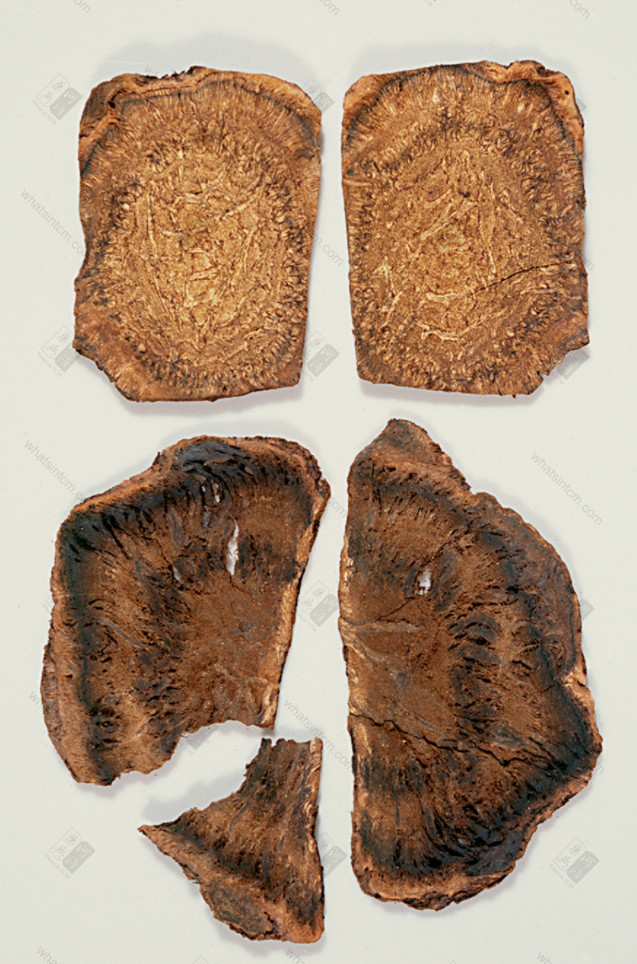 Wine-Washed and Wine-Fried Da Huang Slices
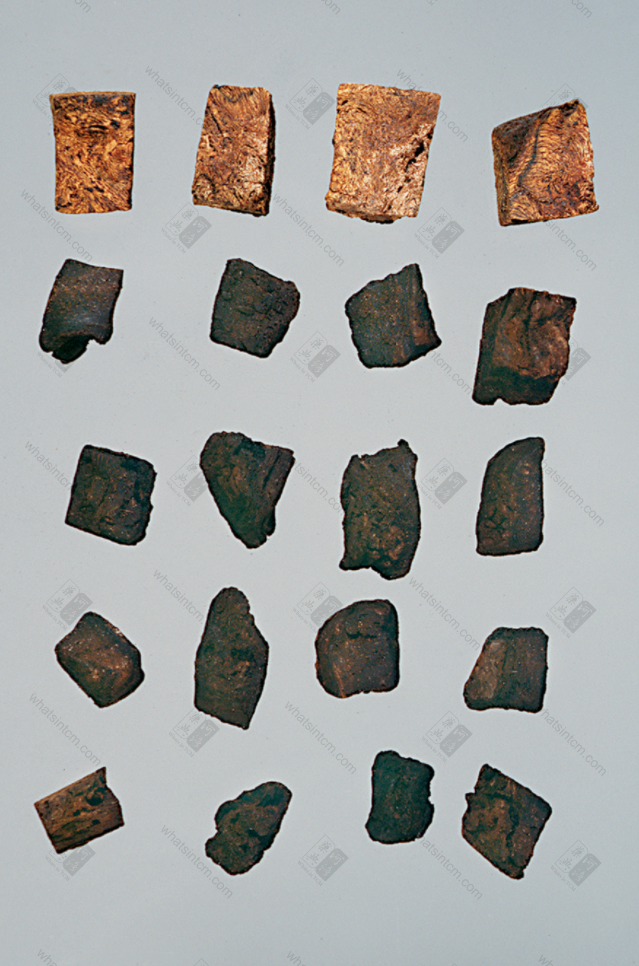 Wine-Steamed Da Huang Slices (The upper 4 are not steamed)
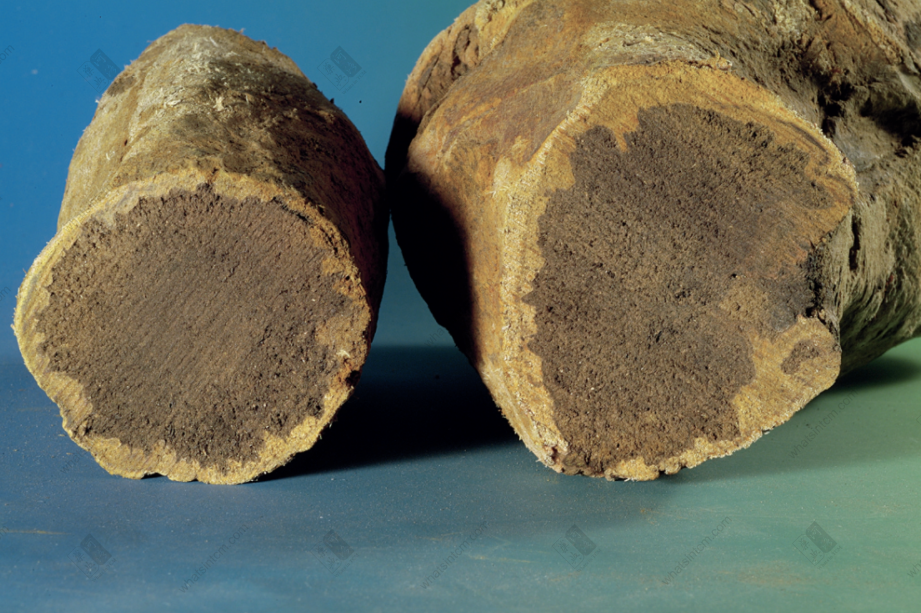 Substandard Da Huang
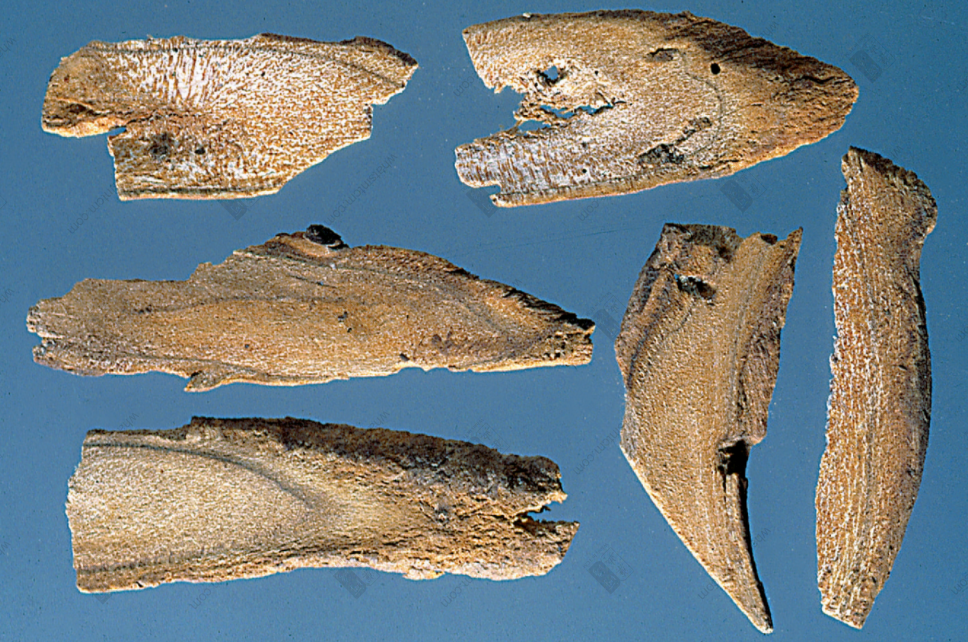 Jin Da Huang Slices
【Naming】
【Source】
Lower Grade in the Shen Nong Ben Cao Jing (Divine Farmer’s Materia Medica)
【Common Use Level】
A
【Botanical Origin】
The roots and rhizomes of Rheum palmatum L., Rheum tanguticum Maxim. ex Balf., or Rheum officinale Baill. of the Polygonaceae family. The first two are commonly called Xi Da Huang (Western Rhubarb), and the latter is commonly called Nan Da Huang (Southern Rhubarb) or Ya Huang.
【Characteristics】
(1) Xi Da Huang (Western Rhubarb): From Rheum palmatum and Rheum tanguticum. Mostly processed into oval, conical, or dumbbell shapes, or irregular short cylindrical shapes, about 5-17cm long and 3-10cm in diameter. The outer skin has been removed, and the outer surface is yellowish-brown. Whitish-rhomboid reticular patterns can be seen, commonly known as “brocade pattern” or “betel nut pattern”. Sometimes chrysanthemum-shaped spiral “star spots” of vascular bundles can be seen. One end often has a rope hole. The texture is hard, the cross-section is yellowish-brown, granular (commonly known as sorghum residue), slightly oily, and sometimes a dark-colored cambium and radial orange-red rays can be seen near the periphery. In the medulla, there are purplish-brown star spots, closely arranged in a ring, and yellow to brownish-red curved lines, also known as “brocade pattern (betel nut pattern)”. It has a special, clear fragrance, and a bitter and slightly astringent taste.
(2) Nan Da Huang (Southern Rhubarb), Ya Huang: Also known as Sichuan Da Huang, Horseshoe Da Huang. From the rhizomes of Rheum officinale. Mostly transversely cut into sections, with one end slightly larger, shaped like a horseshoe. A few are also conical or dumbbell-shaped, about 6-12cm long and 5-8cm in diameter, with the cork layer removed. The cross-section is yellowish-brown, mostly porous, with larger, irregularly arranged star spots. The texture is relatively loose and rich in fiber. Ya Huang is large and light, while Nan Huang is small and firm. The aroma is weaker, bitter and slightly astringent.
Processed slices are round or semi-circular, or irregular oval, 4-6cm in diameter, 2-4cm thick. Those with the rough skin scraped off are yellow or reddish-brown, with whitish reticular patterns or chrysanthemum-shaped star spots. Those with the outer skin not scraped off are brownish-brown, with nodular protuberances on the surface, with transverse and longitudinal wrinkles. The texture is firm, sometimes the center is softer. The cross-section shows star-shaped brocade patterns and is slightly oily. The aroma is clear and special, and the taste is bitter and astringent. Wine-Prepared Da Huang: yellowish-brown or blackish-brown. Cooked Da Huang, Da Huang Charcoal: black.
【Processing】
1. Raw Da Huang 2. Wine Da Huang 3. Wine-Washed Da Huang 4. Cooked Da Huang 5. Da Huang Charcoal 6. Vinegar Da Huang 7. Qing Ning Pian (a specific Da Huang preparation)
【Identification】
Xin Xiu Ben Cao (Newly Revised Materia Medica): “Dry slightly in the sun, then string and air dry until it is best.”
Zheng Lei Ben Cao (Classified Materia Medica): “The one with brocade pattern from Sichuan is the best,” “The one dried in the shade from Western Sichuan is superior.”
Ben Cao Pin Hui Jing Yao (Essential Compendium of Materia Medica): “The root with brocade pattern is the best.”
Chi Shui Xuan Zhu Quan Ji (Complete Collection of Scarlet Water Mysterious Pearl): “Chuan Da Huang must have brocade pattern to be considered good.”
Pao Zhi Quan Shu (Complete Book of Processing): “The one with purple-ground brocade pattern is the best.”
Yao Zheng (Medicinal Symptoms): “The one that is yellow and moist is good.”
Liang Lie Jian Bie (Discernment of Good and Bad): “The one with oblique lines and tendons, and dry, is of good quality.”
It is best if it is dry, solid, has a brocade pattern, has a clear fragrance, and a bitter but not astringent taste. Those with dark or “pithy” heart are second best. Generally, large ones are often pithy, as the saying goes, “Nine out of ten large ones are pithy”, because excessive water is not easy to evaporate, and they are easily frozen and become pithy, which is not easily seen from the outside. If the goods have very deep corrugations, with both ends recessed and the outside showing yellow, they are mostly good goods; if the body is round without corrugations, and the ends are not round, and the outside is black instead of yellow, then it is already pithy. Generally, the one that is light or heavy is considered good. If it is too heavy, it is mostly iron filings, and if it is too light, then nine out of ten are pithy. Generally, wild ones are of the best quality, with fine outer surface, solid and brittle texture, yellowish-brown outer color, and a betel nut pattern inside, with cinnabar spots, and the older the better. Cultivated Da Huang has a coarse outer pattern, loose texture, light yellow outer color, and although the inner color also has a betel nut pattern, it has white spots.
【Identification Terminology】
1. Chuan Jun: Sichuan Da Huang, another name for Rheum officinale.
2. Zhong Ji: A processing specification, referring to the longer Da Huang cut into sections, which are larger.
3. Pian Ji: A processing specification, referring to the one cut into vertical slices.
4. Star Spots: Scattered dark brown abnormal vascular bundles on the cross-section of the Da Huang rhizome, like star-shaped patterns. They are produced by secondary meristematic tissue formed by medullary cells. The cambium of each abnormal vascular bundle is ring-shaped, with phloem in the center, sometimes mucilage cavities can be seen near the cambium, the outer side is xylem, and the rays are dark brown, radiating in a starburst shape. Parenchymal cells contain a large amount of starch grains and calcium oxalate druses, commonly known as “betel nut pattern”, “cinnabar spots” or “brocade pattern”, referring to the abnormal vascular bundles and dark brown rays. The commonly used Da Huang can be distinguished according to the number and arrangement of abnormal vascular bundles.
5. Horseshoe Da Huang: Processed Da Huang is cut into the shape of a horseshoe.
6. Sorghum Residue: A figurative description of the fractured surface of Da Huang. Da Huang has a firm texture and is not easy to break. After breaking, the cross-section is yellowish-brown, showing granularity, and is reddish-brown, commonly known as sorghum residue.
7. Liang Huang: Liangzhou Da Huang, a processing specification. It is unprocessed, unpeeled raw Da Huang, shaped like a dog’s head, hence the name Dog Head Da Huang.
8. Dan Ji Pian: A processing specification, referring to Xining Da Huang cut into slices.
9. Dan Ji: A processing specification, referring to Xining Da Huang. Its characteristics are that it is processed into an egg shape, heavy and firm, with betel nut pattern cinnabar spots, and many brocade patterns.
10. Brocade Pattern (Betel Nut Residue, Betel Nut Pattern, Betel Nut Pattern): On the cross-section of Da Huang, especially in the medulla tissue, there are many star spots and yellow and brownish-red textures, interwoven to form a brocade-like pattern. This cross-section has red flesh and white tendons, clear and not messy, showing betel nut-like stripes.
11. Pithy Heart: The yellowish-green, large, and decayed medulla of Nan Da Huang (Horseshoe Da Huang).
12. Pithy Crack: After Da Huang is dried on a kang (heated brick bed), its center shows a grayish-brown withered pithy state, with a light and fluffy texture, commonly known as pithy crack.
13. Su Ji: A processing specification, referring to Da Huang slices with a smaller shape.
【Category】
Rhizomes