



Glehnia Root
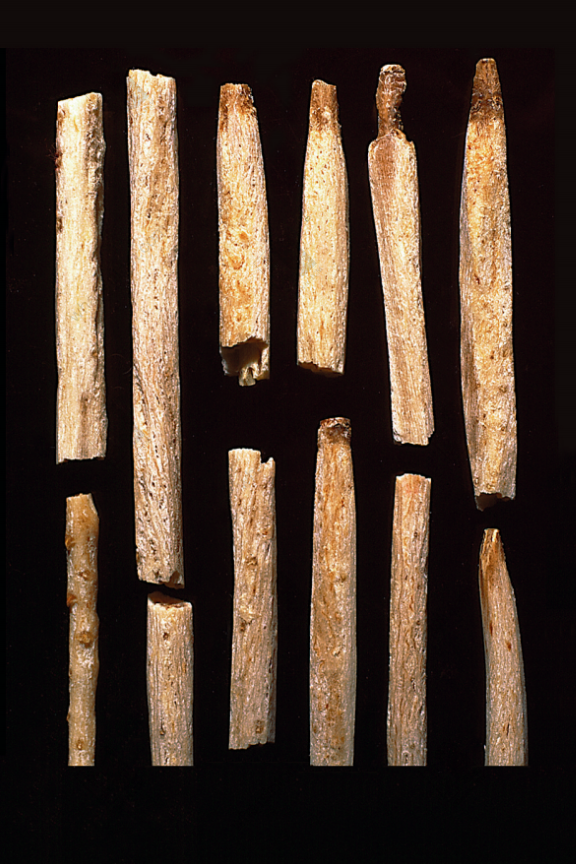
North Glehnia Root(Gelatinized and horny, yellowish-white woody core)
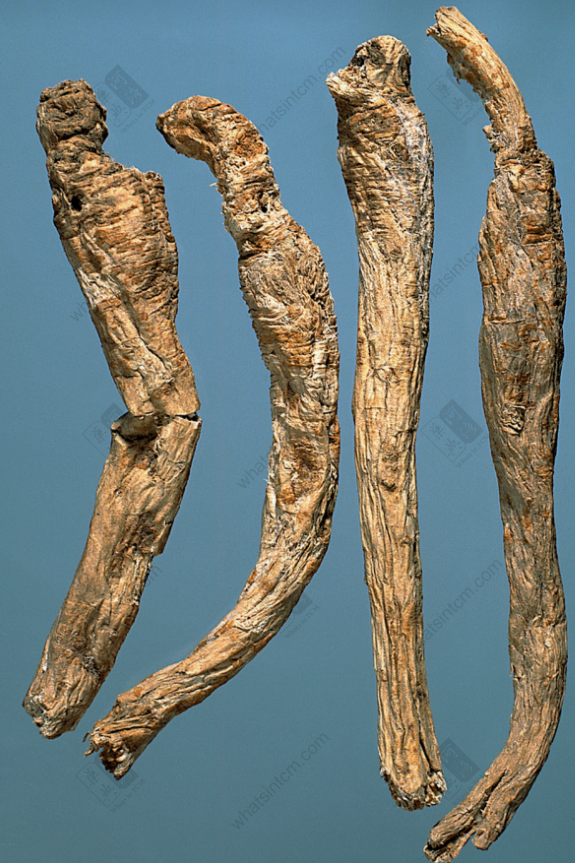
South Glehnia Root(Spiral pattern)(Conical and curved, whitish-brownish-yellow, indented, easily foamed)
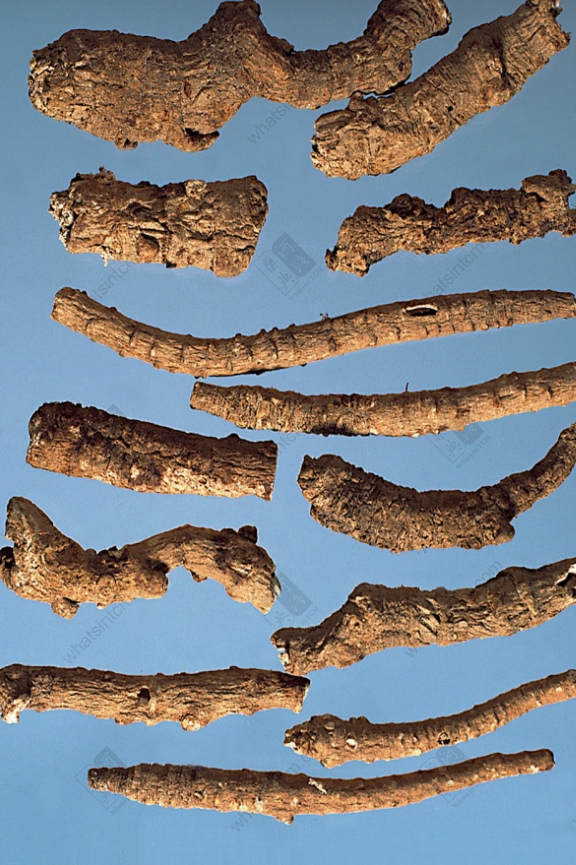
South Glehnia Root(Easily broken, many fissures)
【Name】
【Source】
Shen Nong’s Herbal Classic, Superior Class
【Botanical Origin】
North Glehnia Root is the root of the umbelliferous plant Glehnia littoralis Fr. Schm. ex Miq. South Glehnia Root is the root of the campanulaceous plant Adenophora tetraphylla (Thunb.) Fisch., Adenophora stricta Miq., or other species of the same genus.
【Characteristics】
(1) North Glehnia Root: It is slender cylindrical or strip-shaped, thinner at both ends, rarely branched, 15~30 cm long, 3~8 mm in diameter. The outer surface is light yellow, rough, with longitudinal lines and residual brownish-yellow cork. It is hard and brittle, and the horny texture is easily broken.
The processed product is in small segments or thinly sliced cross-sections. The cut surface is yellowish-white, with a distinct cambium ring that is brown. The cortex has small reddish-brown dots, and the wood is yellow and hollow. It has a faint odor and a sweet taste.
(2) South Glehnia Root: It is long spindle-shaped or cylindrical, thicker at the top and thinner at the bottom, sometimes slightly curved or twisted, and occasionally branched, with a total length of 5~25 cm. The top has a rhizome (reed head) 0.5~10 cm long and 1~2 cm in diameter, with significant transverse lines. The surface of the skinned one is yellowish-white to brown, with transverse spiral lines, especially on the upper part. The surface of the peeled one is yellowish-white, with longitudinal wrinkles. The body is light and loose in texture and easily broken.
The processed product is cut into circular or elliptical thin slices, about 4 mm thick, with irregular wavy edges. The cut surface is off-white, uneven, with many fissures, resembling a sponge. After being honey-fried, it is yellowish-brown. It is odorless, sweet, and slightly bitter.
【Identification】
《Zheng Lei Ben Cao》: “The one that is centered, upright, white, and solid is good.”
《Ben Cao Pin Hui Jing Yao》: “The root that is firm and solid is good.”
《Ben Cao Bei Yao》: “Resembles Ginseng but is light in body; the one that is loose, white, and solid is good. The one that grows in sandy soil is long and large, and the one that grows in loess soil is thin and small.”
《Ben Cao Jian Yao Fang》: “The one produced in the northern region is good.”
1. North Glehnia Root: The best ones are those with slender and long roots, cylindrical shape, no large head, uniform white color, clean outer skin, smooth surface, glutinous body, and firm texture. The ones that are too thick and short or uneven in thickness, yellow in color, rough outer skin, and loose in texture are second-rate.
2. South Glehnia Root: The best ones are those with roots of medium and uniform thickness, the ones that are too thick are spongy and easily broken, and the ones that are too thin are lean and shriveled. The body is firm, the color is white, there is no rough skin, the taste is not bitter, and the taste is sweet.
【Identification Terminology】
1. Fissures: Fissures formed by the desiccation and wrinkling of ray cells and parenchyma cells, such as those in South Glehnia Root.
2. Spiral pattern: Refers to the spiral ring pattern on the surface of roots and rhizomes, such as in South Glehnia Root.
3. Spongy and loose: Light and loose in texture, such as South Glehnia Root.
【Category】
Roots