



Huang Lian (Coptis Rhizome)
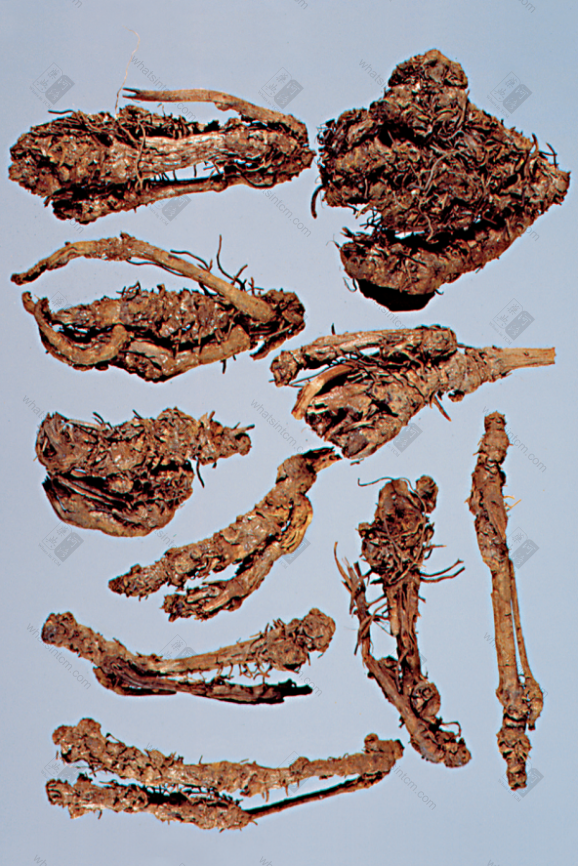
Chicken Claw Coptis (clustered, chicken claw-like, scaly leaves)
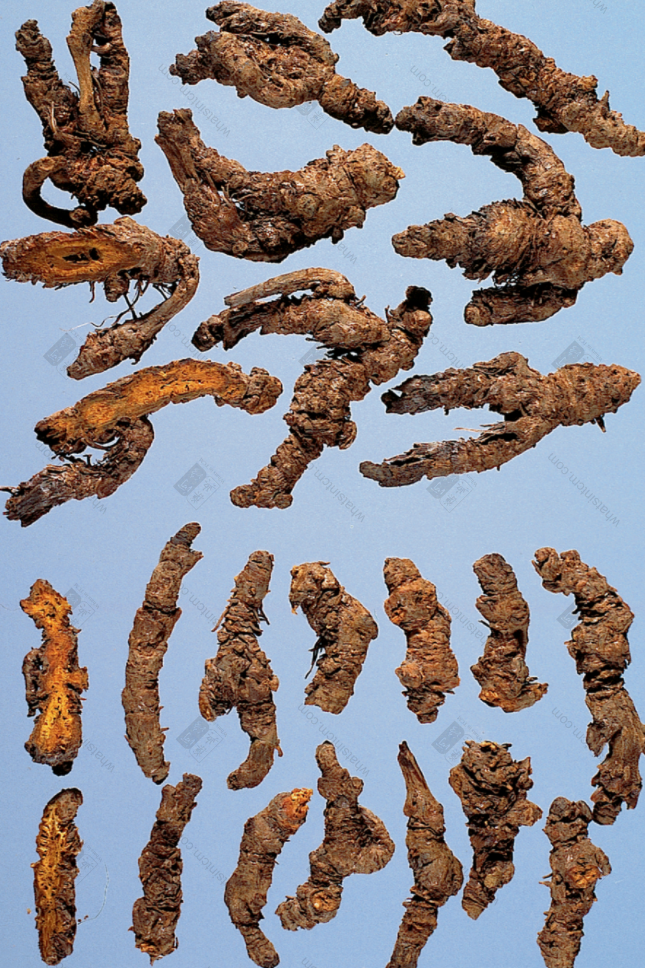
Second Grade Chicken Claw Coptis (top), Bei’an Coptis (bottom)
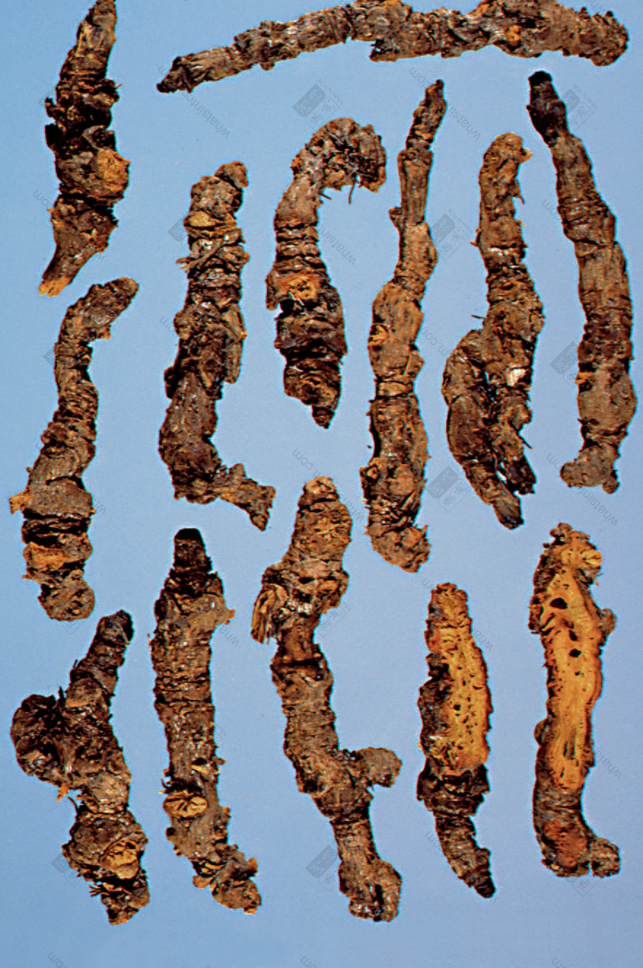
First Grade Ya Coptis (single branch)
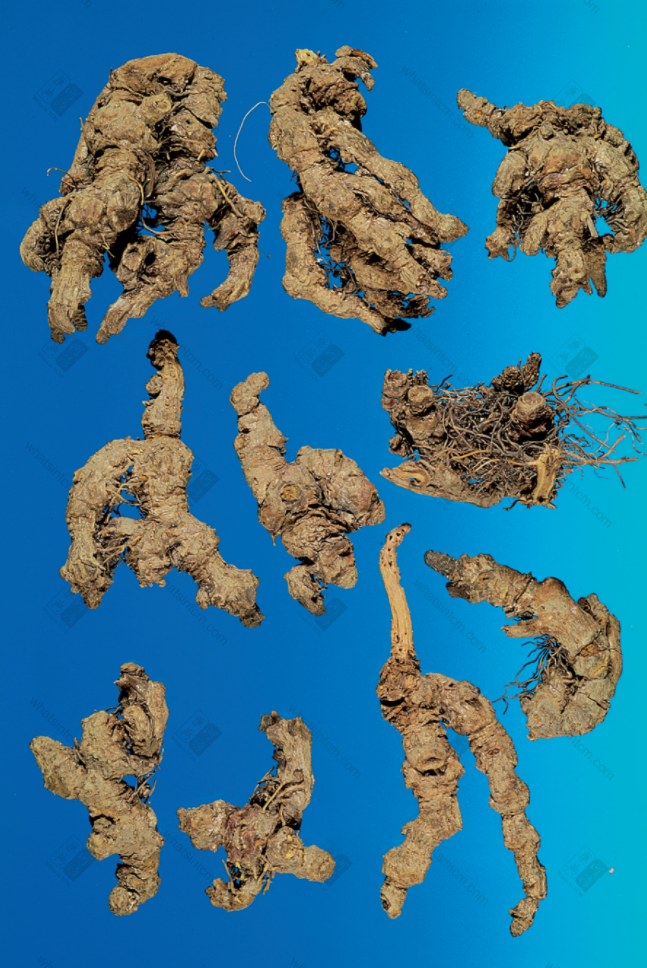
Ya Coptis (cultivated)
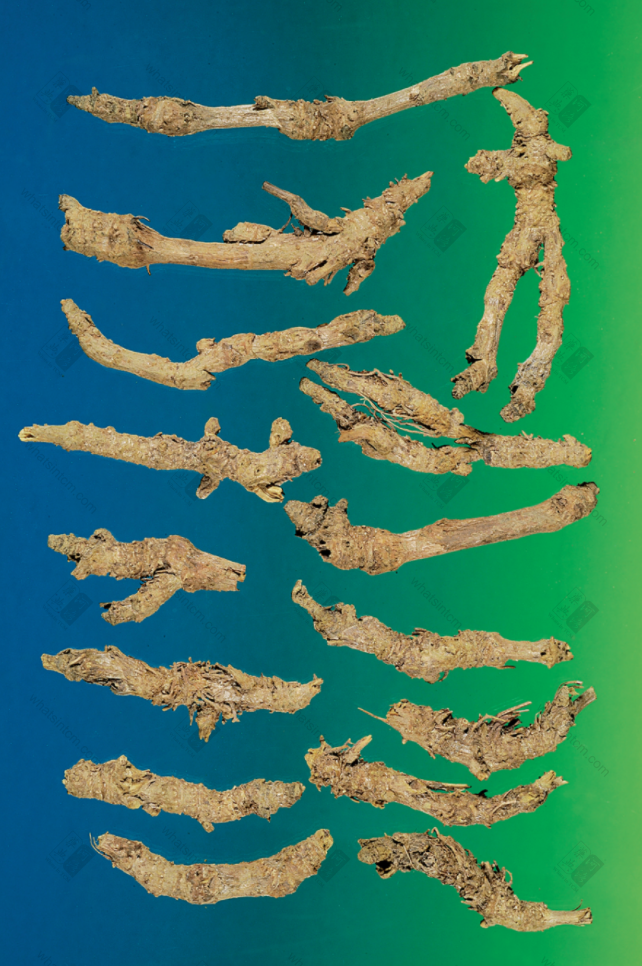
Triangular Leaf Huang Lian (Coptis) (plant name, cultivated in Sichuan)
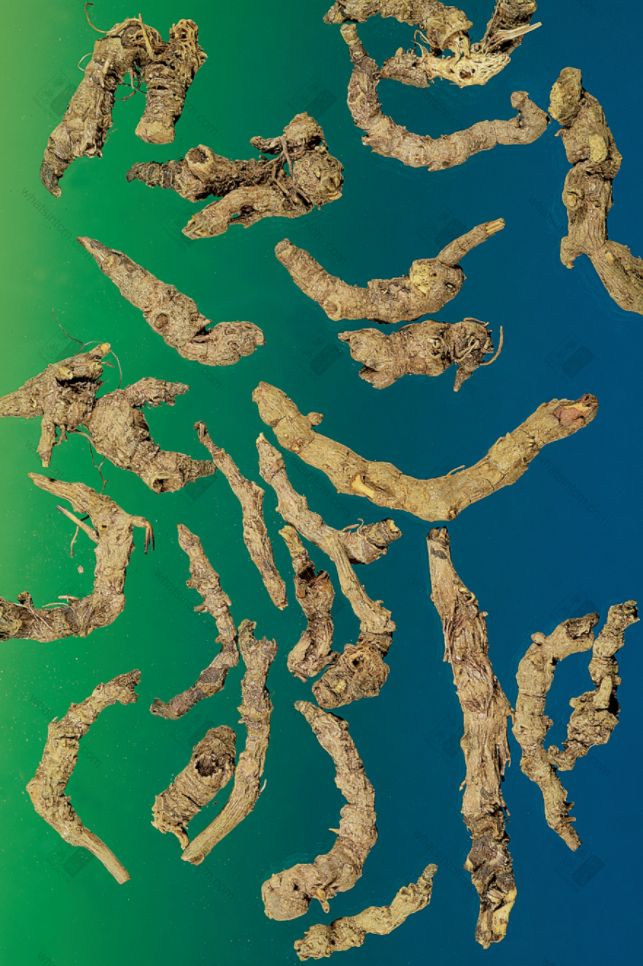
Yun Coptis (small, curved hooks)
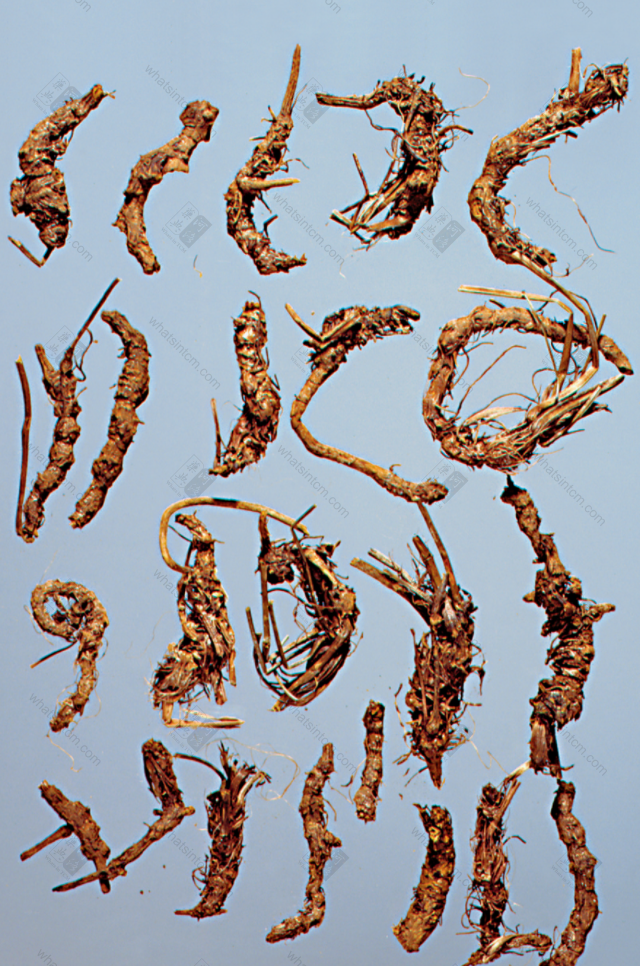
Yun Coptis
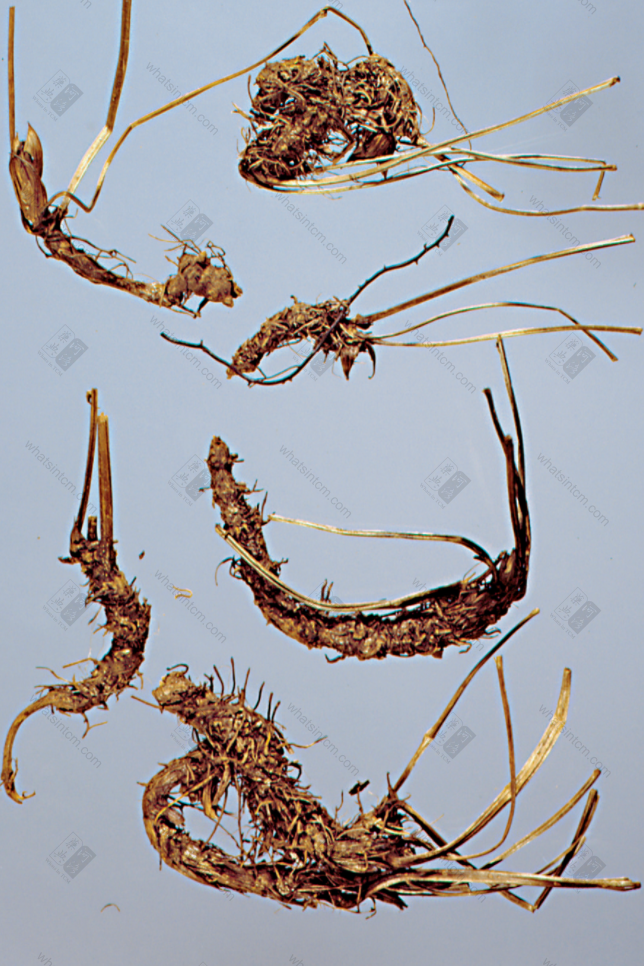
Emei Wild Coptis (retaining a section of petiole)
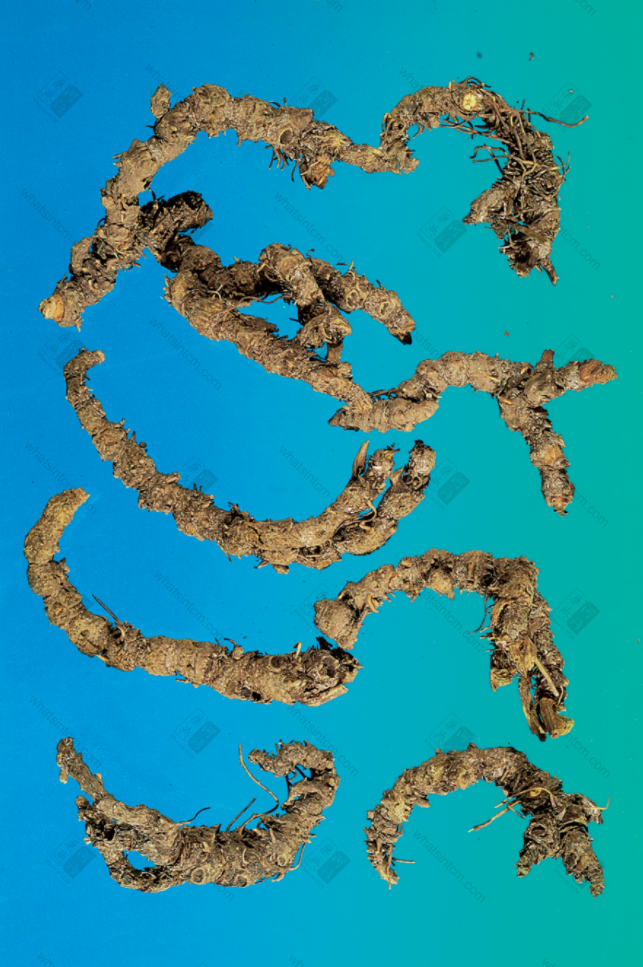
Emei Wild Coptis
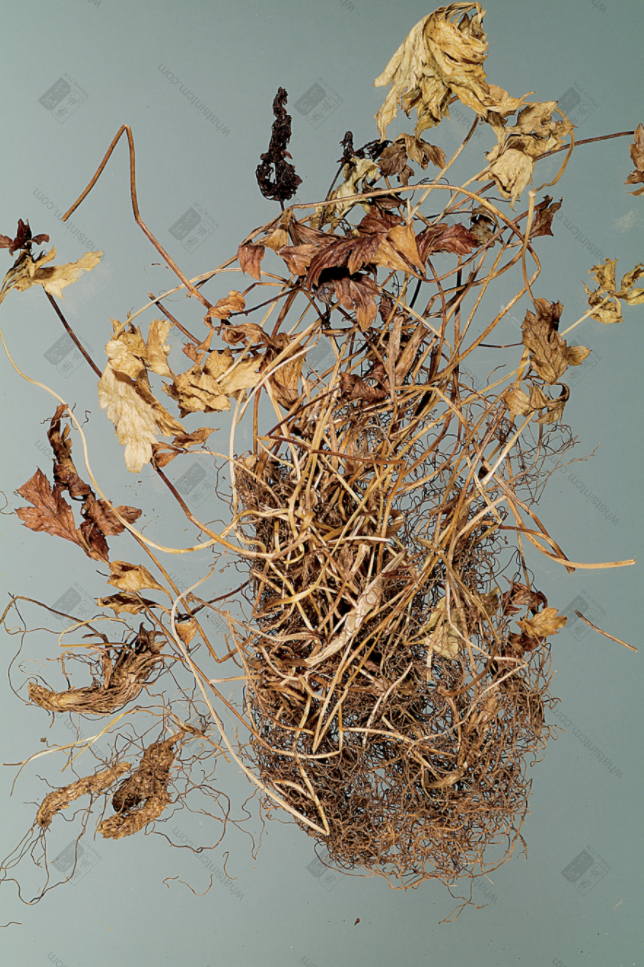
Whole Plant of Huang Lian (Coptis)
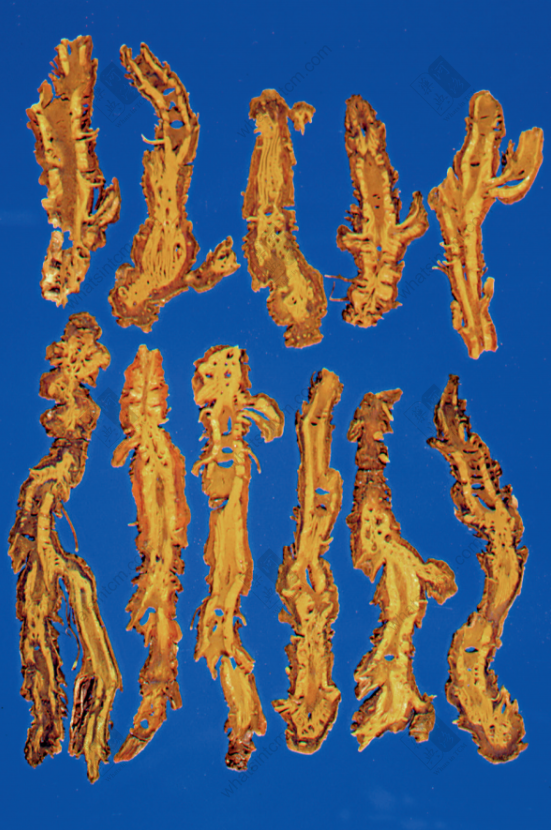
Huang Lian (Coptis) Slices (yellow, radial texture, bitter)
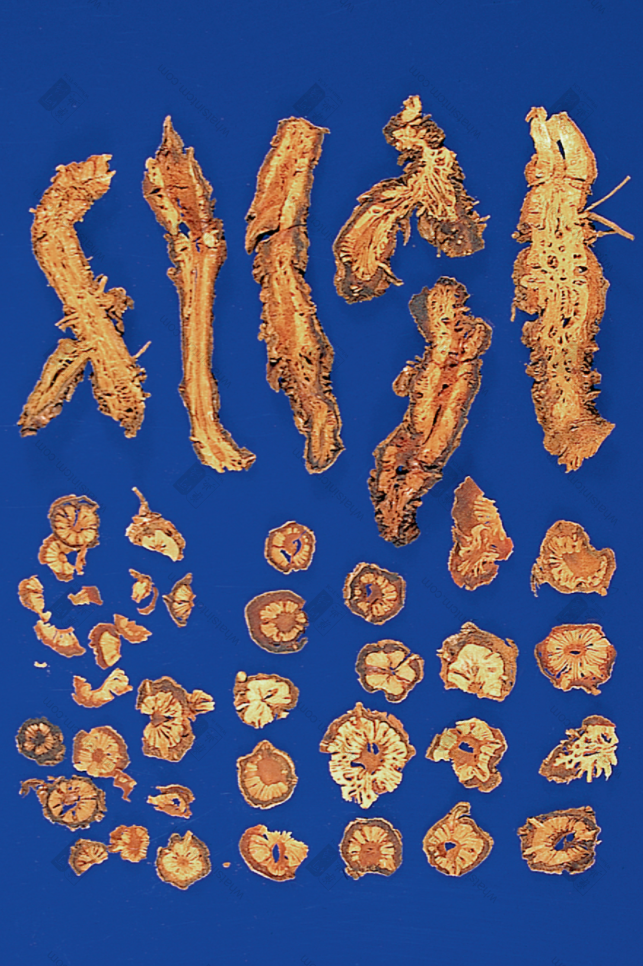
Huang Lian (Coptis) Slices
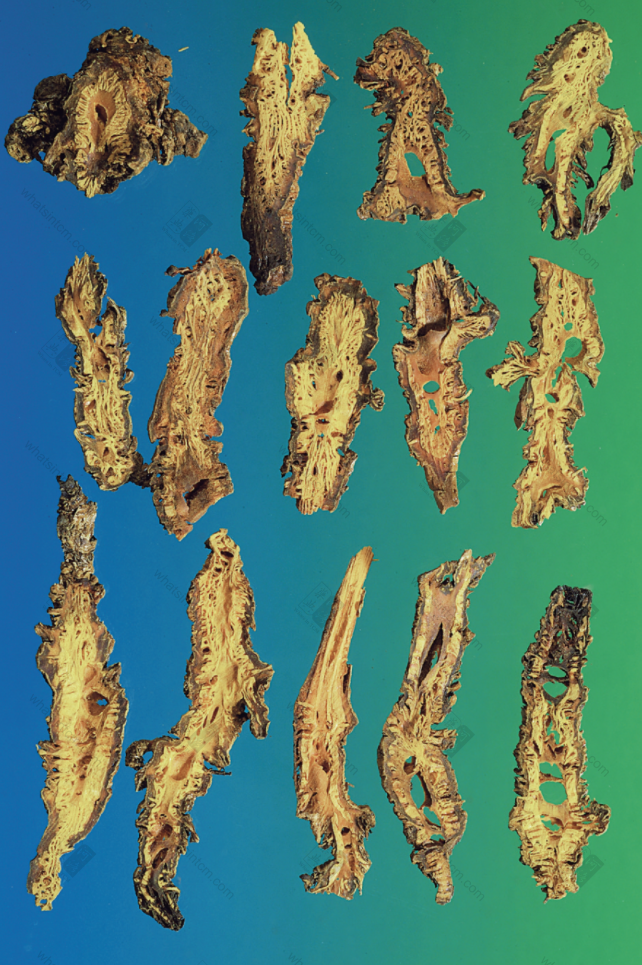
Five-Year-Old Huang Lian (Coptis) Slices
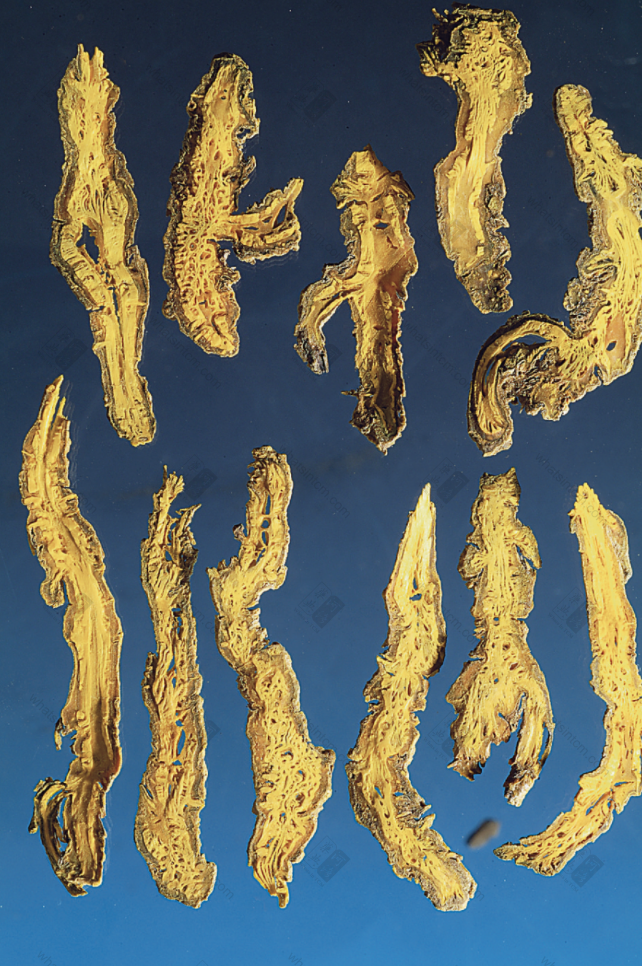
Huang Lian (Coptis) Slices
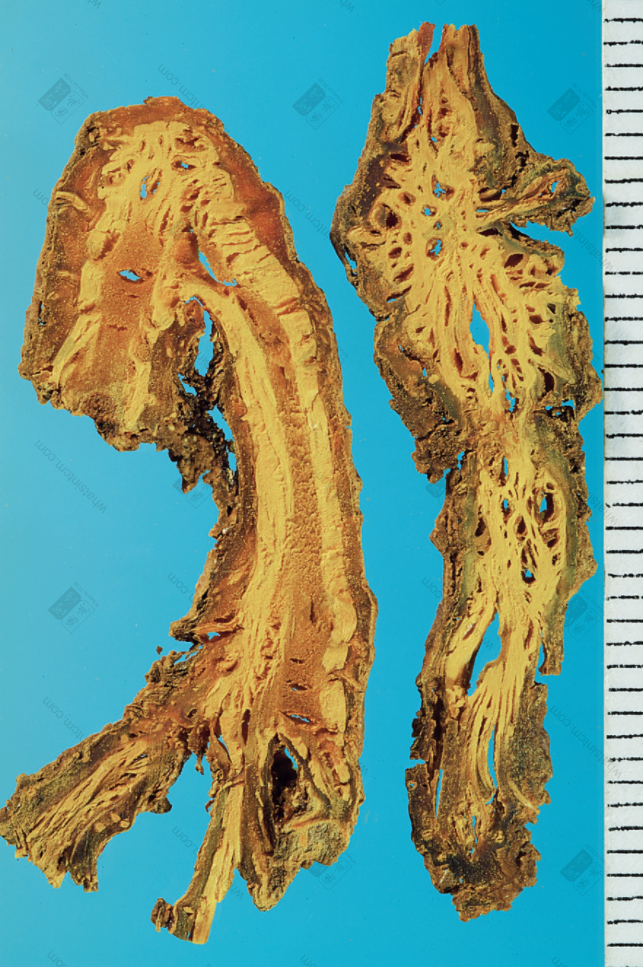
Huang Lian (Coptis) Slices (golden yellow xylem, central cavity)
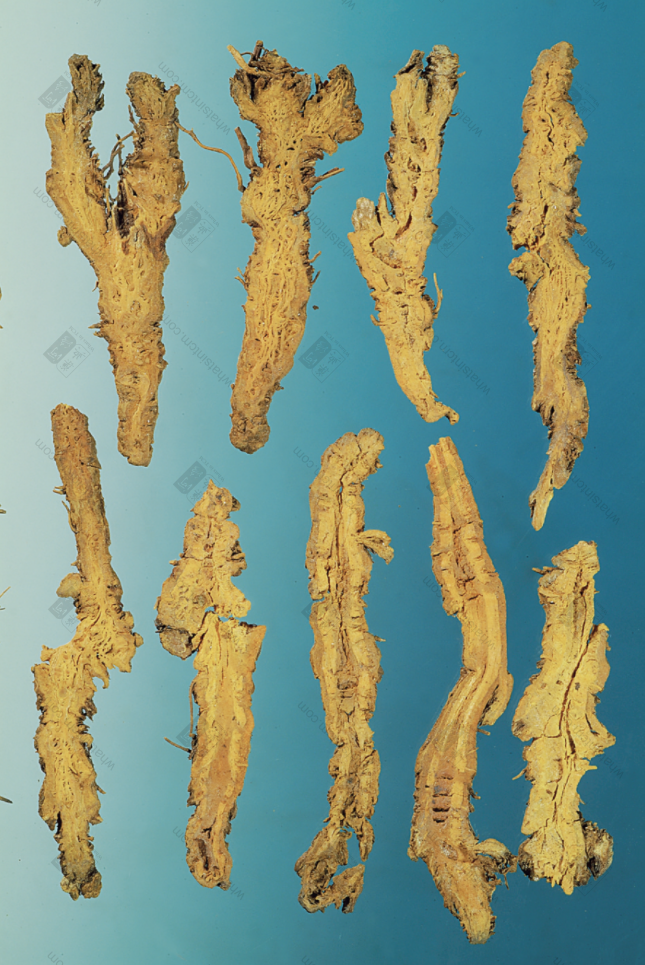
Re-dyed Huang Lian (Coptis) Slices
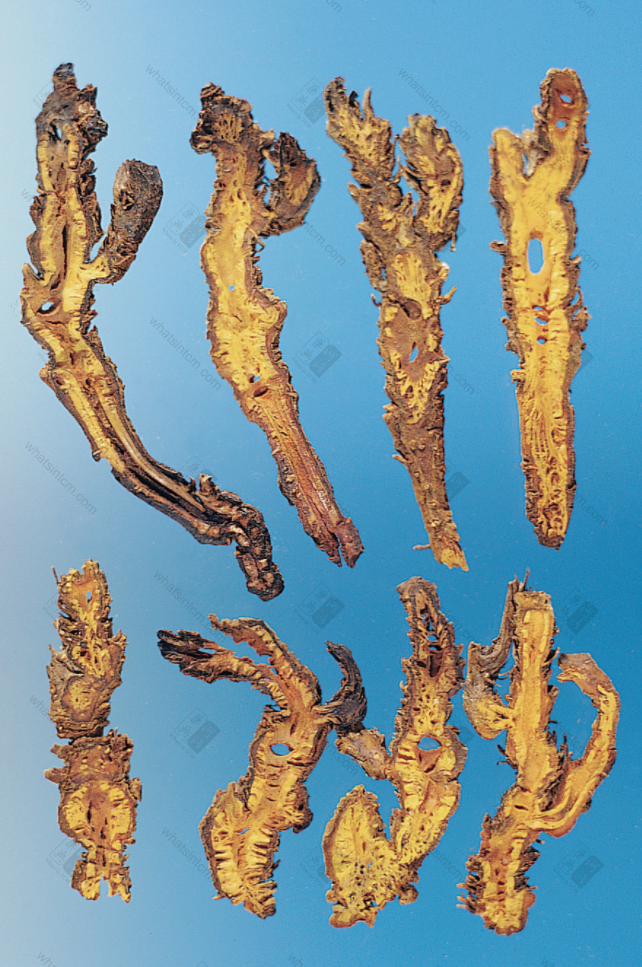
Wine-Processed Huang Lian (Coptis)
【Naming】
【Source】
Shen Nong’s Materia Medica, Upper Class
【Frequency of Use】
A
【Botanical Origin】
The rhizomes of Coptis chinensis Franch., Coptis deltoidea C. Y. Chang et Hsiao, and Coptis teeta Wallich, all belonging to the Ranunculaceae family.
【Characteristics】
Cylindrical, sometimes branching, often slightly curved, about 6 cm long and 2-7 mm thick. The apex has residual stem and leaf bases and small scaly leaves. The surface is dark grayish-yellow, with irregular nodular prominences and numerous hard, residual fibrous root bases. The texture is firm, the fracture surface is fibrous and rough, the xylem is bright yellow, and occasionally the central part is hollow. The taste is extremely bitter and can turn saliva yellow. The cross-section is bright yellow.
Prepared slices are irregular longitudinal or oblique slices, or circular slices, with a diameter of 2-7 mm and a thickness of 0.5 mm. The cut surface has a brownish cortex and golden yellow xylem, with a central cavity in most. Odorless, extremely bitter. In Taiwan, they are mostly longitudinally or obliquely sliced.
【Processing】
1. Raw Huang Lian (Coptis) 2. Wine-Huang Lian (Coptis) 3. Ginger-Huang Lian (Coptis) 4. Evodia-Huang Lian (Coptis) 5. Stir-fried Huang Lian (Coptis) 6. Bile-Huang Lian (Coptis)
【Identification】
Zheng Lei Ben Cao: “Modern TCM practitioners value Xuanzhou Nine-Section Coptis, which is firm, heavy, and produces a sound when struck together.” Ren Shu Bian Lan: “Good Huang Lian (Coptis) has its whiskers removed and resembles an eagle’s claw.” Ben Cao Cheng Ya Ban Jie: “During the Han dynasty, the best came from Shu (Sichuan); during the Tang dynasty, the best came from Lizhou; today, the best comes from Yazhou and Meizhou.” Ben Cao Bei Yao: “That from Xuanzhou is thick and fat, while that from Sichuan is thin and small, resembling an eagle’s claw, and is best when connected in beads.” Jing Yan Dan Fang Hui Bian: “Sichuan Coptis resembles eagle’s claw connected in beads, with fine and dense root hairs, and is genuine if it has a chrysanthemum-like yellow heart.” Ben Cao Shu Gou Yuan: “The best is bright red-gold in color.” Liang Lie Jian Bie: “The highest grade resembles a stiff silkworm, with a light green cortex and a dark yellow interior, and is extremely bitter.”
Good quality is dry, long, with dense nodes, without hairs or whiskers, and has a chrysanthemum-like heart on the cross-section. When placed in water, it dyes the water a yellow line, and sinks before floating back up. Inferior quality immediately diffuses the yellow color and does not form a line. This is because the Berberine contained in Huang Lian (Coptis) gradually dissolves, creating a yellow line in the water. Some inferior products are often dyed yellow on the surface, which immediately diffuses upon immersion. Poor quality is thin, with long, bare branches, short and thin knotted rhizomes, and has hairs, whiskers, and scaly leaves, and is dark yellow in color.
【Identification Terminology】
1. Qian Zi Lian: Refers to Huang Lian (Coptis) petioles processed into rod-like shapes. It is a byproduct of cultivated Huang Lian (Coptis) production.
2. Bei’an Lian: Also known as Bei’an Wei Lian, it is a cultivated variety of Huang Lian (Coptis). It is produced in Chengkou, Wushan, and Wuxi on the north bank of the Yangtze River in eastern Sichuan, and in Fangxian, Badong, Zhuxi, and Tigui in Hubei. Its characteristics are firm texture, fine skin, fat branches, and few hairs.
3. Nan’an Lian: Also known as Nan’an Wei Lian, it is a cultivated variety of Huang Lian (Coptis). It is produced in Shizhu and Nanchuan on the south bank of eastern Sichuan, and in Enshi, Laifeng, Jianshi, and Lichuan in Hubei. Its characteristics are loose texture, thin body, wasp waist, and many hairs.
4. Jian Kou Lian: Refers to a section of petiole cut off near the stem base during the processing of Huang Lian (Coptis).
5. Lian Zha: Refers to the root hairs knocked off in the tumbling cage during the processing of Huang Lian (Coptis).
6. Lian Xu: Refers to the velvety root hairs cut from the Huang Lian (Coptis) rhizome.
7. Yu Lin Jia (Scaly Shell, Fish Scale Petals): (1) Emei Ye Lian (Wild Coptis) is silkworm-shaped, often with a stem base, the length of which varies. For those that have grown for many years, the stem base nodes are scaly shells. (2) Refers to the scaly leaves on rhizome-like medicinal materials, such as the rhizomes of Ya Lian (Triangular Leaf Huang Lian (Coptis)).
8. Yun Lian: Namely Yunnan Huang Lian (Coptis). Its characteristics are single branch, thin and lean, without cross-river branches, and is hook-shaped and curved, resembling a scorpion’s tail.
9. Guo Qiao Gan (Bridge Pole, Cross-River Branch, Hornet Waist): The Huang Lian (Coptis) rhizome has a smooth, thin pole of varying length that divides the multi-warty branching rhizome into two sections, with very long internodes, smooth like a stem, shaped like a log bridge. It often has intermittent transverse lines, is rough, and is attached with fine root hairs, which are prickly to the touch. However, some are smooth like poles without transverse lines. For example, the rhizome of Ya Lian (Triangular Leaf Huang Lian (Coptis)) has a longer bridge.
10. Feng Wei Lian: Is a type of wild Huang Lian (Coptis) (Emei Wild Coptis). The appearance is similar to Ya Lian, but its upper end retains a 6-10 cm long petiole, shaped like a phoenix tail.
11. Ji Zhao Huang Lian (Coptis) (Chicken Claw Coptis): Is one of the authentic medicinal materials of Huang Lian (Coptis). Wei Lian rhizomes are often curved, multi-branched, and often clustered together, shaped like chicken claws.
【Category】
Rhizomes