



Moutan Bark
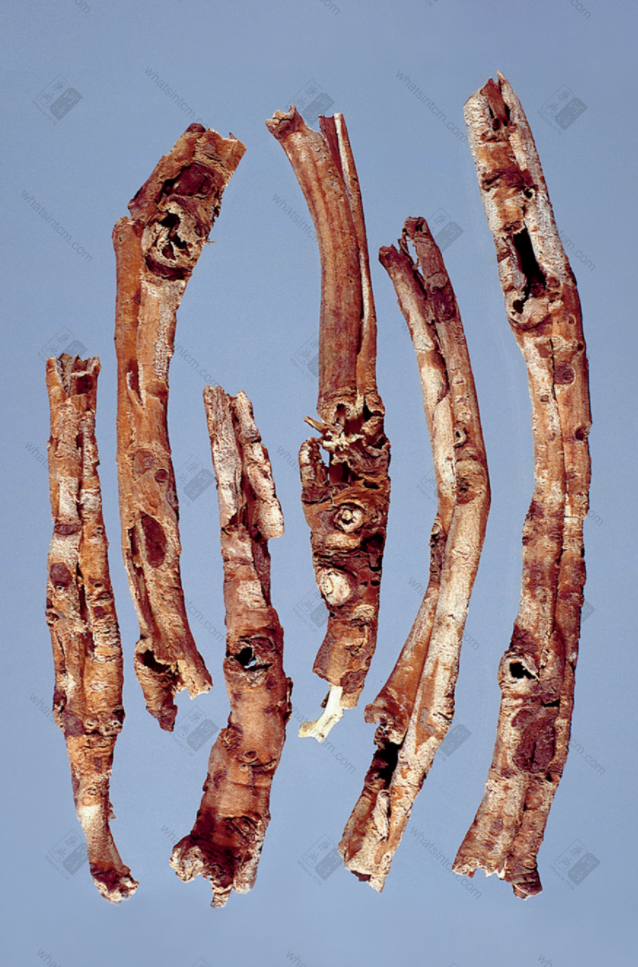
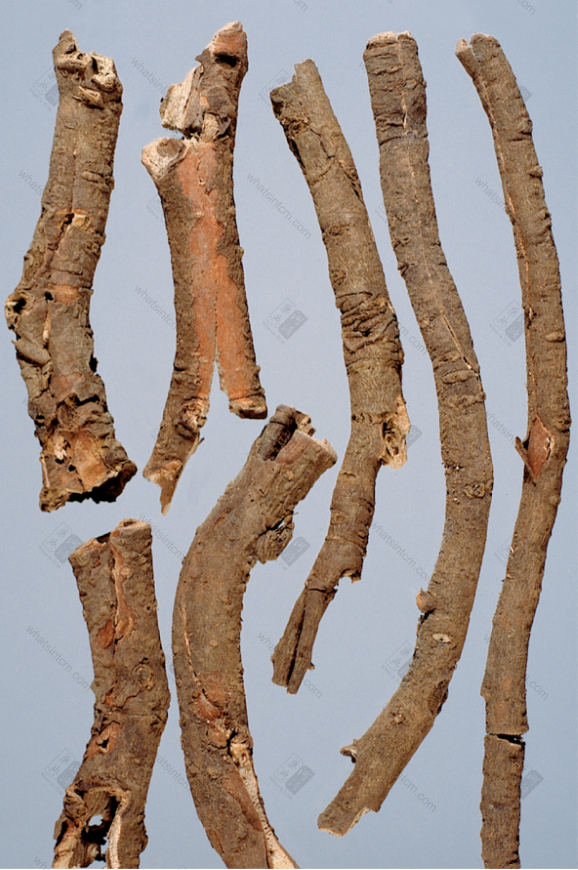 Moutan Bark (Feng Dan Pi) (Cylindrical or semi-cylindrical, brownish-red, longitudinal split, inwardly curled on both sides)
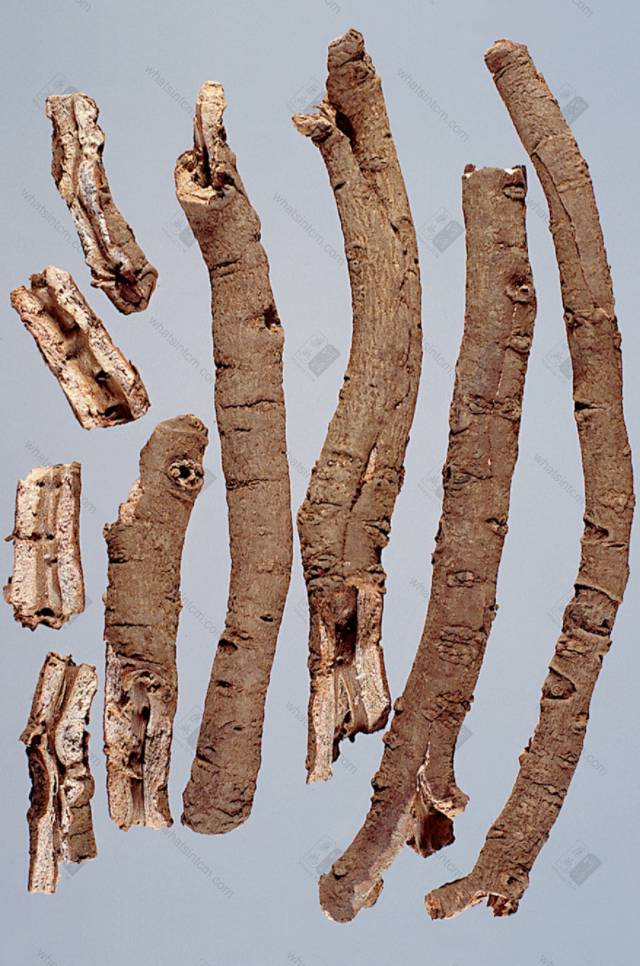 Su Dan Pi
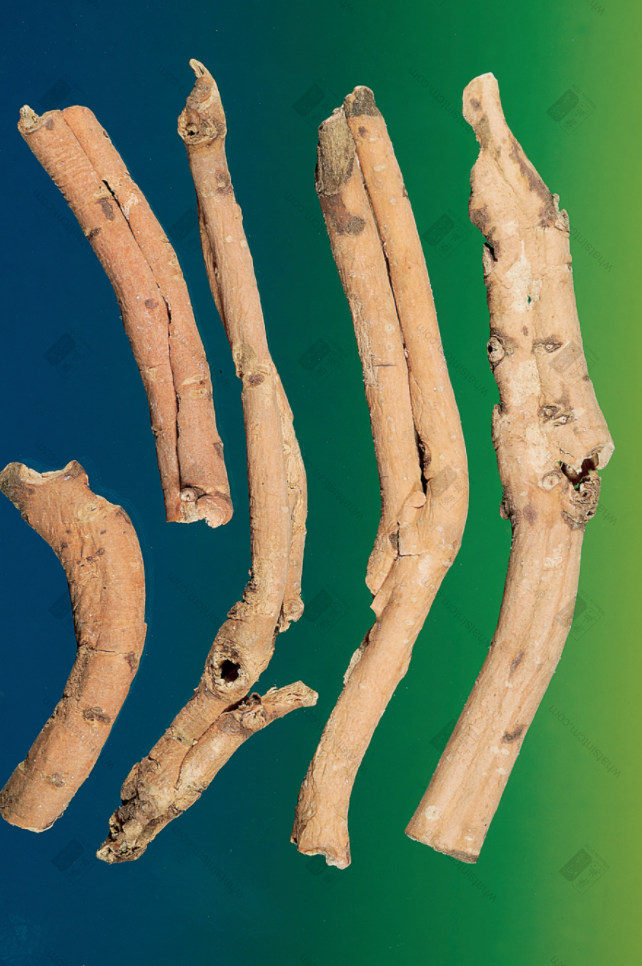 Moutan Bark (Cultivated in Anhui)
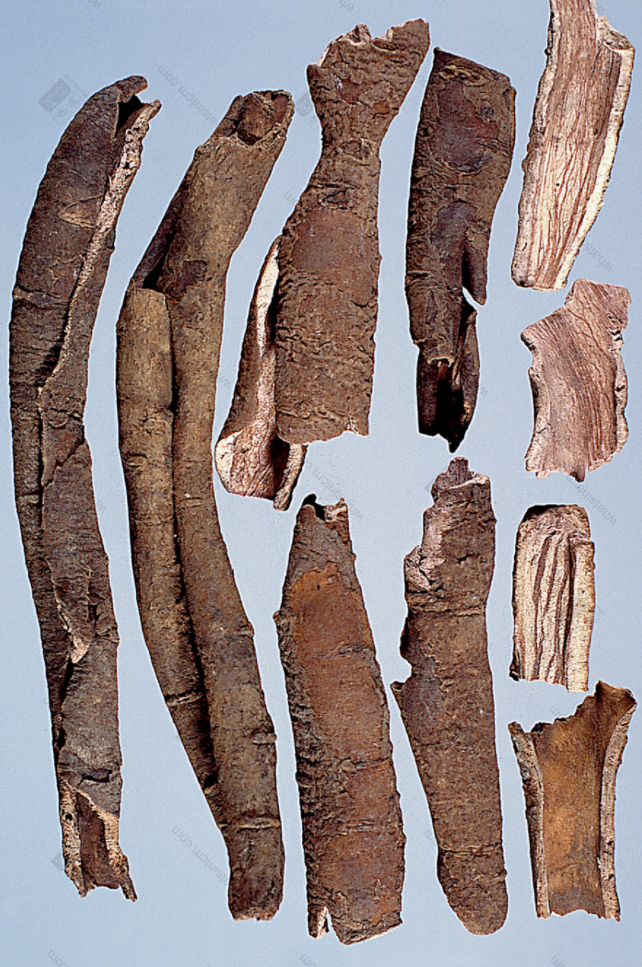 Xi Dan Pi
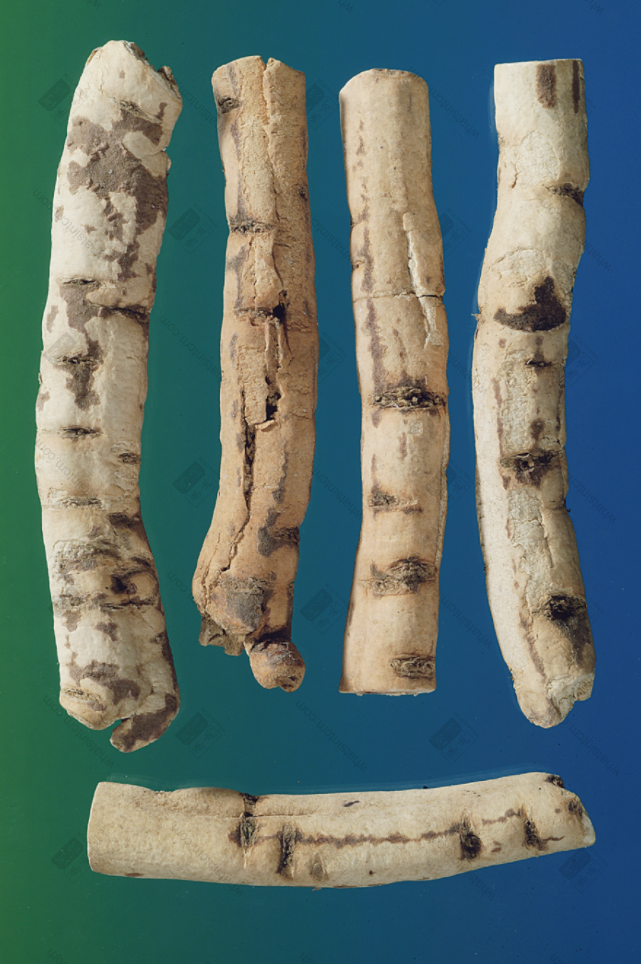 Scraped Moutan Bark
 Scraped Dan Pi
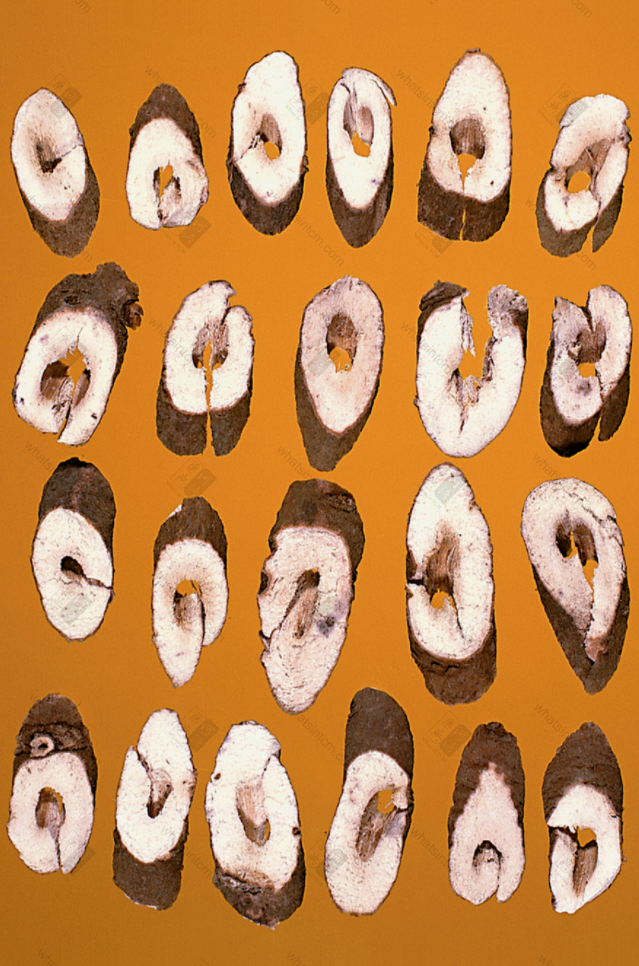 Dan Pi Slices (Powdery, with shining star Paeonol)
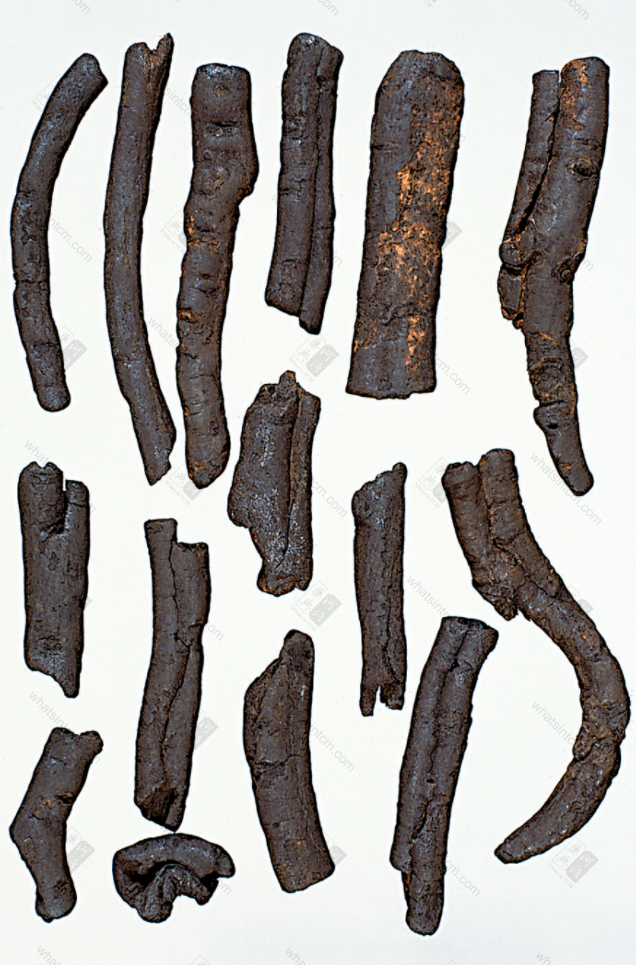 Charred Moutan Bark
【Naming】
【Source】
Listed as a medium-grade herb in the Classic of Herbal Medicine (Ben Jing)
【Common Usage Level】
B
【Botanical Origin】
Root bark of the peony Paeonia suffruticosa Andr. (Family: Ranunculaceae).
【Characteristics】
This product is obtained by longitudinally cutting the root, removing the xylem, and then obtaining the root bark. The root bark is cylindrical or semi-cylindrical, with longitudinal splits, and both sides are curled inward, usually 3-8 cm long and about 2 mm thick. The outer surface is grayish-brown or purplish-brown, and the cork layer may have fallen off, exposing the reddish-brown bark, with visible fibrous root scars and protruding lenticels. The inner surface is light brown or grayish-yellow, with shiny crystalline Paeonol precipitated and attached. It is hard and brittle, with an uneven fracture surface, or appears powdery, pale yellow and slightly red. It has a special aroma, a slightly bitter and astringent taste, and a slightly numbing sensation on the tongue.
Scraped Dan Pi: Also known as Fen Dan Pi (Powdery Dan Pi). The outer black bark is scraped off, and the surface is slightly rough and pinkish. Other characteristics are the same as the original Dan Pi.
The processed product consists of transverse slices, ring-shaped or semi-ring-shaped thin slices, about 1-2 mm thick, with the outer surface showing light brownish-red, the inner part white, the cut surface flat and straight, the rays obvious, slightly powdery, often with needle-like or columnar Paeonol crystals attached. Sometimes, it contains large, uncut pieces and debris. Charred Dan Pi: The surface is blackish-brown, and the inside is charred brown.
【Processing】
1. Stir-fried Dan Pi 2. Charred Dan Pi
【Identification】
“The ones with red color from the eastern region are considered good,” according to Annotations to the Materia Medica. Zhenglei Bencao states, “The ones with red color are good,” and “The single-petaled red flowers from the mountains are the best.” Bencao Yan Yi Bu Yi states, “Moutan Bark… the single-petaled red flowers from the mountains are the best.” Essentials of Materia Medica says, “The single-petaled red flowers are used as medicine, and the ones with thick flesh are the best.” Bencao Jian Yao Fang states, “Collecting the roots for medicine is good.” Zeng Yao Bian says, “The Su Dan Pi should be bought as the best.” Differentiation of Good and Bad states, “The ones with reddish-brown exterior, light red interior, strong aroma, large and long are superior.”
Usually, the best ones are thick, uniform, straight, without a wood core, without fibrous roots, with fine bark and thick flesh, white and powdery, not turning red, and with many shining stars (Paeonol crystals).
【Identification Terms】
1. Scraped Dan Pi, Powdered Dan Pi: A commercial specification of Moutan Bark medicinal material, which is scraped off the outer coarse skin with a bamboo knife or bowl piece while fresh, and the xylem is removed and dried.
2. Dong Dan: Refers to the Moutan Bark mainly produced in the Heze area of Shandong. The medicinal material is mostly scraped off the outer skin, white in color, and has sufficient powder.
3. Qing Dan: Refers to Moutan Bark whose roots are exposed to the ground during the growing process and turn green over time.
4. Bright Silver Stars: Refers to the fact that some components of certain medicinal materials often precipitate crystals on the surface, and point-like flashes can be seen under light. For example, the inner surface of Moutan Bark has shiny Paeonol crystals.
5. Lian Dan Pi (Original Dan Pi): A commercial specification of Moutan Bark medicinal material, which only removes the fibrous roots during processing, and then longitudinally cuts and removes the xylem and dries it. Also known as “Original Dan Pi.”
6. Hu Dan (Xiang Dan Pi): Refers to the Moutan Bark mainly produced in Shaoyang and other places in Hunan. It is in the shape of a curled tube or fragments, with a purplish-brown outer surface and a grayish-white inner color, and fewer bright silver stars. In the past, it was mostly processed into bundled shapes.
7. Dian Dan: Refers to the Moutan Bark mainly produced in Dianjiang, Guanxian and other places in Sichuan. It is in the shape of a cylinder or sheet, the cylinder is mostly thin, the outer surface is grayish-brown, the inner part is reddish-brown, the flesh is thin, the texture is loose, and it has bright silver stars.
8. Yao Dan: Refers to the Moutan Bark mainly produced in Nanling, Anhui. Its characteristics are that the strips are large, mostly contractured, the seams are mostly cracked into a semi-cylindrical shape, and it is mostly processed into scraped Dan Pi, the cut surface is more red, has bright silver stars, and the powder quality is poor.
9. Feng Dan: Refers to the authentic Moutan Bark produced in Fenghuang Mountain, Tongling, Anhui. Its characteristics are that the inner surface is earthy black, light brown or grayish-yellow, with longitudinal lines and bright silver stars, hard and brittle, easy to break, the inner color of the cut surface is white, and has sufficient powder. It is the best quality among Dan Pi.
【Category】
Bark Category
Related Products

