

Safflower
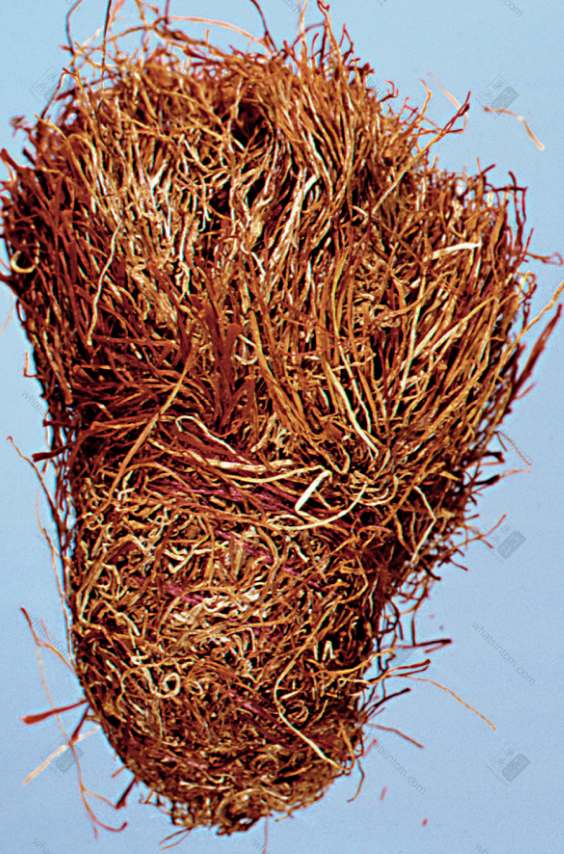 Western Safflower
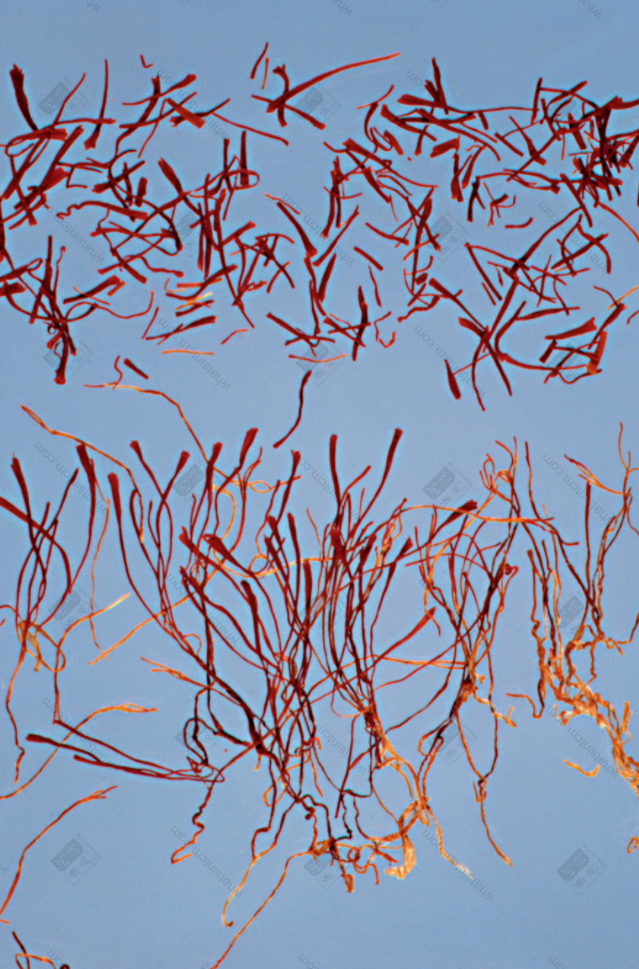 Western Safflower (Flattened stigma in three parts, funnel-shaped, red and yellow, unevenly serrated edges, slender, oily, shiny, light and soft)
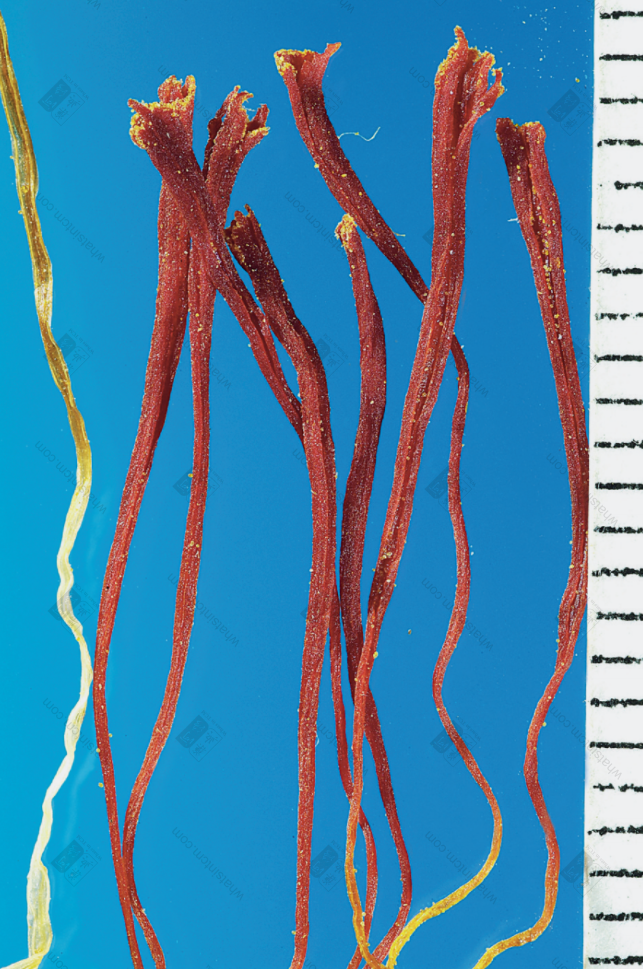 Western Safflower (When immersed in water, a yellow line sinks, diffuses slowly at the bottom, dyeing the water golden yellow, and the stigma expands into a trumpet shape)
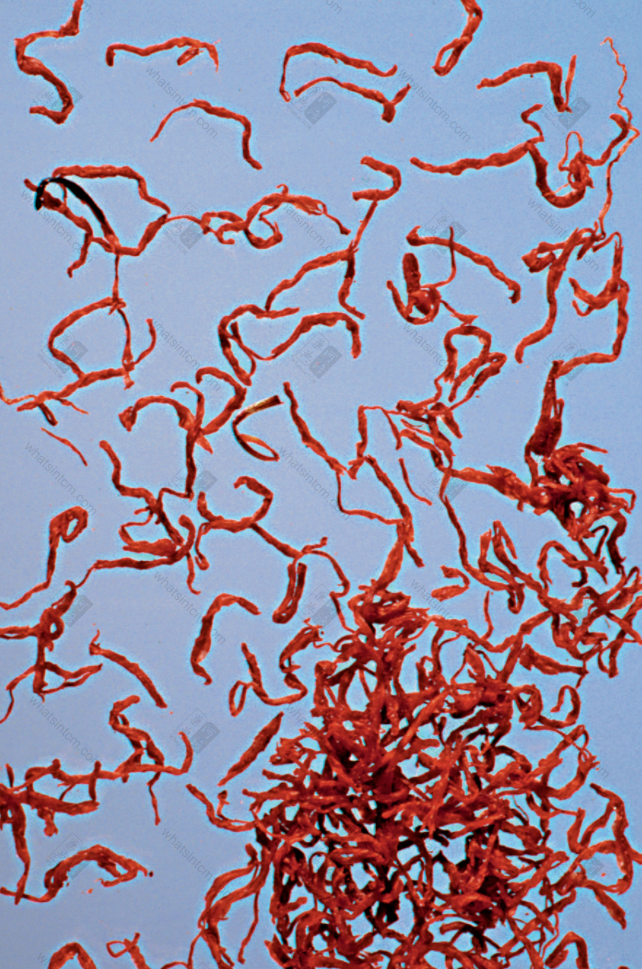 Fake Western Safflower (Aqueous solution is red)
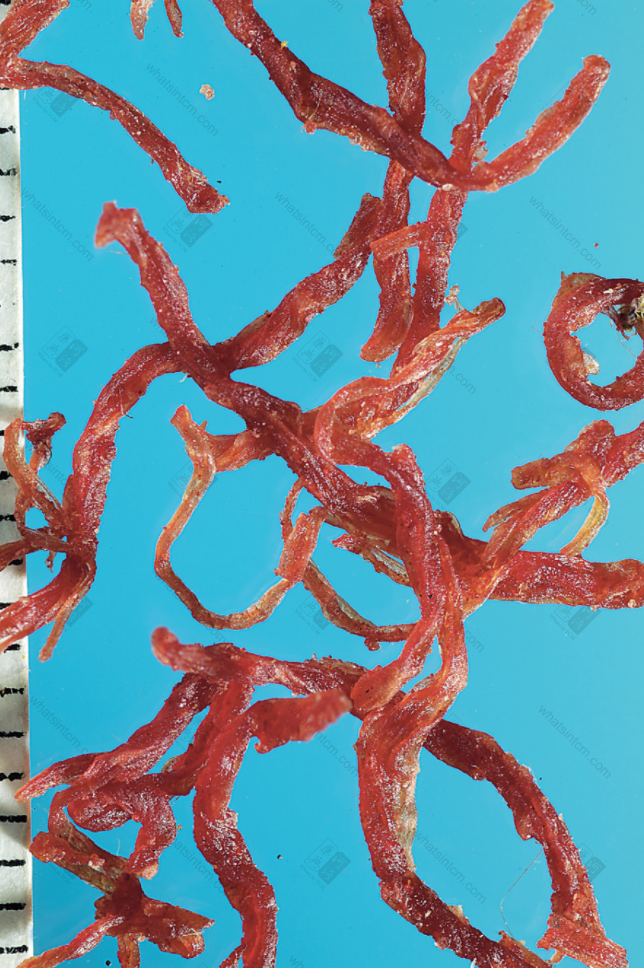 Fake Western Safflower
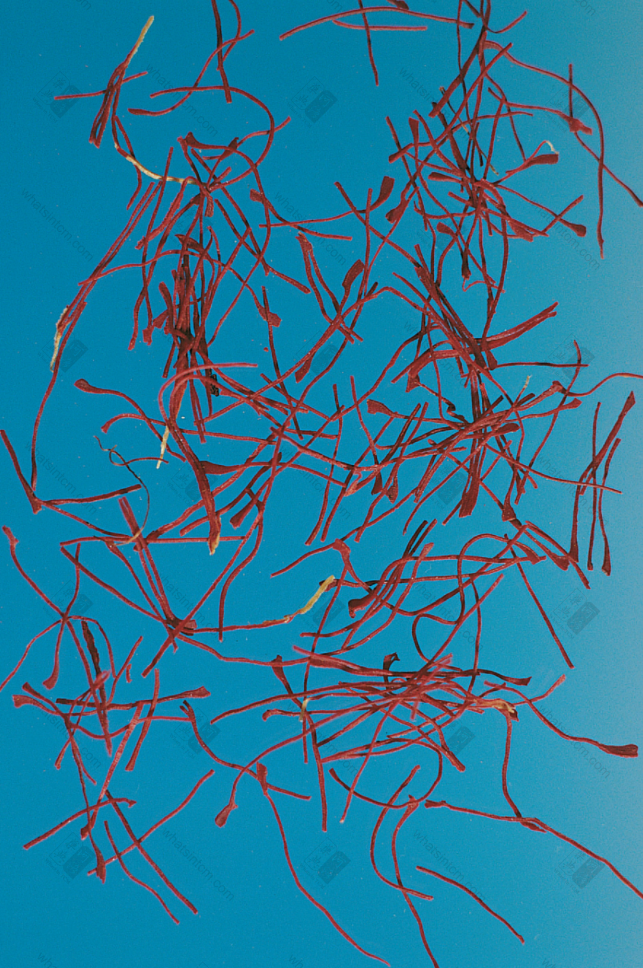 Fake Western Safflower
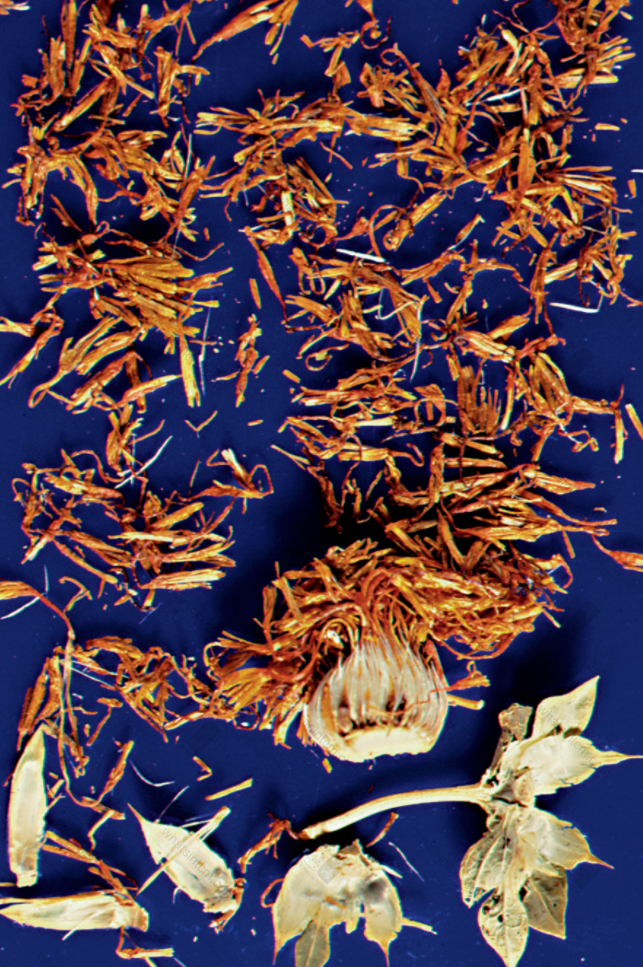 Sichuan Safflower
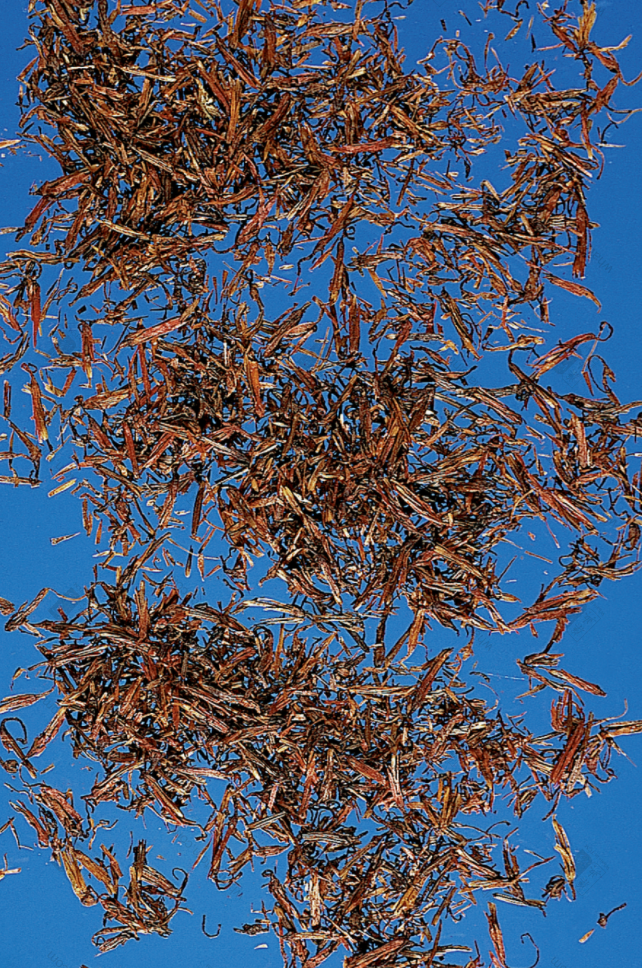 Wine-processed Sichuan Safflower
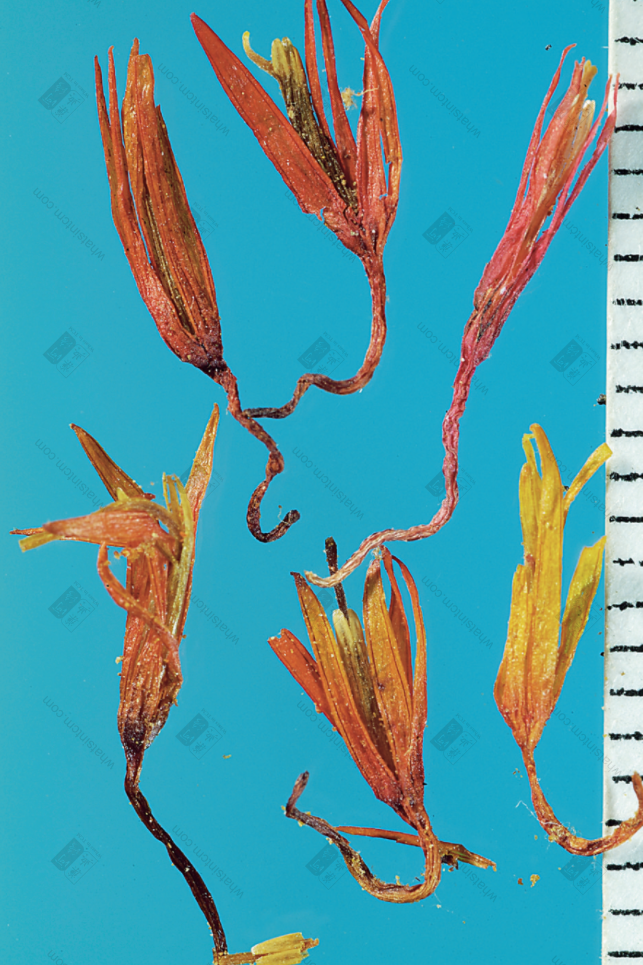 Sichuan Safflower (Tubular, with narrow flower tube)
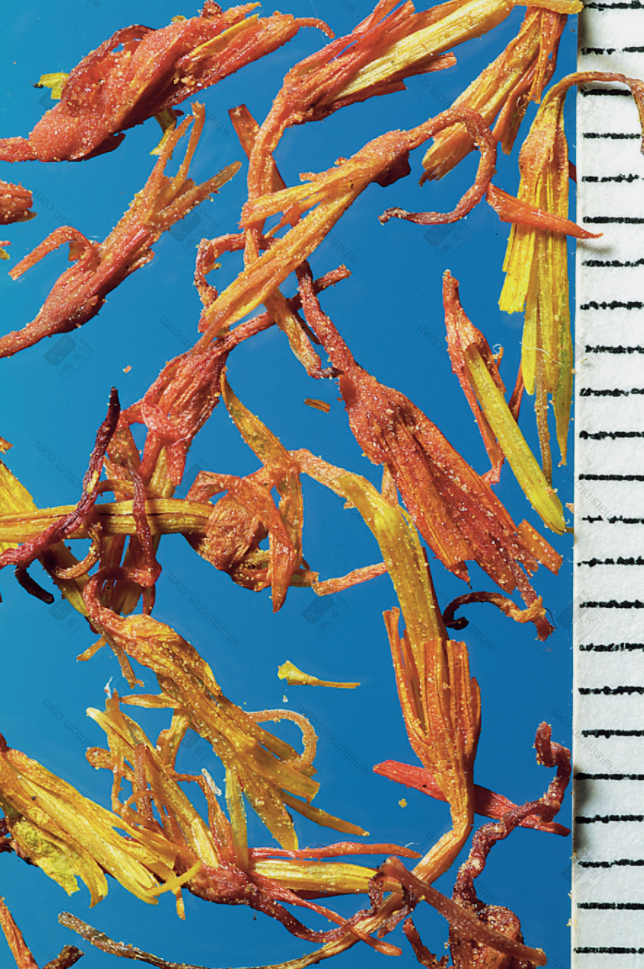 Sugared Sichuan Safflower (To increase weight)
【Naming】
【Source】
Song Kaibao
【Commonly Used Degree】
A
【Botanical Origin】
Sichuan Safflower is the dried tubular flower of Carthamus tinctorius L., from the Asteraceae family. Western Safflower (Fan Hong Hua) is the dried stigma of Crocus sativus L., from the Iridaceae family.
【Characteristics】
(1) Sichuan Safflower (Du Hong Hua): It is a tubular flower without an ovary, about 1.5 cm long, orange-red, with a narrow flower tube and a 5-lobed apex. The lobes are narrow and linear, 5-7 mm long. There are 5 stamens, with yellow anthers fused into a tube that extends beyond the lobes, with a stigma protruding from the center. It has a unique aroma and a slightly bitter taste.
(2) Western Safflower (Xi Hong Hua, Tibetan Safflower): It often appears as a loose mass, pressed together by numerous flattened stigmas. Typically, three stigmas grow from the top, appearing dark reddish-brown. It has a unique aroma and a slightly bitter taste. Fresh material has an oily luster, but with prolonged storage, the color darkens and the texture becomes brittle. A complete stigma is about 2.5 cm long, slightly wider and inwardly curved at the top, somewhat funnel-shaped, with irregularly serrated edges and villous projections. It is not oily, has a light texture. The commodity sometimes retains a yellow style about 1 cm long. The style is occasionally yellow. It has a unique aroma and a slightly bitter taste. When placed in water, it floats on the surface, expands, and releases a deep yellow pigment, dyeing the water yellow.
【Processing】
1. Mix evenly with yellow wine, steam, and dry in the sun. 2. Stir-fry Safflower.
【Identification】
《Wai Tai Mi Yao》: “Fresh safflower is the best.” 《Zheng Lei Ben Cao》: “The flower is dried in the sun to dye true red and make rouge, which is best for postpartum blood disorders.” “Three liang of Safflower, fresh is the best.” 《Ren Shu Bian Lan》: “The first harvest of Safflower is the best.” 《Ben Cao Jian Yao Fang》: “That produced in Tibet is good.”
It is best to have a bright red color, heavy oil, shiny, glutinous body, special aroma, and when placed in water, the water is dyed yellow with a line downward, then gradually diffuses, and the safflower itself is trumpet-shaped.
There are many counterfeit Western Safflower products. Simple identification method: (1) Take a small amount of the sample and put it in water. The genuine product turns the water yellow and will not cloud over time, and there is no oil on the surface of the water. If the water turns red and cloudy, and there is oil on the surface of the water, it is a counterfeit. (2) When immersed in water, the genuine product is funnel-shaped, while the counterfeit is not. (3) After soaking in water, stir with a needle. The genuine product does not break easily, while the counterfeit breaks easily. (4) For counterfeit products mixed with starch, one drop of iodine solution will turn blue-black immediately, while the genuine product does not change color.
【Section】
Flower Category
Related Products

