



Zhi Mu (Anemarrhena)
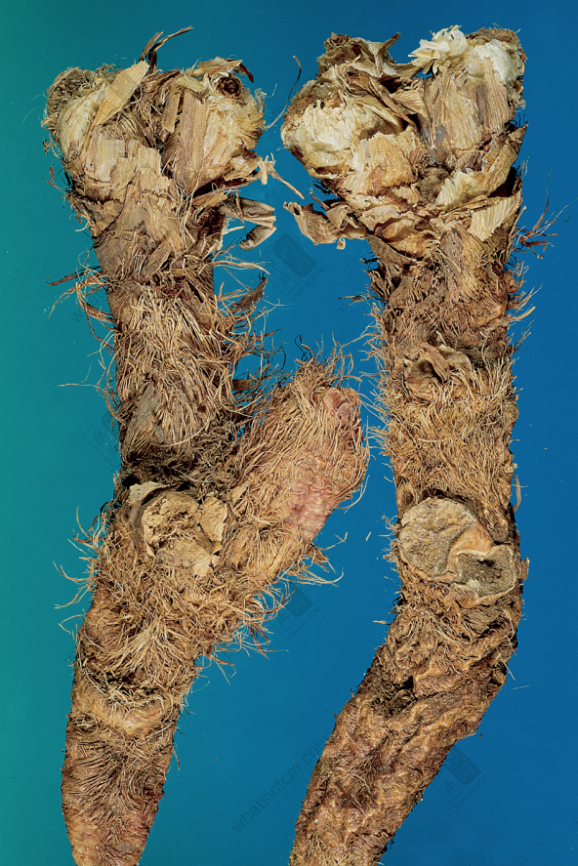 Hairy Zhi Mu (Long, slightly curved, brownish-gray)
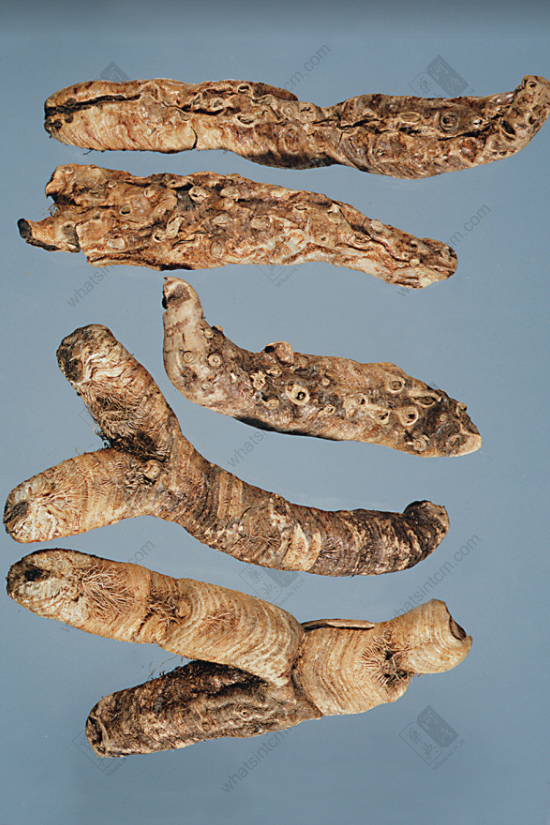
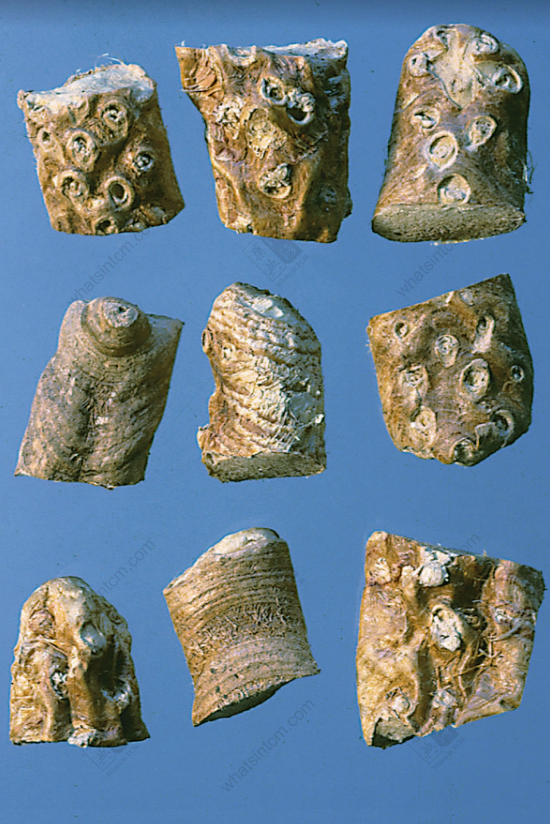 Zhi Mu Chunk
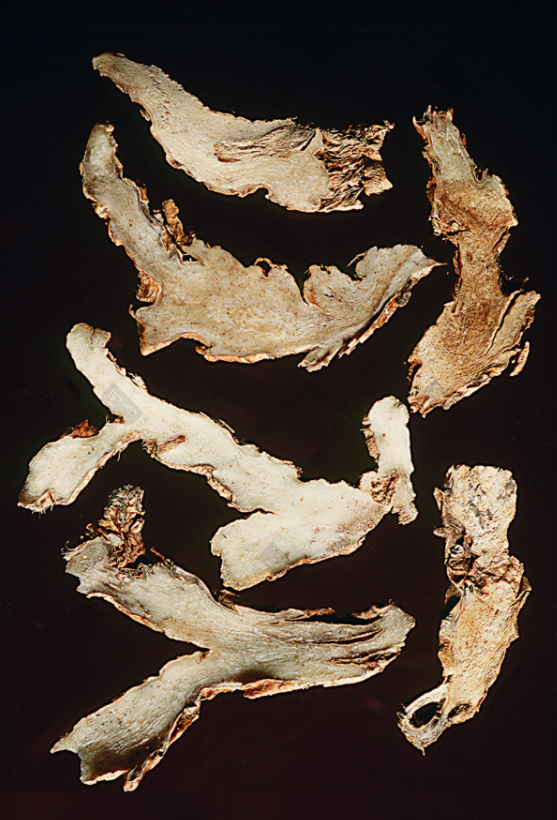 Zhi Mu Slice (Yellowish-white, twisted grooves)
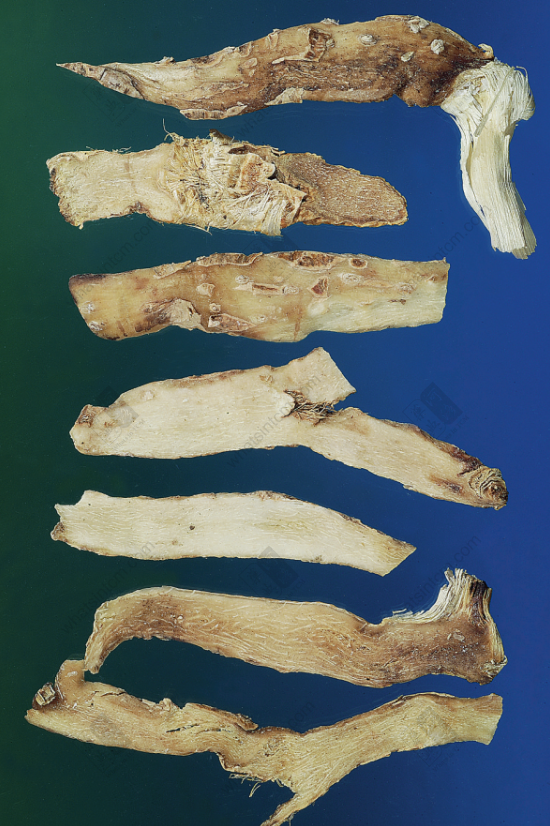 Wild Zhi Mu Slice (Sulfur-free)
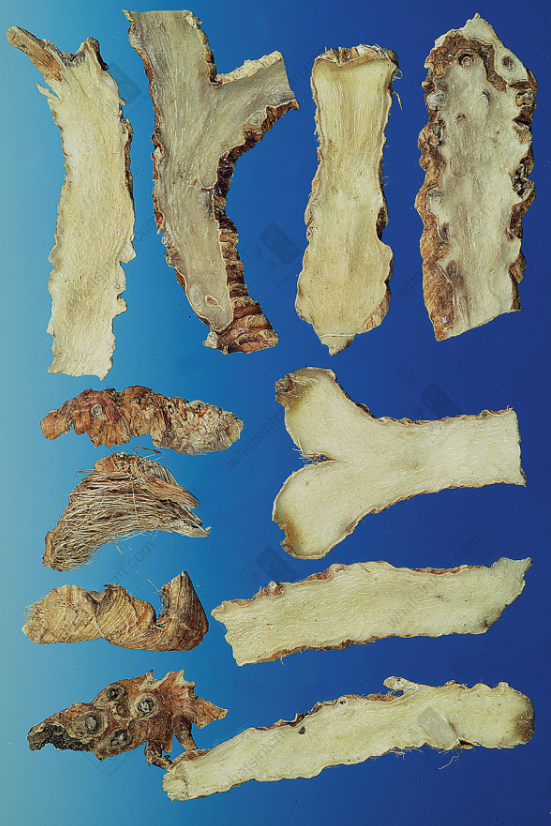 Zhi Mu Flattened Slice (Sulfur-free)
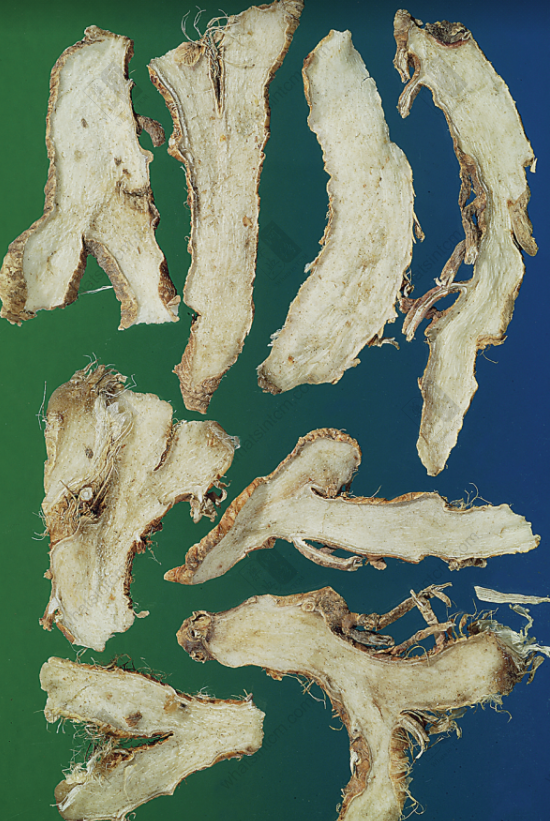 Zhi Mu Flattened Slice (Sulfured)
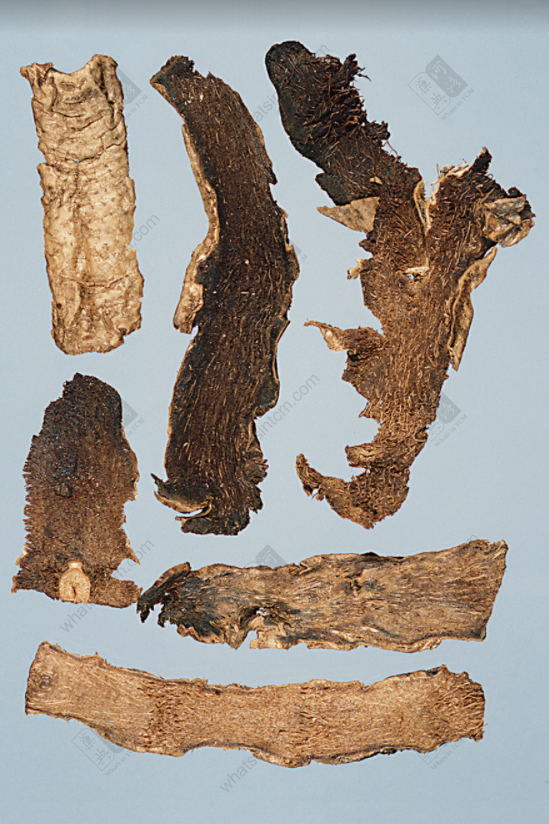 Salt-Processed Zhi Mu Slice
【Naming】
【Source】
Classified as a medium grade in the Divine Farmer’s Materia Medica (Ben Jing)
【Common Usage Level】
A
【Botanical Origin】
This product is the rhizome of Anemarrhena asphodeloides Bge., belonging to the Liliaceae family.
【Characteristics】
(1) Hairy Zhi Mu: This refers to the rhizome with its outer skin intact. It appears as a flattened cylinder, slightly curved, thicker at one end and thinner at the other, occasionally with 2-3 branches. It measures 3-17cm in length and 0.8-2cm in diameter. The root head has light yellow leaf scars and root trace remnants. There is a sunken longitudinal groove in the center of the upper side, with closely arranged ring-shaped nodes. The nodes are densely covered with golden-yellow, flat villi, concentrated from both sides towards the upper part of the rhizome. The other side is more wrinkled, with numerous sunken or protruding small round root traces, with little or no yellow villi. It is hard in texture and easily broken.
(2) Smooth Zhi Mu: Also known as Zhi Mu flesh, this is the rhizome with the outer skin removed. It is smaller than Hairy Zhi Mu, measuring about 3-13cm in length and about 1cm in diameter. The surface is yellowish-white or light yellowish-brown, with twisted longitudinal grooves. Numerous irregularly scattered small root traces can be seen on one side. It is hard in texture and easily broken. The cross-section is white or yellowish-white, with some showing vascular bundle spots. It becomes sticky after being soaked in water, and the odor is the same as Hairy Zhi Mu.
The prepared slices are flattened longitudinal slices, or small sections cut transversely to 1cm, or transversely cut into irregular circular thin slices, about 1-2mm thick. The edges are uneven, and some are attached with hairs. The cross-section appears brownish-yellow, and light yellowish-white vascular bundles can be seen, scattered in dots, with the central cylinder occupying most of the rhizome. The texture is soft, and the middle part of the cross-section is relatively loose. It becomes sticky when soaked in water, and tastes bitter and sweet. Salt Zhi Mu: Appears deep yellow. Wine Zhi Mu: Appears yellowish-brown.
【Processing】
1. Raw Zhi Mu 2. Salt Zhi Mu 3. Wine Zhi Mu
【Identification】
The best quality is characterized by round, large, fine hairs, soft and delicate texture, moist, hard texture, yellowish-white color, and stickiness when chewed. The ones produced in North China are large, with thick flesh and soft texture, making them the best. Those produced in Shandong are harder and considered second best.
【Identification Terminology】
1. Jin Bao Tou (金包頭) (Hairy Zhi Mu): Refers to Zhi Mu that has not had its outer skin removed. It is characterized by a slightly flattened, elongated shape, thicker at one end and thinner at the other, with residual light yellow leaf scars and stem traces at the top.
2. Mao (毛) (Hair): Generally refers to the fiber bundles, vascular bundles, etc. that remain after the tissue has dried. The “hair” on Zhi Mu medicinal material is actually the vascular bundle.
3. Jin Yu Tou (金魚頭) (Goldfish Head): The Zhi Mu rhizome grows horizontally, with closely arranged segments. The nodes are densely covered with golden-yellow villous fibers, concentrated from both sides towards the upper part, and the head is even denser, representing the residual leaf base vascular bundles.
4. Kang (糠) (Chaff): Refers to medicinal material that has become loose due to freezing and deterioration, or also refers to medicinal material with a loose texture. For example, in Hebei, Hairy Zhi Mu collected in summer is called “light and chaff-like” (體輕質糠).
【Chapter】
Rhizomes
Related Products
