



How to Choose Mai Men Dong, a Commonly Used Chinese Herb for Nourishing Yin and Moistening the Lungs
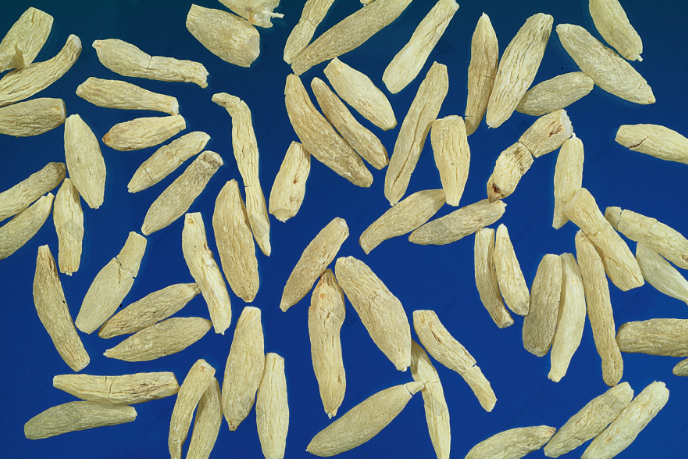
Hangzhou Mai Men Dong: Swollen and spindle-shaped, slightly pointed at both ends, yellowish in color, with visible longitudinal wrinkles, soft in texture, translucent, chewy and rich in sweetness.
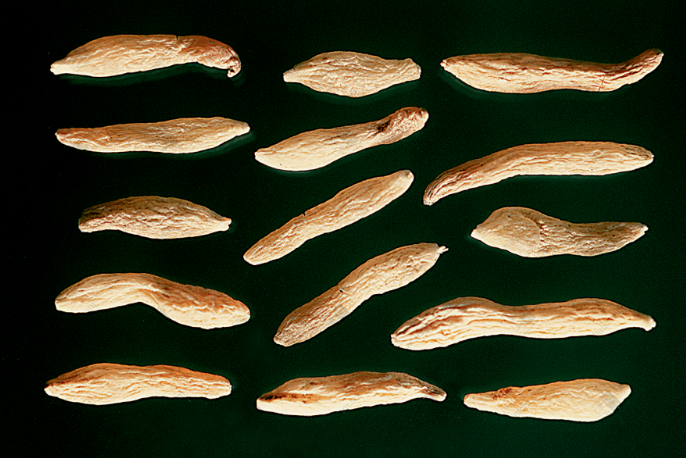
Mai Men Dong: Cun Dong (Inch Dong)
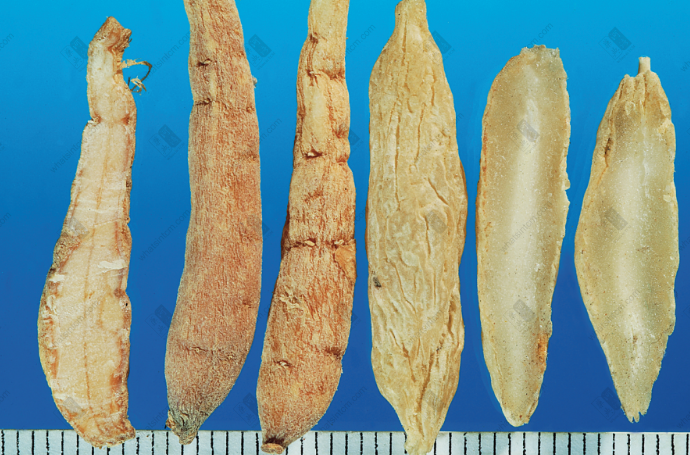
Mai Men Dong (right), Tai Zi Shen (left)
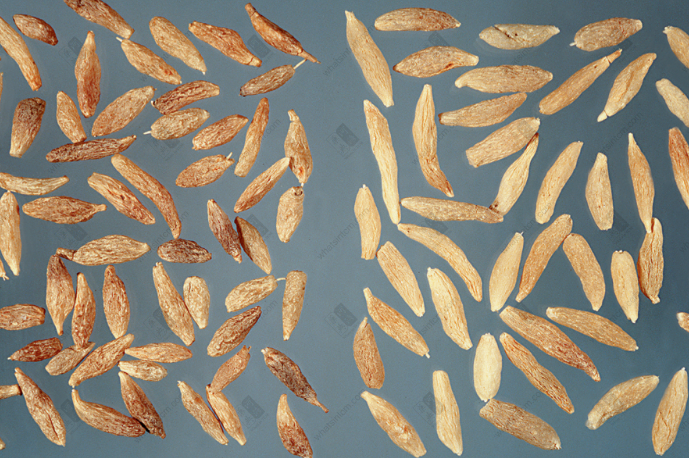
Mai Men Dong Grade 1 (right), Mai Men Dong Grade 2 (left)
“A pillow of clear breeze worth thousands of gold, yet no one buys this north-window sleep. A decoction of Mai Men Dong to warm the stomach and invigorate the heart, knows it was brewed by Su Dongpo himself.”
From “Waking up to hear that Mi Yuanzhang arrived at the East Garden in a fever and sent a Mai Men Dong decoction” by Su Shi
This poem by the great literary master Su Shi of the Northern Song Dynasty describes how he prepared a medicinal decoction of Mai Men Dong for his friend who was feeling unwell with a fever. This demonstrates the importance and efficacy of this herb, which was highly valued even by the renowned Su Dongpo.
As recorded in the Fourth Edition of the Taiwan Chinese Medicine Pharmacopoeia (https://reurl.cc/pZdMjx), Mai Men Dong (Ophiopogon japonicus) is the dried tuberous root of the plant of the Liliaceae family. It is commonly known as “Mai Dong” and is typically harvested in the summer. After washing and drying to about 80% dryness, the fibrous roots are removed before being dried for use. It is primarily produced in Zhejiang, Jiangsu, Sichuan, Guizhou, Yunnan, Guangxi, Anhui, Hunan, and Hubei provinces. Taiwan also has scattered cultivation. Mai Dong produced in Zhejiang is commonly called Zhe Mai Dong or Hang Mai Dong, while that from Sichuan is called Chuan Mai Dong. Because its leaves resemble leeks, it has many alternative names such as “Ma Jiu” (horse leek) and “Yang Jiu” (sheep leek). Since it can survive through winter, it is also called “Ren Dong” (enduring winter) or “Bu Si Yao” (immortal medicine). Due to its ease of growth, it is also called “Jie Qian Cao” (grass in front of the steps). The medicinal material is usually considered good if it is dry in appearance, plump, with a fine skin, a fine pith, yellowish-white in color, translucent, fragrant, rich in sweetness, sticky when chewed, and not oily. The term “pith” (心, xin) refers to the central part of the medicinal material that differs in form and texture from the surrounding parts. However, due to variations in the origin of the medicinal material, the meaning of “pith” can vary. For Mai Men Dong, the “pith” refers to the central core of the medicinal material.
Mai Men Dong is a commonly used Chinese herb in clinical practice for clearing heat, nourishing yin, and moistening dryness. It is typically used for symptoms of yin deficiency with internal heat, dry cough with thick phlegm, and rebellious qi. In traditional Chinese medicine prescriptions, there is a common combination known as “Er Dong” (two Dongs), which refers to Mai Men Dong and Tian Men Dong. Both herbs can nourish the stomach and promote fluid production. However, Tian Men Dong is particularly effective at nourishing lung yin and treating cough, whereas Mai Men Dong is more significantly effective for stomach yin deficiency and excessive virtual fire. Therefore, the Fourth Edition of the Taiwan Chinese Medicine Pharmacopoeia lists its main functions as nourishing yin and moistening the lungs, calming cough and resolving phlegm, benefiting the stomach and promoting fluid production, and clearing the heart and relieving vexation. Current research indicates that ancient medicinal Mai Men Dong originated from more than one source, including plants from the *Ophiopogon* genus and the *Liriope* genus. It is commonly used in formulas such as Zhu Ye Shi Gao Tang, Mai Men Dong Tang, and Qing Xin Lian Zi Yin. The Fourth Edition of the Taiwan Chinese Medicine Pharmacopoeia mainly records Mai Men Dong derived from plants of the *Ophiopogon* genus. The “Chinese Pharmacopoeia” includes dried tuberous roots of *Liriope* species, such as Hubei Mai Dong and *Liriope spicata*, as separate entries under the name “Shan Mai Dong” to distinguish them from Mai Men Dong. Depending on clinical application, Mai Men Dong is prepared in different ways. Ancient texts often specify “Mai Dong (with pith removed)”, “Mai Dong (pith not removed)”, or “Mai Dong (pith removed, baked)”. Modern research suggests that the composition of the flesh and the pith of Mai Men Dong are largely the same. The primary difference in the composition of their water decoctions is related to whether the surface of the medicinal material is cracked. Therefore, flattening the material to slightly crack the skin is considered a good preparation method.
In the market, you can often find both Mai Men Dong and Shan Mai Dong. There are several key differences between them. Generally, Mai Men Dong is also called “Cun Dong” (inch dong), as its length does not exceed one inch. If it is longer than one inch, it might be *Liriope spicata* from the northern Mai Dong varieties. Secondly, in terms of surface color, Mai Men Dong is yellowish-white or pale yellow, while *Liriope spicata* is pale yellow to brownish-yellow. Furthermore, the surface features of Mai Men Dong have fine longitudinal wrinkles, while *Liriope spicata* primarily has coarse longitudinal wrinkles. Lastly, looking at the cross-section of the medicinal material, Mai Men Dong is yellowish-white and translucent, while *Liriope spicata* is white and horny. Additionally, regarding how they break, the fracture surface of *Liriope spicata* is relatively flat and even, whereas the pith of Mai Men Dong is more apparent, making it difficult to break, or the fresh fracture surface is uneven. Finally, you can taste them. Generally, *Liriope spicata* is sweet without bitterness, while Mai Men Dong is sweet with a hint of bitterness. These methods can be used to distinguish between the two. Once you have confirmed it is Mai Men Dong, to assess its quality, if it appears brown or has an oily smell, it is considered inferior. Mai Men Dong should be pliable and tough, capable of being cut with a fingernail. If it is hard and stiff, cannot be cut with a fingernail, and requires force to break, examine it under a magnifying glass for fine white granules to determine if the material has been artificially weighed down. Lastly, if there are too many non-medicinal fibrous roots in Mai Men Dong, it is also considered inferior and should be noted.
In summary, Mai Men Dong is a commonly used Chinese medicinal herb, especially in the era of long COVID where viral damage to the lungs is a concern. Given its functions of nourishing yin and moistening dryness, the usage of Mai Men Dong is expected to continue to increase. Taiwan’s regulatory authorities have established specific limits for sulfur dioxide and heavy metals such as arsenic, cadmium, mercury, and lead, allowing the public to use it with confidence.
【Image Provided by】Professor Chang Xian Zhe, “Illustrated Guide to Authentic Medicinal Herbs” https://whatsintcm.com