

Mid-Autumn Festival Overindulgence in Barbecue? Common Chinese Herbs for Digestion
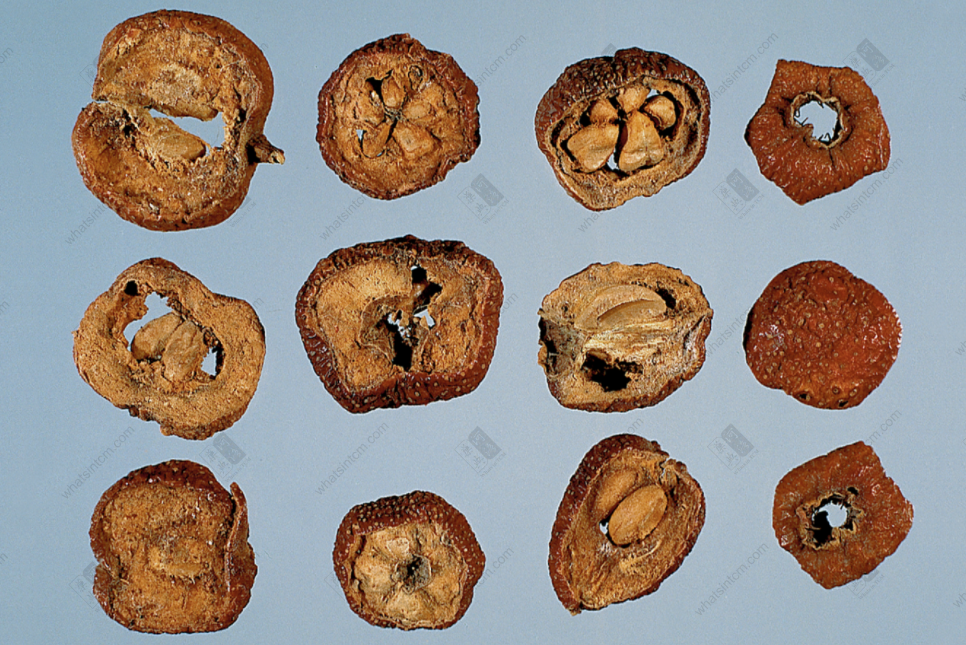 Hawthorn: Yellow flesh, purplish-red edges, seed like a pomegranate bud.
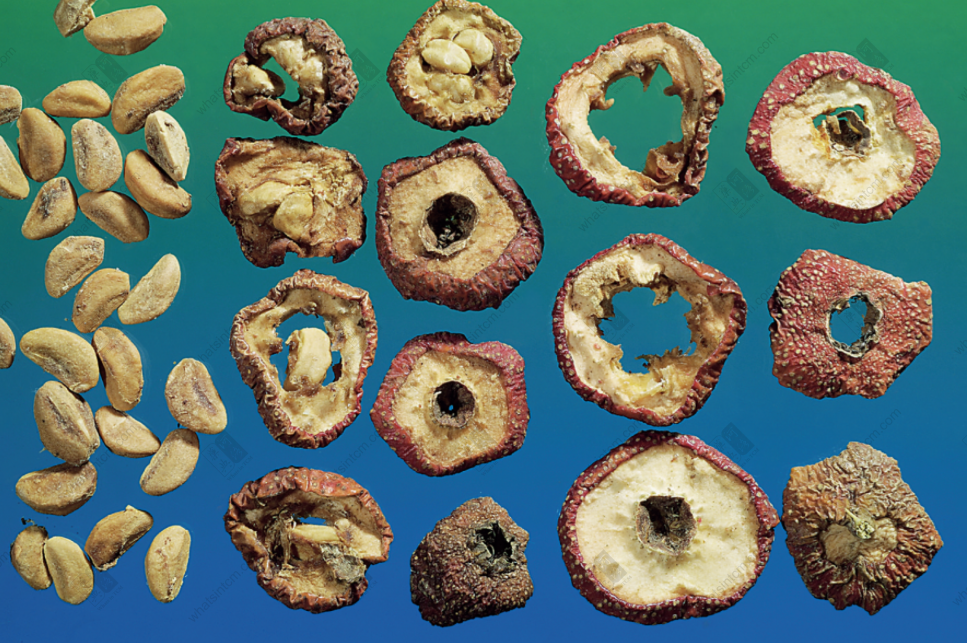 From left to right: Hawthorn seeds, Southern hawthorn (small spherical), Northern hawthorn (large slices).
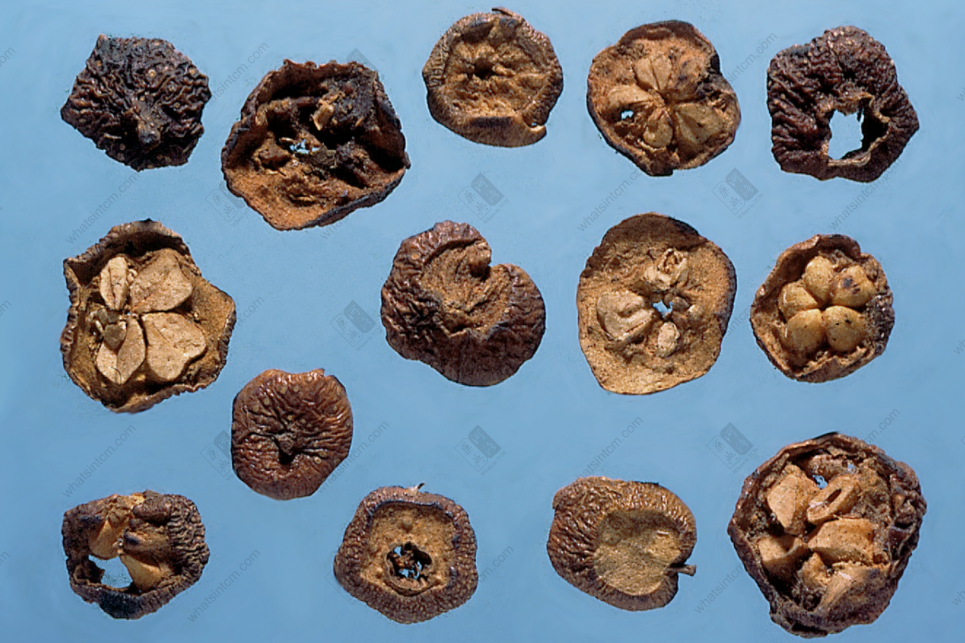 Stir-fried hawthorn.
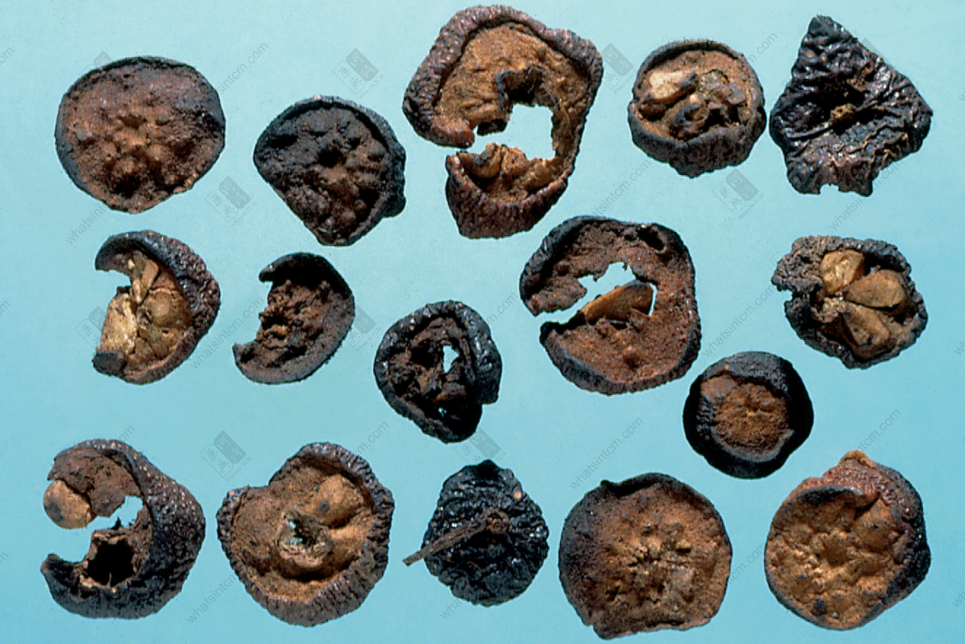 Charred hawthorn.
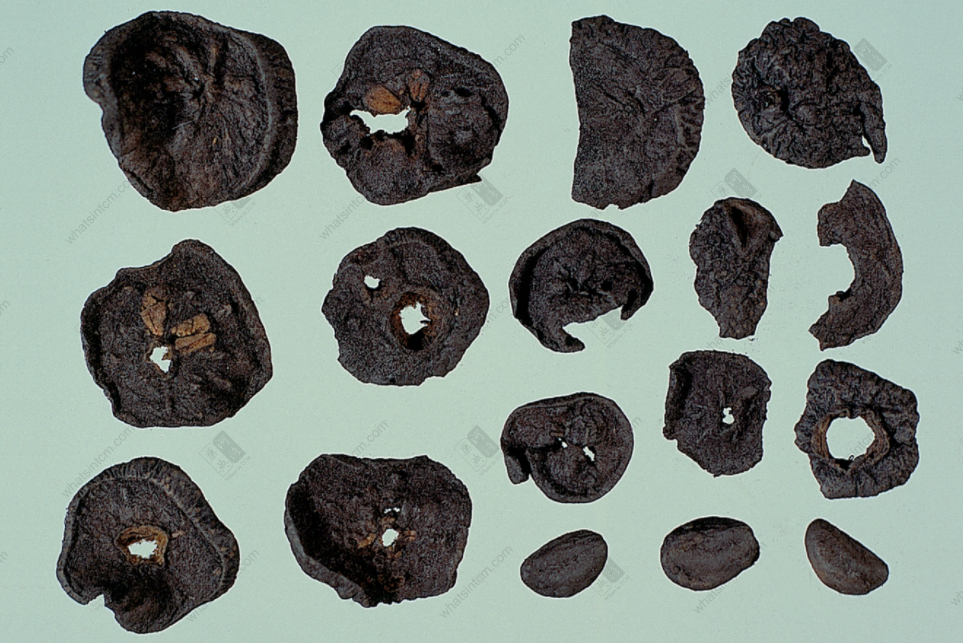 Hawthorn charcoal.
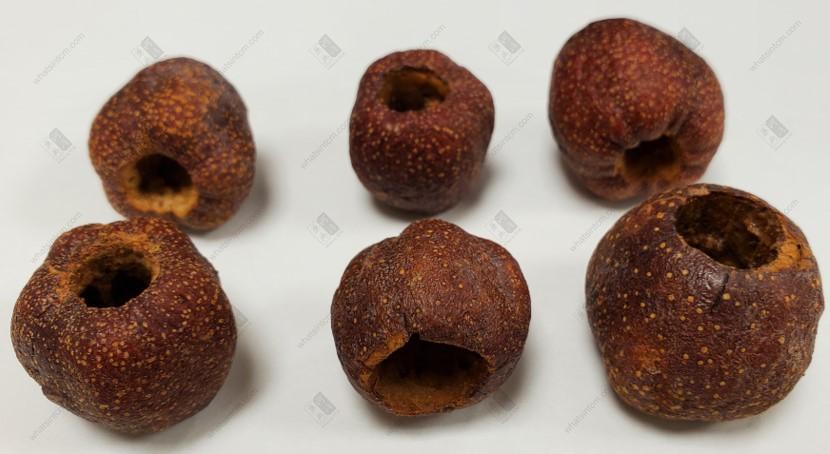 Freeze-dried de-seeded hawthorn. Provided by Dr. Chen Da-zhen
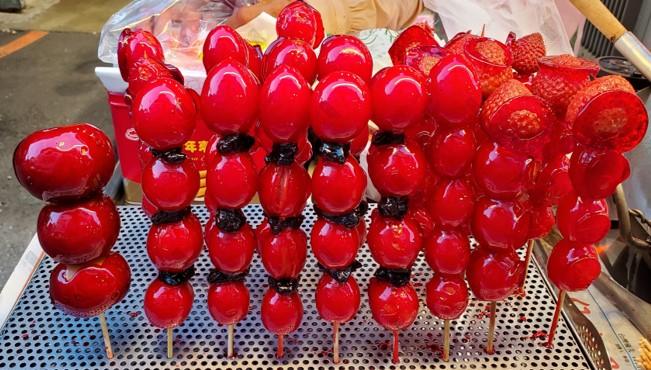
Tanghulu (candied haws): The bag on the left contains pears, the middle contains tomatoes, and the bag on the right contains strawberries. Provided by Dr. Chen Da-zhen
“Southern hawthorn differs from northern hawthorn, its exquisite jinzhao a feast. Its color rivals rouge, its sweetness like honey, it aids in sobering up and aids digestion.” — Yang Jingting, “Miscellaneous Poems of the Capital,” Qing Dynasty
The jinzhao mentioned in the poem is the hawthorn cake sold in markets. The poem also describes hawthorn’s rouge-like red color and its efficacy in dispelling alcohol and aiding digestion. Due to its red color, resembling rouge, hawthorn is also known as “rouge red.”
According to the third edition of the Taiwan Chinese Materia Medica, hawthorn () is the dried mature fruit of the Rosaceae family plants *Crataegus pinnatifida* Bunge or *Crataegus pinnatifida* Bunge var. *major* N.E. Br. It is mainly produced in Shandong, Henan, Hebei, and Shanxi provinces, with a small amount also cultivated in Taiwan, primarily consisting of wild pears. It is typically harvested in autumn when the fruit ripens. This plant was first recorded in the *Erya* as “朹” and used medicinally. Tao Hongjing’s *Commentary on the Divine Farmer’s Materia Medica* during the Liang Dynasty and the *Xinxiu Bencao* (New Compilation of Materia Medica) of the Tang Dynasty referred to hawthorn as “red gourd.” The Song Dynasty’s *Tujing Bencao* (Illustrated Materia Medica) called it “tang qiu zi.” Ming Dynasty’s Li Shizhen stated, “Red gourd, tang qiu, and hawthorn are one thing.” He also noted, “Rarely used in ancient prescriptions; it was only after Zhu Danxi that the efficacy of hawthorn was documented, and thereafter it became an important medicine.” Thus, hawthorn began to be widely used after the Yuan Dynasty. Due to its rosy red color, it is also called “rouge red” and “red fruit.” As it grows on mountains, it is also called “mountain red.” When selecting hawthorn, choose those with large slices, red skin, small seeds, and thick flesh, a faint fragrance, and a sour taste. Depending on its clinical use, there are different processing methods. The most common is sun-drying and slicing, removing impurities, sifting out loose cores and stems, and drying. Another method involves stir-frying hawthorn slices in a pot over low heat until the surface color deepens and slightly scorches, then removing and cooling to make “stir-fried hawthorn.” Alternatively, stir-fry over high heat until the surface is brown and the inside is yellowish-brown, then spray with a small amount of water, remove, and dry to make “charred hawthorn.” Another method is to stir-fry over high heat until the surface is brown and the inside is charred brown, spray with a little water, extinguish any sparks, spread out, and cool to make “charred hawthorn.” A new drying method appearing on the market is freeze-dried hawthorn, which usually has the core removed, appearing hollow to ensure complete drying. Since it is low-temperature dried, active ingredients are well preserved. As it is rich in vitamins and minerals, it is also called a “natural multivitamin,” leading some people to eat it directly as a snack. However, there are some imitations on the market made from the mature fruit of wild pears, a plant of the same family. Several methods can be used for identification. Externally, hawthorn typically has a reddish-brown skin with more noticeable whitish lenticels, while wild pears have yellowish-brown or slightly reddish-brown skin with fainter, less obvious lenticels. The stem of genuine hawthorn is usually symmetrically tubular and concave, and the core is light yellow and hard. Finally, hawthorn has a slightly sour aroma, while wild pears have a pear-like fragrance. These identification methods should allow for clear differentiation.
Hawthorn is most famously associated with tanghulu (candied haws) in history. Legend has it that during the Shaoxi era of the Southern Song Dynasty, Emperor Guangzong’s favorite concubine fell ill, becoming sallow and losing her appetite. Despite the efforts of imperial physicians and precious medicines, she did not recover. Finally, a wandering physician entered the palace, diagnosed the concubine, and treated her with a decoction of hawthorn and brown sugar. She was instructed to eat five to ten pieces before each meal. After following this regimen, the concubine soon recovered. This method later spread to the public and evolved into tanghulu. With the progress of the times, tanghulu sold in markets today also uses strawberries, tomatoes, and other fruits as bases, which are also very delicious.
Besides aiding digestion and resolving food stagnation, hawthorn can also improve irregular menstruation in women. Modern pharmacological research indicates it can help improve high blood pressure. As hawthorn is a commonly consumed food, the government has established standards for the detection of residual sulfur dioxide, heavy metals such as arsenic, cadmium, mercury, and lead, as well as aflatoxins, ensuring public safety in consumption.
【Image provided by】Professor Chang Hsien-che, “Atlas of Authentic Medicinal Materials” https://whatsintcm.com
【Author Introduction】
Chen Da-zhen
Education: Ph.D. in Chinese Medicine, China Medical University.
Current Position: Assistant Researcher, Center for Medical Intelligence, Taichung Hospital, Taichung Veterans General Hospital.
Editor, Chinese Medicine Subject Committee, National Common Textbook Compilation Committee for Chinese Medicine Schools.
Distinguished Lecturer, Industrial Technology Research Institute.
Adjunct Lecturer, School of Post-Baccalaureate Chinese Medicine, China Medical University.
Adjunct Assistant Professor, Department of Pharmacy, Kaohsiung Medical University.
Co-founder of Heluo Materia Medica and www.whatsinTCM.com.