Why is winter the most suitable season to tonify the kidneys? What to eat for kidney health?
[Image provided by] Professor Chang Hsien-Che, “Illustrated Handbook of Authentic Medicinal Materials“
[Author] Chen Ta-Chen
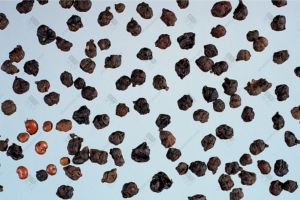
As winter arrives, the north wind howls, and cold chills to the bone. This has been true from ancient times to the present. How to preserve life and nourish health becomes a crucial subject. It is recorded in the “Treatise on the Six Sections of Zangxiang” of the Huangdi Neijing – Suwen (Yellow Emperor’s Inner Canon – Basic Questions): “The kidney is responsible for hibernation, the foundation of storage and sealing, the residence of essence. Its splendor is manifested in the hair, its nourishment is in the bones. It is the lesser yin within yin, connected to the energy of winter.” This passage explains that the kidney governs hibernation, is the source for storing and sealing vital energy (精氣), and is where essence resides. Its external manifestation is seen in the hair, its nourishment is provided to the bones. It is the lesser yin within yin, connected to the qi (energy) of winter. Therefore, winter primarily focuses on tonifying kidney qi.
Basically, the function of kidney qi affects all human metabolism, having a close impact on reproduction, growth, and development throughout life. Additionally, the kidney governs water, playing a role in regulating the metabolism of body fluids. In addition to being similar to the Western medical understanding of kidney filtration and urination, regulating the body’s water balance, it also includes functions like endocrine regulation. Furthermore, the kidney governs the reception of qi, primarily meaning that the kidney can regulate and assist the lungs in inhalation. And the kidney’s emotion is fear, indicating that human fear is closely related to the kidneys. Finally, the kidney stores essence. Besides referring to the kidney’s influence on reproduction, it also points out that it is the root source for forming the human body and driving human life activities. From the above, it is clear that the kidney’s functions play a very important role in the body’s normal metabolism. There are many Chinese medicinal materials that nourish kidney qi, and most dark-colored foods in a general diet have such effects. Here, we introduce two traditional Chinese medicinal materials.
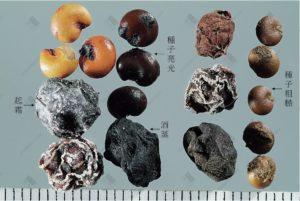
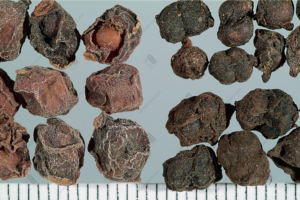
The first is Schisandra berry (Wǔwèizǐ). According to the third edition of the Taiwan Herbal Pharmacopoeia, Wǔwèizǐ refers to the dried mature fruits of Schisandra chinensis (Turcz.) Baill. or Schisandra sphenanthera Rehder et E.H.Wilson from the Magnoliaceae family. The former is commonly known as “Northern Schisandra (Běi Wǔwèizǐ),” and the latter as “Southern Schisandra (Nán Wǔwèizǐ).” Northern Schisandra is mainly produced in the Northeast region and Hebei, among other places. Its pulp is soft, some surfaces are black-red or show “white frost,” and its diameter is larger. Southern Schisandra is mainly produced in Sichuan, Hubei, Shanxi, Yunnan, and other places. Its surface is dark brown, shriveled, wrinkled, the pulp often adheres tightly to the seeds, and its diameter is smaller. Although ancient physicians believed that Southern Schisandra was extraordinary for coughs caused by wind-cold, and Northern Schisandra was most effective for deficiency and chronic strain, currently Northern Schisandra is generally more commonly used, and its quality is also better than Southern Schisandra. The market price for Northern Schisandra is usually higher, sometimes double that of Southern Schisandra. Schisandra berry is effective in treating various types of coughs. Therefore, the Japanese book Wakan Yakuko once recorded it as: “God of Coughs.” The book Bencao Qiuzhen also states: “Schisandra berry is a crucial medicine for coughs. It is used for all coughs caused by wind-cold, summer-heat, dryness, chronic strain, kidney water deficiency, kidney fire deficiency, and prolonged cough with asthma.” Therefore, in addition to being effective for various types of coughs, it also has good effects on coughs caused by kidney water or kidney fire imbalances.
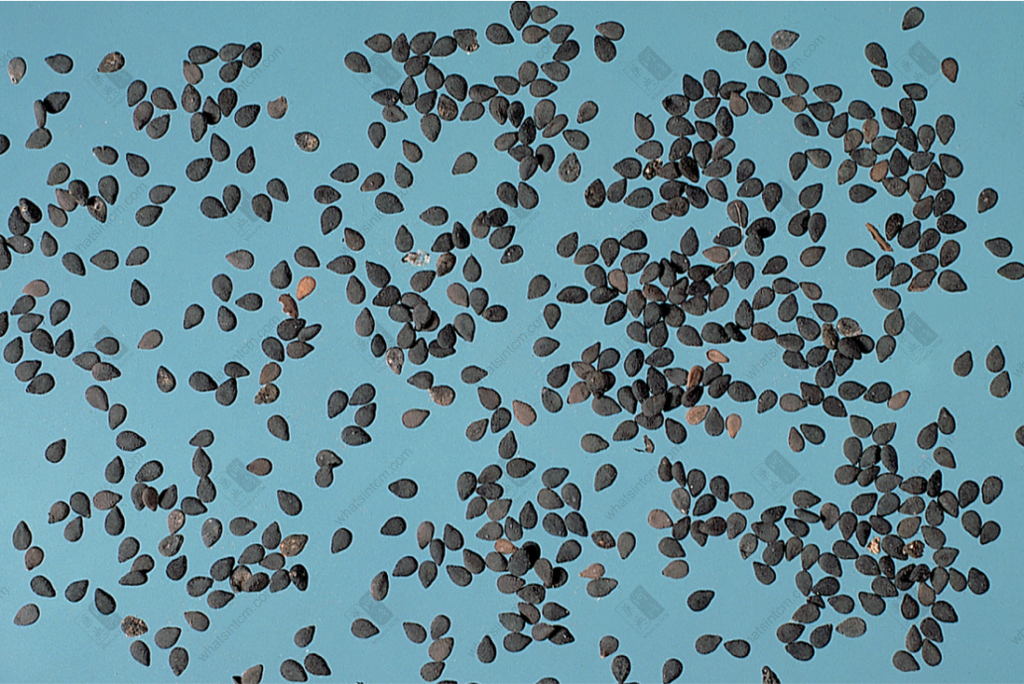
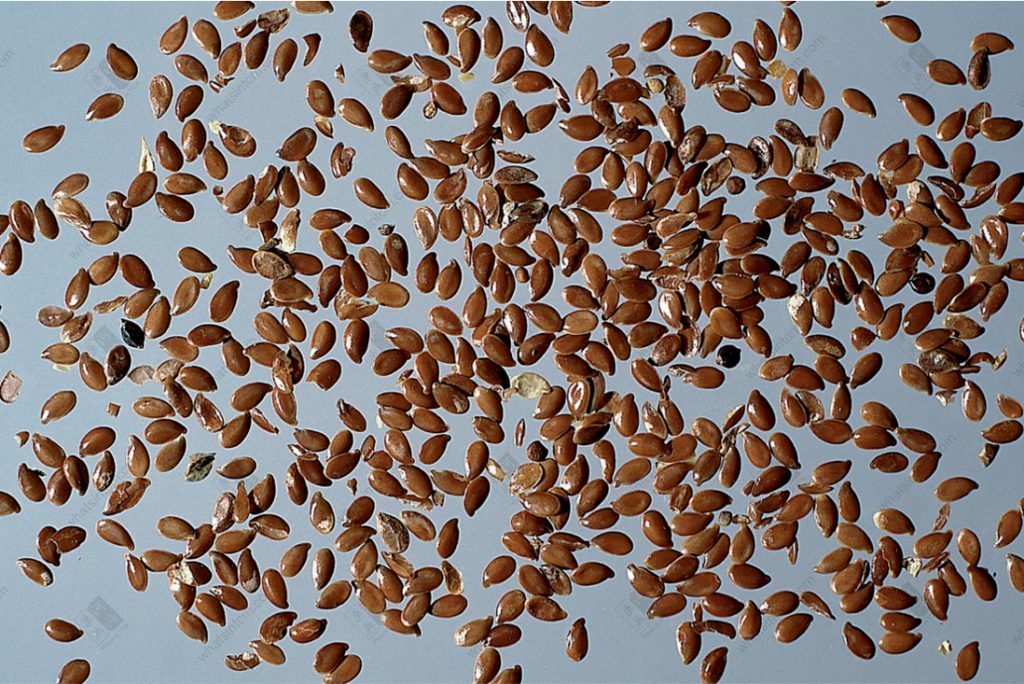
The other is Sesame (Húmá). Due to its black color, it is also known as black sesame (https://whatsintcm.com/en/dt_articles/sesame/. According to the third edition of the Taiwan Herbal Pharmacopoeia, Húmá refers to the dried mature seeds of Sesamum indicum L. from the Pedaliaceae family. Sesame is mainly produced in Henan, Shandong, Hubei, Anhui, and other places. It is also cultivated and harvested in southern Taiwan, primarily once a year, sometimes twice. It is also known as Jùshèng (巨勝) or Yóumá (油麻), and due to its resemblance to fleas on a dog, it is also called Gǒushī (狗蝨, dog flea). The Shennong Ben Cao Jing (Divine Farmer’s Materia Medica) from the Wei, Jin, Northern, and Southern Dynasties recorded: “Sweet in taste, neutral in nature, non-toxic. It mainly treats internal injury and emaciation, tonifies the five zang organs, boosts qi and strength, promotes muscle growth, and fills the brain and marrow. Long-term consumption lightens the body and prevents aging.” This illustrates its excellent tonic effects. There is another common flaxseed (亞麻仁), also known as “Tick Sesame” (壁蝨胡麻), which might be misused. Its color and appearance are different, and its efficacy also varies, so attention should be paid. Additionally, flaxseed produces mucilage during cooking, which can also serve as a basis for identification. Winter is primarily a season for “storage.” Besides paying attention to diet, it’s also important to focus on keeping warm to prevent the invasion of cold evil into the body.