



Autumn Arrives, Throat Congested with Phlegm: Common Expectorant Drugs and Their Toxicity
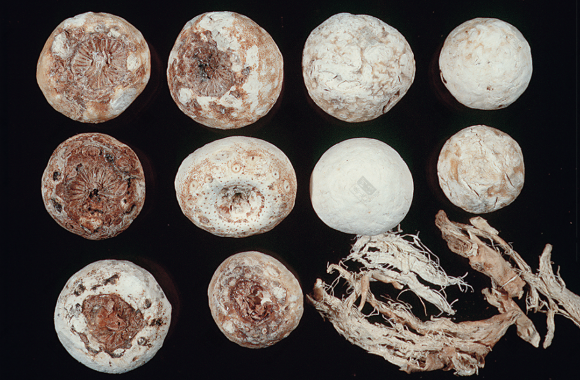 Ginger-processed Pinellia: Features a recessed cavity and brown spots.
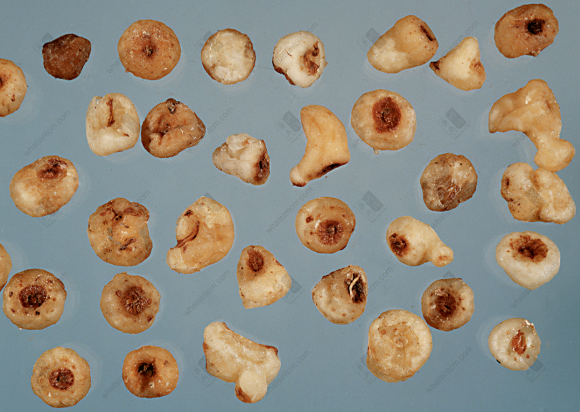 Processed Pinellia (Zhū Bànxià)
 First-grade Ginger-processed Pinellia: Resembles a sheep’s eye; tastes pungent and irritates the throat.
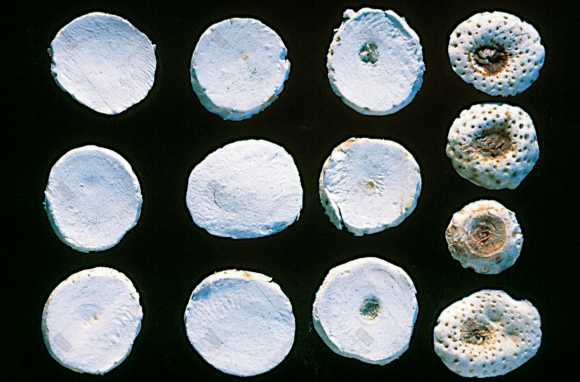 First-grade Processed Pinellia (Fǎ Bànxià): White in color, with a powdery texture being ideal.
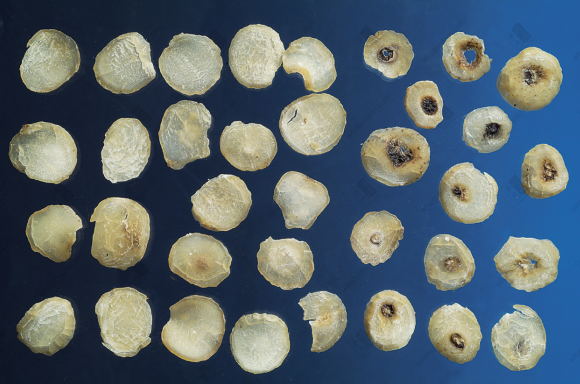 Prepared Pinellia (Zhì Bànxià): Not fumigated with sulfur.
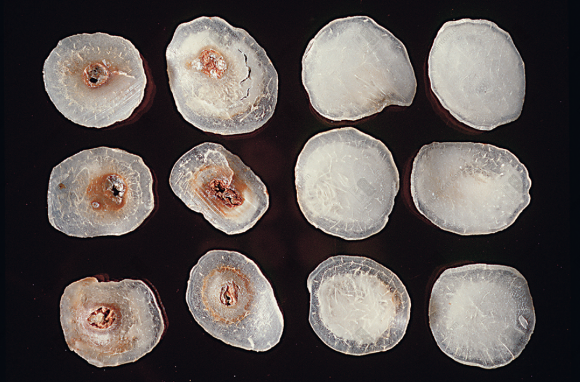
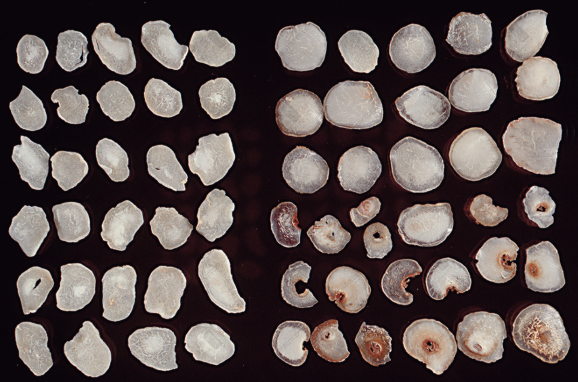 Left: Sliced Water Pinellia; Right: Sliced Pinellia
“When the Pinellia is fully grown, Thunderbolt rattles the phlegm-filled palace, deafening the ears. Prepared with ginger, it can be guided. Substitute with Fritillary, and confusion may arise.
It ensures that phlegm and dampness cannot reside in the stomach; one must recognize the risk of miscarriage from its use. For those with deficient blood, excessive sweating, and dry thirst, the ancients thrice warned against its use.”
By Qing Dynasty Official Zhao Jinshu
This poem explains the growing season and preparation methods of Pinellia, as well as its efficacy in treating phlegm and dampness, and its contraindications.
According to the third edition of the Taiwanese Herbal Pharmacopoeia, Pinellia (https://whatsintcm.com/dt_articles/%e5%8d%8a%e5%a4%8f/) is the dried rhizome of the Araceae plant *Pinellia ternata* (Thunb.) Breitenb. The pharmacopoeia also lists raw Pinellia in the “List of Highly Toxic Chinese Medicines” to alert the public to its usage. It is primarily produced in Sichuan, Hubei, Hunan, Anhui, and other regions, with Sichuan producing the highest quality. It is also produced in Korea and Japan, with scattered cultivation in Taiwan. Its common names include Dìwén, Shǒutián, and Shìgū. Because its shape resembles jade, it is also called Shuǐyù. As its medicinal form resembles a sheep’s eye, it is also called Yángyǎn Bànxià. As it typically grows with three leaves, it is also known as Sānyè Bànxià. The *Book of Rites* records: “In the fifth month, Pinellia grows, around the middle of summer, hence the name.” It is usually harvested in summer and autumn, then washed, the outer skin and fibrous roots removed, and dried for use. The medicinal material is spherical, white or light yellow on the surface, with the characteristic “recessed cavity” at the top where the rhizome scar is located, and “brown eyes” or “speckles” around the stem base scar from numerous fibrous root marks. Large, firm, white, powdery, and pungent, with a spicy, throat-irritating taste is considered best. Commonly confused medicinal materials include the rhizomes of *Typhonium giganteum* (Zhǎngyè Bànxià) or the tubers of *Pistia stratiotes* (Shuǐ Bànxià). Additionally, in the past, due to high prices, tubers of *Alocasia macrorrhizos* (Gūpó Yù), also from the Araceae family, were sometimes processed and cut into round slices for use. Therefore, caution is advised when purchasing medicinal materials.
This medicinal material was first recorded in the *Shen Nong Ben Cao Jing* and classified as a lower-grade herb. In the *Ming Yi Bie Lu*, it is recorded: “Raw is slightly cold, processed is warm, and toxic. It primarily dispels phlegm-heat in the heart and abdomen, chest oppression, cough with upward gas, severe pain and hard masses below the heart, vomiting from seasonal illnesses, subsidence of carbuncles and sores, miscarriage, and treats flaccidity and jaundice, beautifies the face and eyes. Raw induces vomiting, processed induces bowel movements.” This indicates its toxicity and that processed Pinellia has a good effect in stopping vomiting. The great physician Zhang Zhongjing also skillfully used Pinellia, and many of his formulas incorporate it, such as Ban Xia Xie Xin Tang, Ban Xia Hou Po Tang, and Xiao Chai Hu Tang, highlighting its importance.
There are several different processing methods depending on clinical use: Qing Bànxià is primarily prepared by soaking raw Pinellia in water with alum for two weeks, then changing the water and soaking for another two weeks, followed by soaking in a concentrated alum solution for a week. Finally, it is boiled until the white core disappears and it no longer causes numbness. It is then dried and stored. Some methods also involve processing with ginger or licorice. Ginger-processed Pinellia (Jiāng Bànxià), primarily used for stopping vomiting, is prepared by soaking raw Pinellia in ginger juice and water for five days, then changing the water until the foamy substance disappears and the taste is no longer numbing. It is then taken out, boiled with ginger juice over medium heat for 4-6 hours, and dried. Some methods also use licorice and ginger. Another type is Fǎ Bànxià, where Pinellia is separated by size, soaked in water until the inner dryness is gone, then taken out. Appropriate amounts of licorice are added and decocted twice. The decoctions are combined and poured into a lime solution prepared with water. It is stirred daily, 1-2 times a day, until the cut surface is uniformly yellow and a slight numbing sensation is felt upon tasting. It is then taken out and washed. There is also the preparation method for Bànxià Qū, primarily developed by people in Langzhong, Sichuan, during the Qing Dynasty. As Langzhong belonged to Baoning Prefecture at that time, Bànxià Qū is also called Baoning Bànxià, so one should be aware of this when purchasing.
Pinellia contains homogentisic acid, which gives it a pungent, bitter, and astringent taste. It also contains ephedrine, which has cough-relieving and expectorant effects. Furthermore, as plants of the Araceae family contain calcium oxalate needle crystal bundles, they can irritate the oral mucosa and throat, causing discomfort. Raw Pinellia, when treated with high temperatures, loses its emetic components. Therefore, if its emetic properties are desired, it must not be subjected to high-temperature processing. Raw Pinellia is toxic. If accidental poisoning occurs, symptoms may include a burning and tingling sensation in the oral and pharyngeal mucosa, stomach discomfort, nausea, and a feeling of chest tightness. Medical attention should be sought immediately, or raw ginger can be used to alleviate the symptoms. The Traditional Chinese Medicine Department of Taiwan has established standards for sulfur dioxide content and heavy metal content (arsenic, cadmium, mercury, lead) to ensure public safety in medication, so the public can use it with confidence.
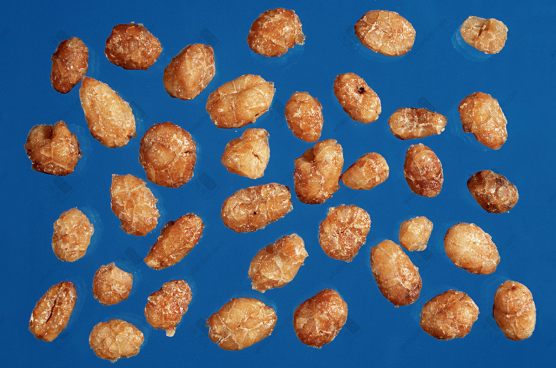 Prepared Pearl Pinellia (Zhì Zhū Bànxià)
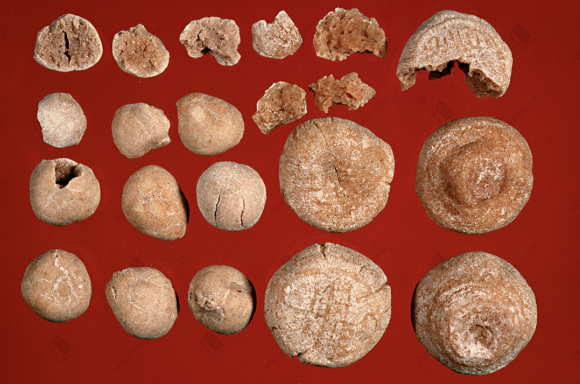 Pinellia Ferment (Bànxià Qū)
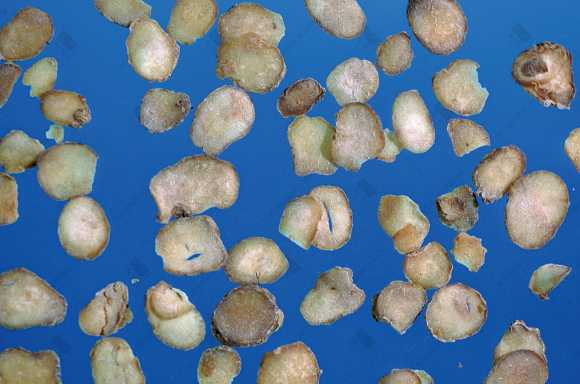 Sliced Water Pinellia
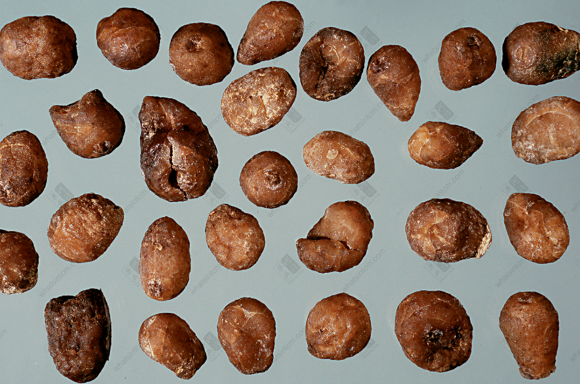 Pearl Pinellia Prepared with Ginger and Vinegar
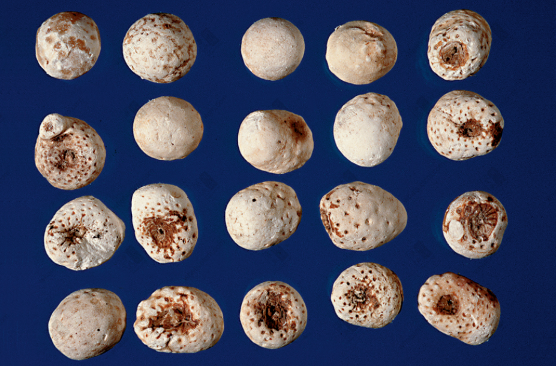 Prepared Pinellia (Fǎ Bànxià): Speckles are visible.
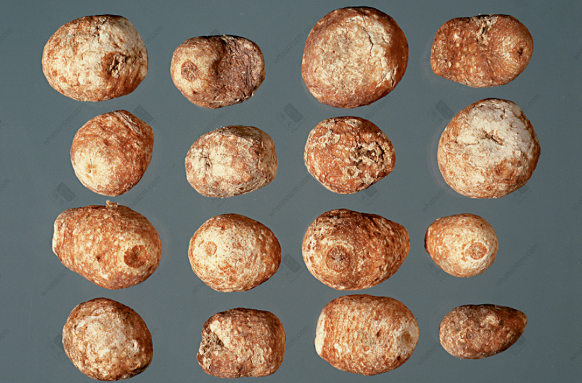 Whole Water Pinellia
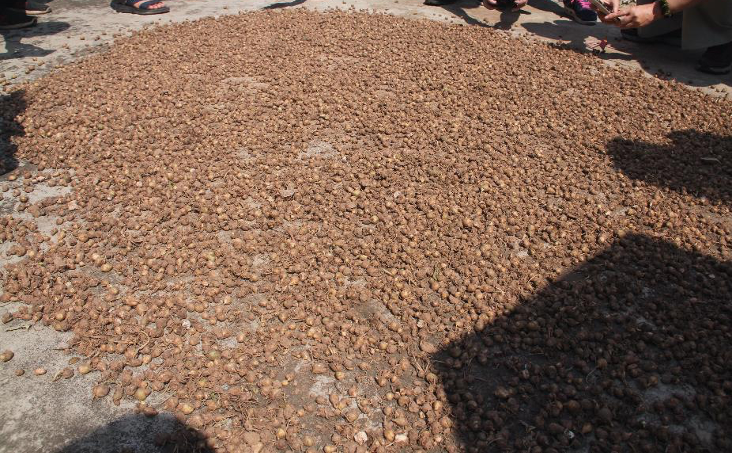
Pinellia just harvested, outer skin not yet removed. **Provided by Dr. Chen Dazhen**
【Image provided by】Professor Zhang Xianzhe, “Illustrated Handbook of Authentic Medicinal Materials” https://whatsintcm.com