



Duhuo (Angelica Pubescens Root)
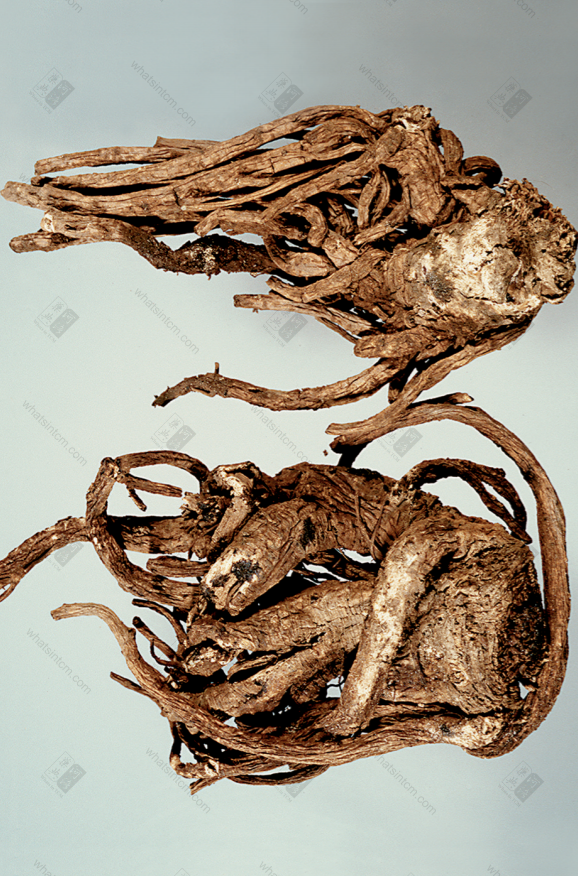 Ziqiu Chuan Duhuo (Mortar = Depression) (Large head, cylindrical branches, grayish-brown)
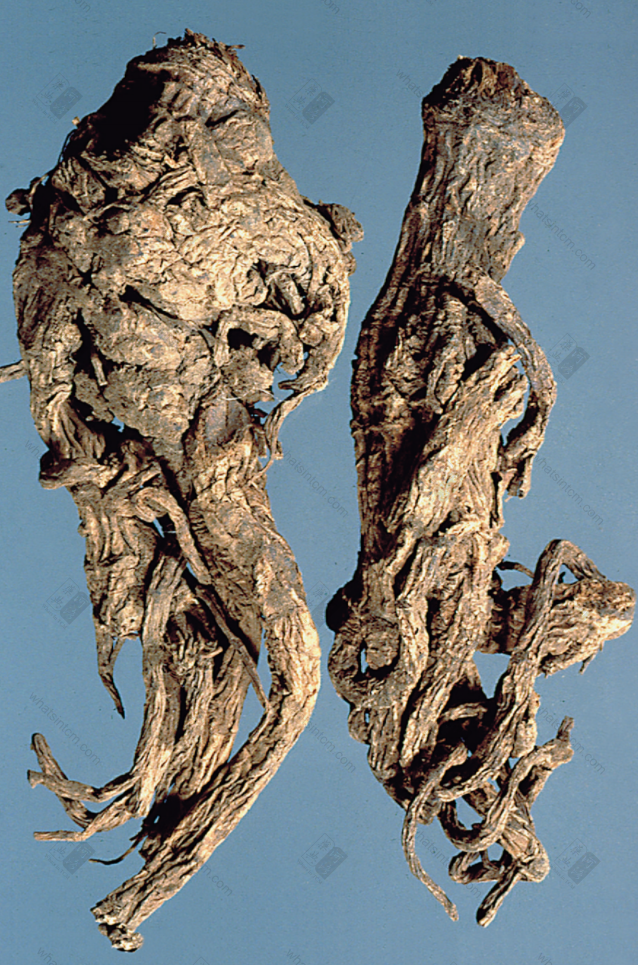 Chuan Duhuo (Hard texture, softens when exposed to moisture)
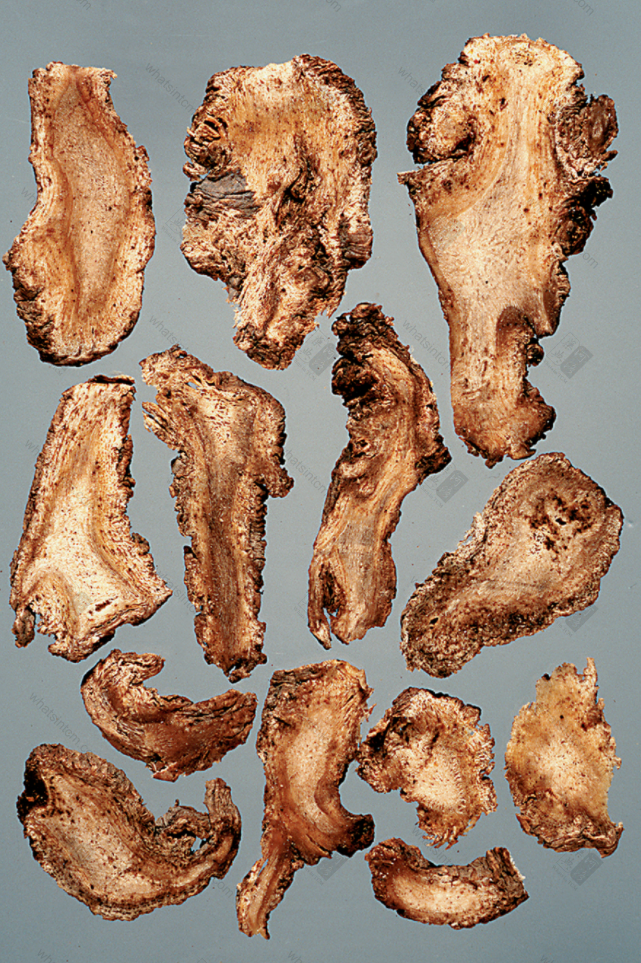 Duhuo Slices (Yellowish-brown, many brown oil dots)
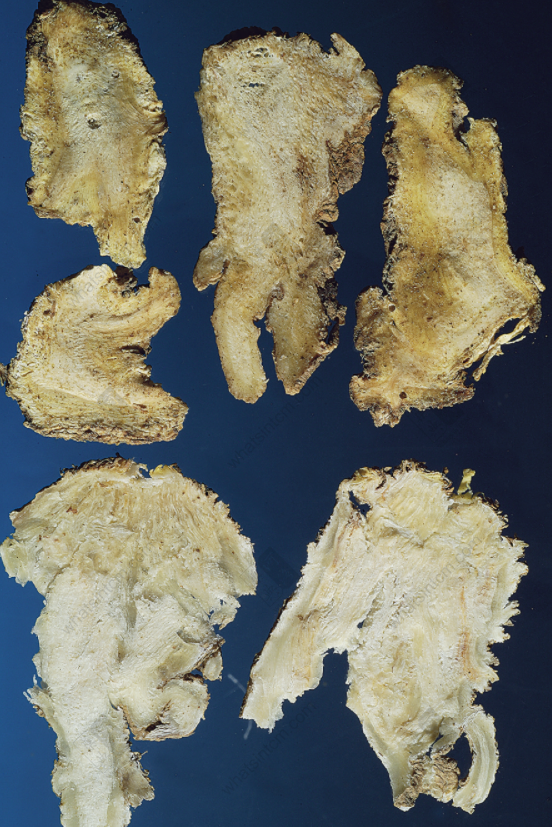 Duhuo Slices (Top) Danggui Slices (Bottom) (Duhuo: Brown, bitter, numbing, spicy, peculiar aroma. Danggui: Yellow, sweet, slightly bitter, fragrant)
【Naming】
【Source】
Shen Nong’s Herbal Classic, Upper Grade
【Common Usage Degree】
B
【Botanical Origin】
The dried root of Angelica pubescens Maxim. f. biserrata Shan et Yuan or Angelica pubescens Maxim. (both from the family Umbelliferae).
【Characteristics】
(1) Ziqiu Duhuo (Badong Duhuo, Rou Duhuo): The original plant is Angelica pubescens Maxim. f. biserrata Shan et Yuan. The rhizome is short and thick, the root head is enlarged and conical, with many transverse wrinkles, 1.5~4.5㎝ long and 1.5~2.5㎝ in diameter. The surface is brown, with many irregular longitudinal wrinkles, and the top has depressed stem scars. Several roots, cylindrical, curved, of varying lengths, with many branches, up to about 30㎝, and 0.5~1.5㎝ in diameter. The surface is relatively rough, with deep wrinkles, and the texture is soft and flexible. The whole is grayish-brown or brown, with longitudinal wrinkles, transverse lenticels and root scars. The cut surface shows a light grayish-brown bark with curved fissures, dark brown rays, dense oil spots, exuding yellow oil droplets when squeezed, and a dark brown ring near the cambium. The xylem is yellowish. The texture is soft and pliable, the fracture surface is off-white, the cambium ring is brown, the aroma is fragrant and rich, the aroma is turbid, the taste is bitter and slightly sweet, and then pungent.
(2) Xiang Duhuo (Zhe Duhuo, Ji Duhuo): The original plant is Angelica pubescens Maxim.. Different from the above, the rhizome is enlarged and conical, the surface is dark brown to grayish-brown, with many irregular longitudinal wrinkles. Several roots, slightly curved, about 5~12㎝ long and about 1.5~3㎝ in diameter, with many branches. The texture is light and brittle, and easily broken. The cut surface shows a grayish-white phloem and cortex with fissures, scattered brown-yellow oil spots, and a brown cambium. The xylem is dark brown, accounting for about 1/2 of the diameter. The aroma is fragrant but weaker, and the taste is slightly sweet and spicy.
Prepared slices are yellowish-brown or light grayish-brown, with many obvious yellow-brown oil spots visible on the cut surface, or slightly arranged in a ring shape, with chrysanthemum patterns or hollow centers. The aroma is spicy and fragrant but more turbid, and the taste is bitter, spicy, and numbing to the tongue.
【Identification】
“Puji Fang” (Prescriptions for Universal Relief): “The best Duhuo roots have ghost eyes.” “Bencao Pinhui Jingyao” (Essentials of Materia Medica): “The ones from Shu Han are the best.” “Bencao Pinhui Jingyao” (Essentials of Materia Medica): “The ones with large hollow roots are good.”
1. Ziqiu Duhuo: The best are those with thick roots, strong aroma, and oily texture.
2. Shan Duhuo: The best are those with thick roots, soft texture, and fragrant aroma.
【Identification Terminology】
1. Niutou Duhuo (Oxtail Duhuo): Duhuo roots are single-branched, rarely branched, and the root head often retains small stem bases and yellow leaf tips, resembling an oxtail.
2. Jiu (Mortar/Depression): Refers to the depressed stem scar at the top of roots and rhizomes. “Bencao Gangmu” (Compendium of Materia Medica) records: “Duhuo has mortars like ghost eyes.” White Flower, Shengma, and other medicinal materials also have mortars. The mortars of Ginseng, Jiegeng, and Nan Shashen are specifically called “Lu Wan” (Reed Bowls).
3. Fupi (Floating Skin): Refers to the cork layer on the surface of certain medicinal materials. It is often easily separated from the inner tissues and falls off. Such as the cork layer of Shan Duhuo root.
【Chapter】
Roots