

Sanqi (Notoginseng)
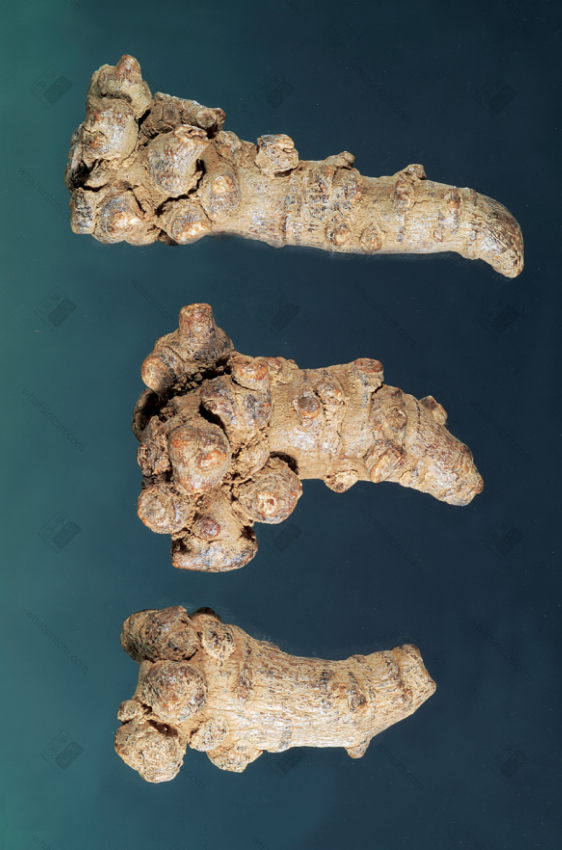 Sanqi (Notoginseng) 30 heads (Copper skin, lion head, nail head) (Large, solid pieces)
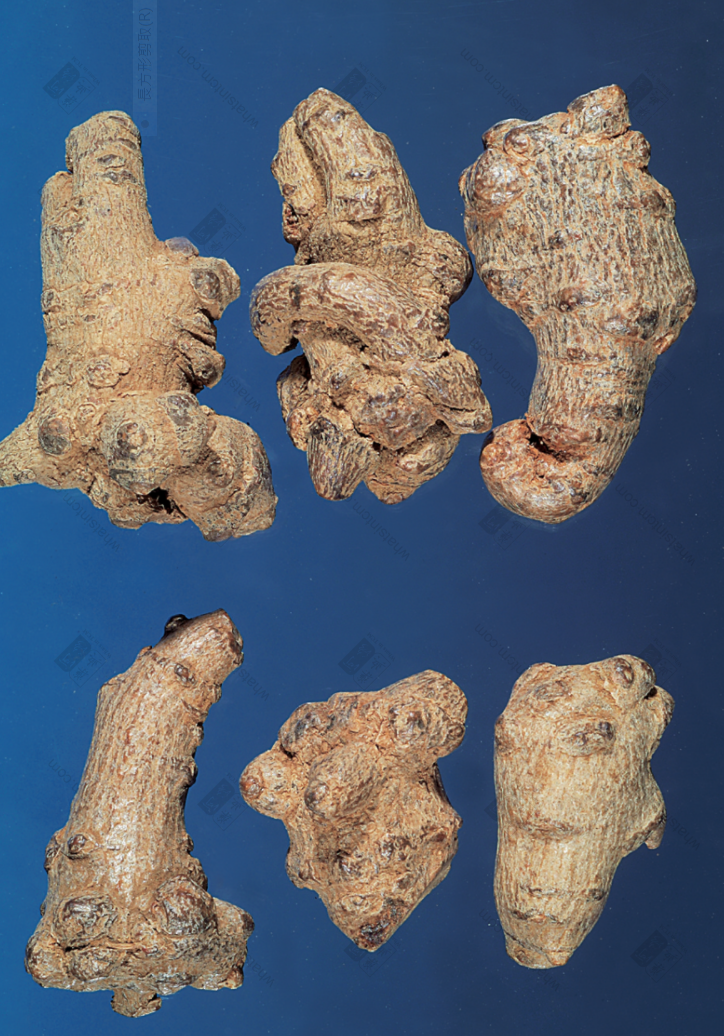 Sanqi (Notoginseng) (60 heads on top, 80 heads on bottom) (Large, solid, smooth, greyish-yellow pieces)
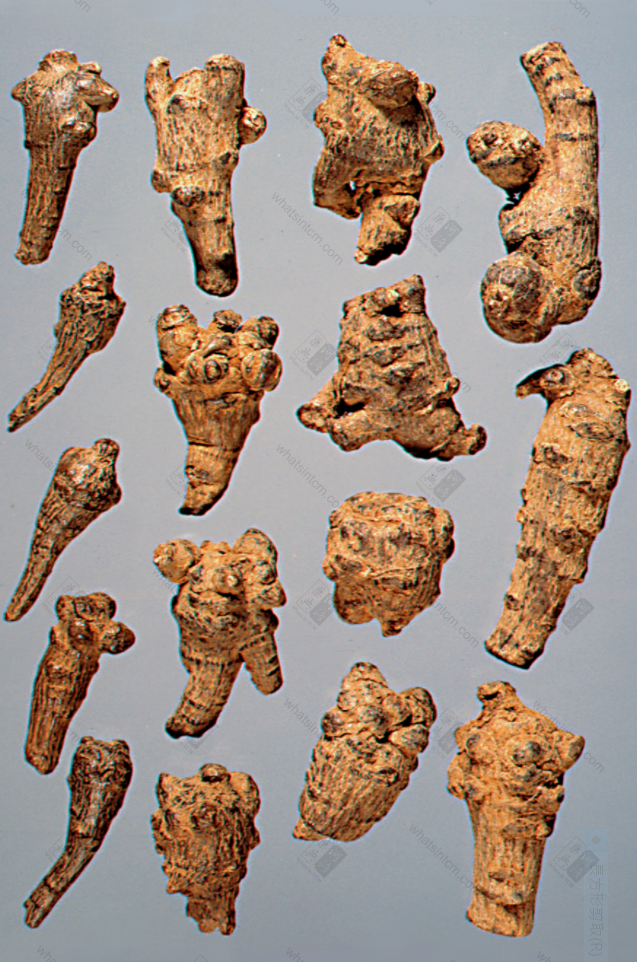 Sanqi (Notoginseng) (200 heads on the left, 80 in the middle two rows, 100 on the right)
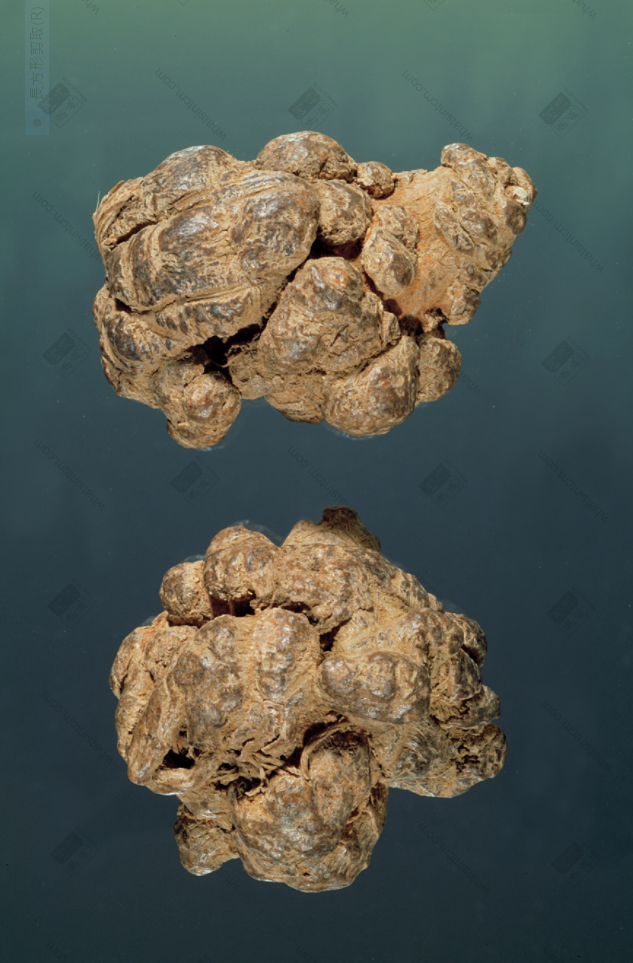 Sanqi (Notoginseng) (Small grains, clumped together)
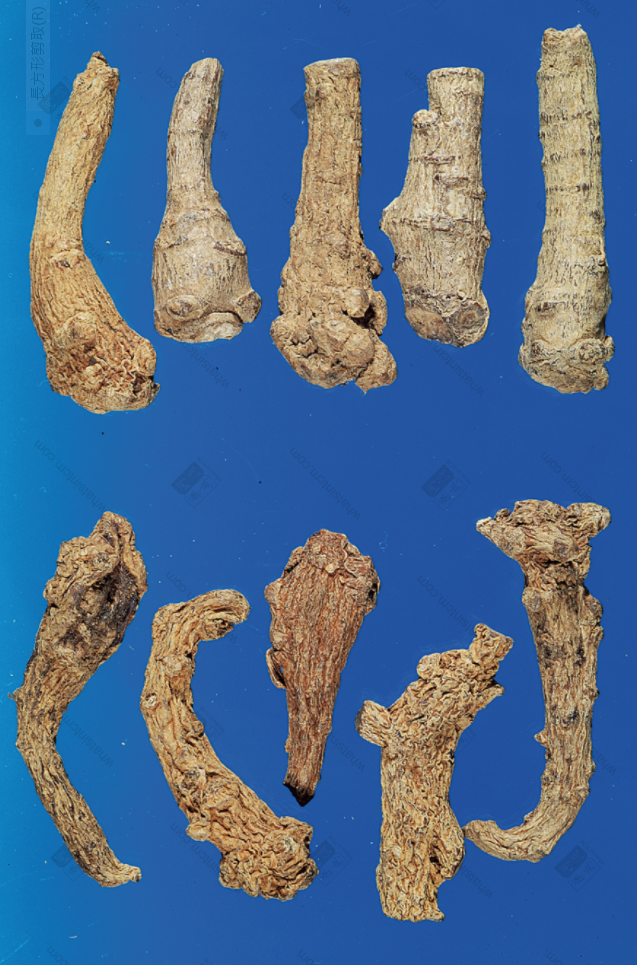 Sanqi (Notoginseng) 200 heads (Full-bodied on top, thin and shriveled on the bottom)
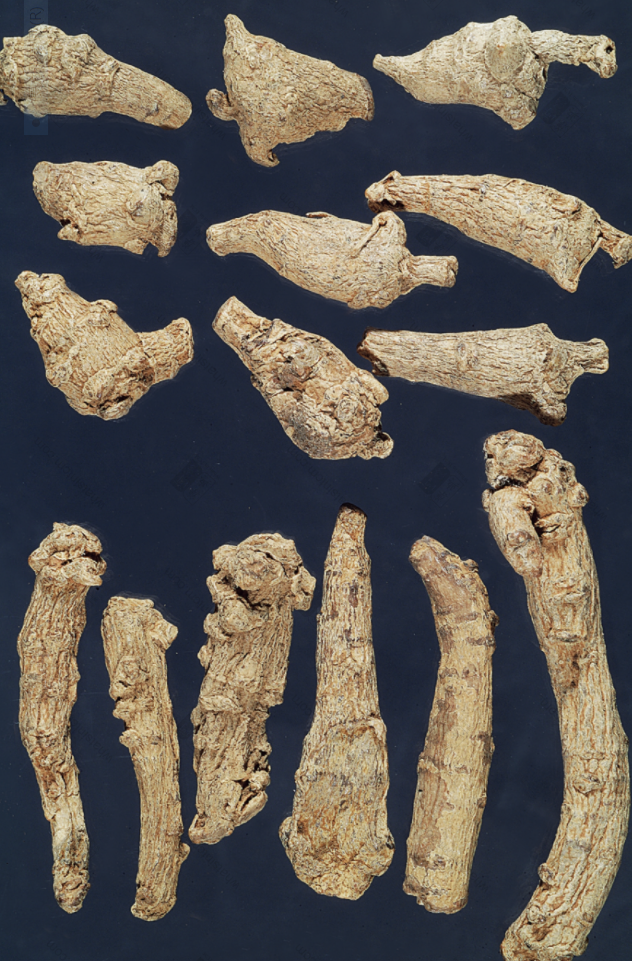 Sanqi (Notoginseng) (400 heads on top, strip goods on the bottom)
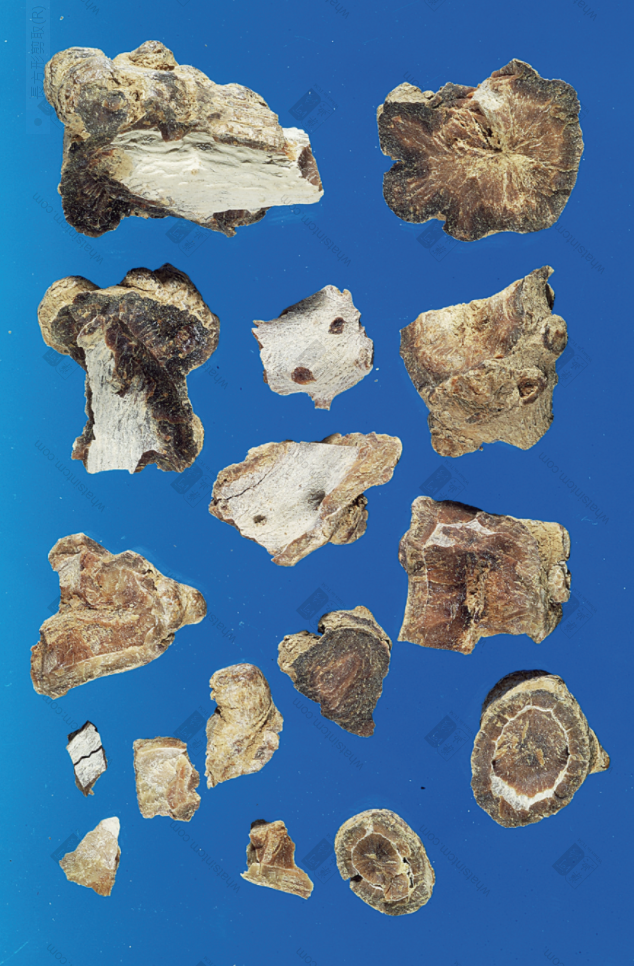 Sanqi (Notoginseng) (Broken 40, 70 heads) (Copper skin, iron bone) (Radiating texture, horny)
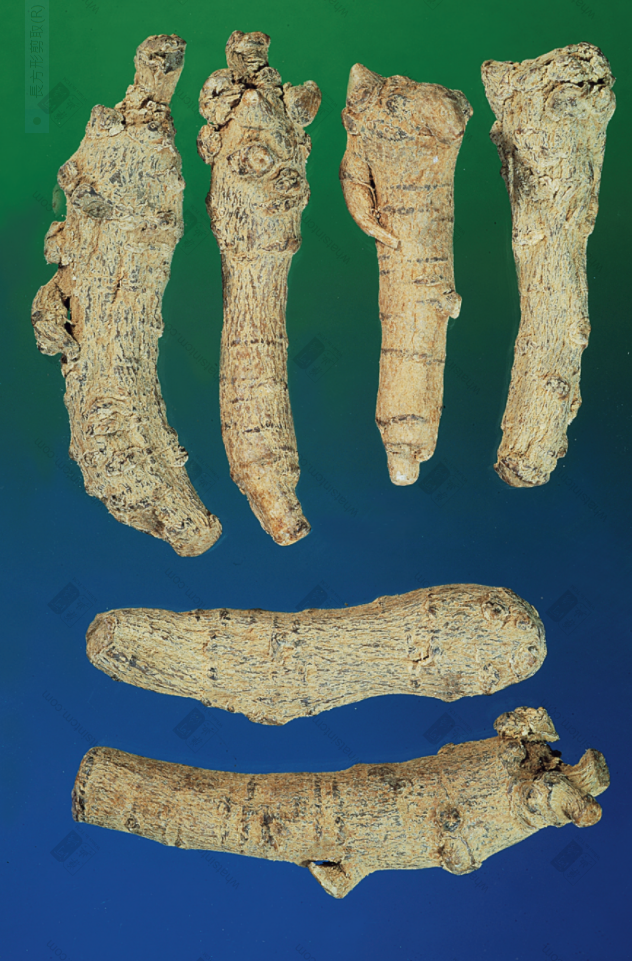 Sanqi (Notoginseng) (Elongated shape)
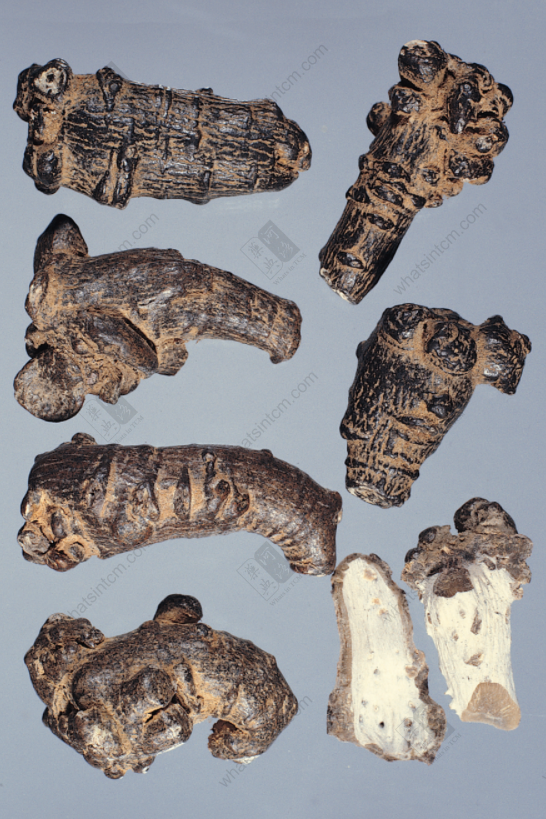 Iron Skin Sanqi (Notoginseng) (30 heads on the left, 40 on the right, broken open on the lower right) (Iron skin, iron bone)
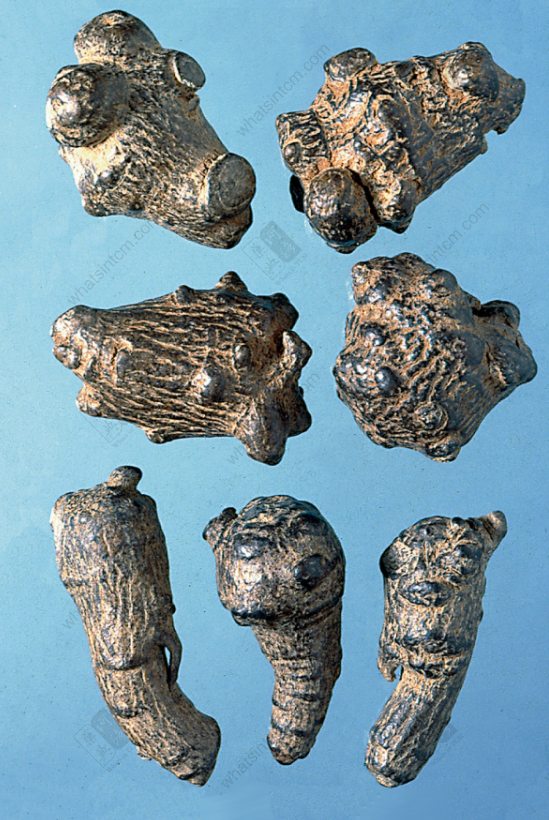 Iron Skin Sanqi (Notoginseng) (80 heads on top, 100 on the bottom)
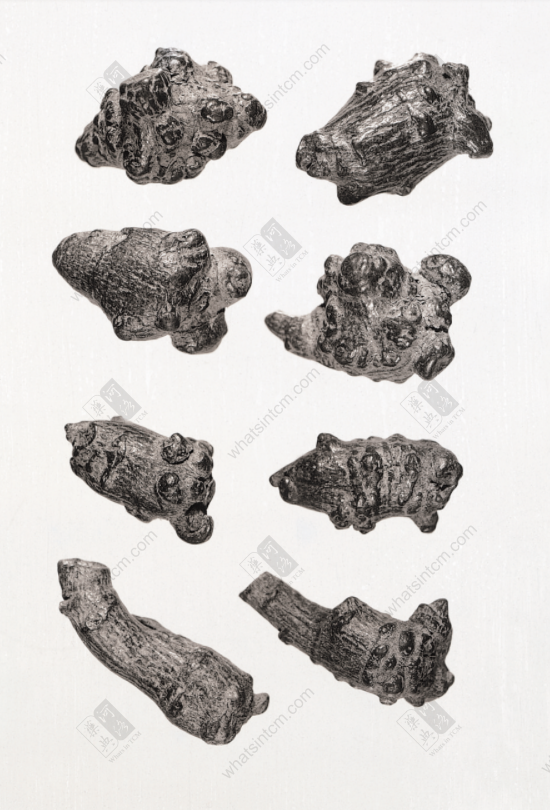 Iron Skin Sanqi (Notoginseng) (From the 1984 Chinese Materia Medica Atlas)
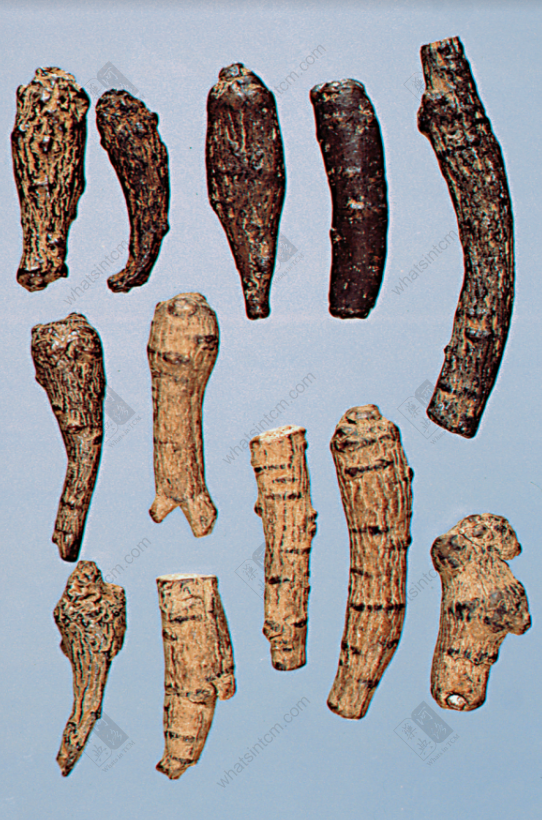 Sanqi (Notoginseng) Tail
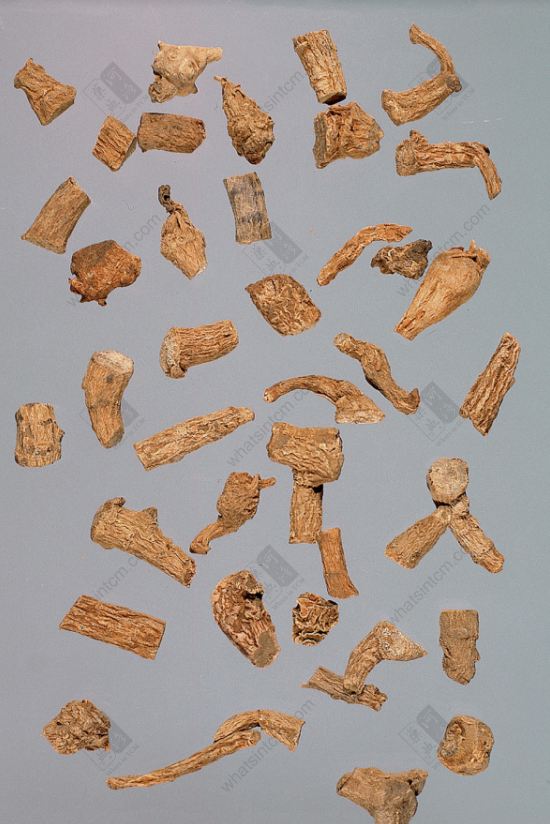 Sanqi (Notoginseng) Thin Tail
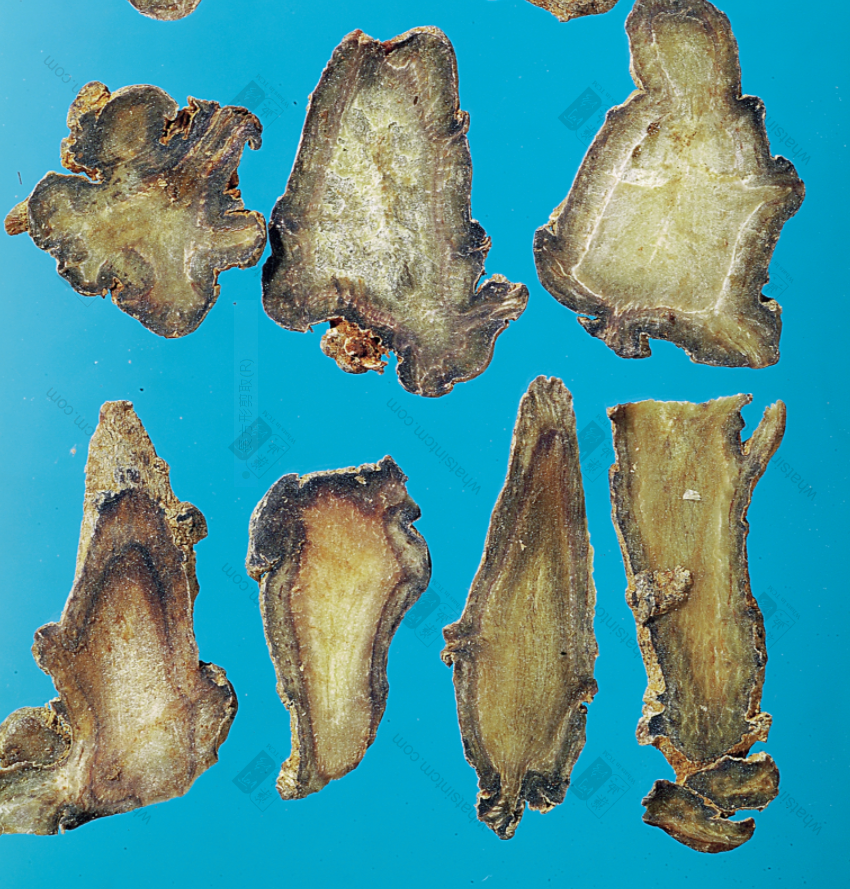 Processed Sanqi (Notoginseng) Slices (Original color, copper skin) (Clear layers, smooth horny texture)
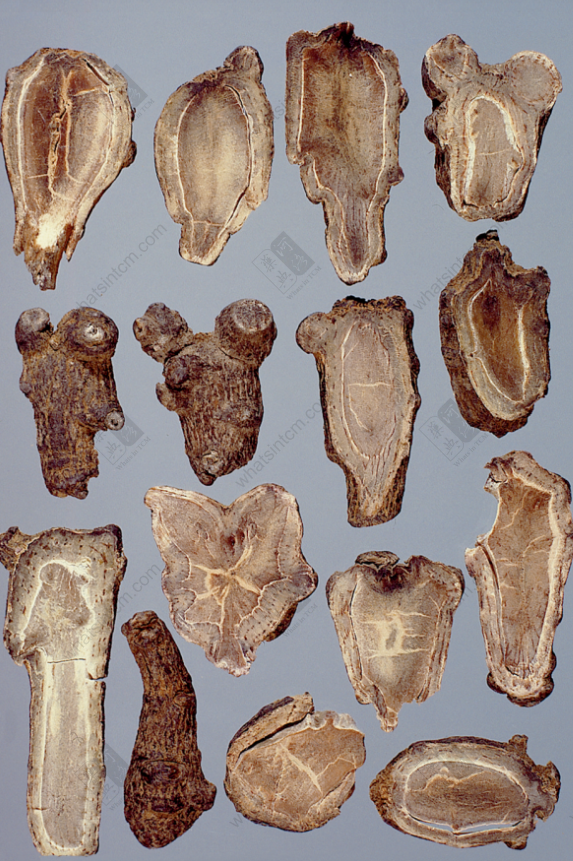 Processed Sanqi (Notoginseng) Slices (Iron skin)
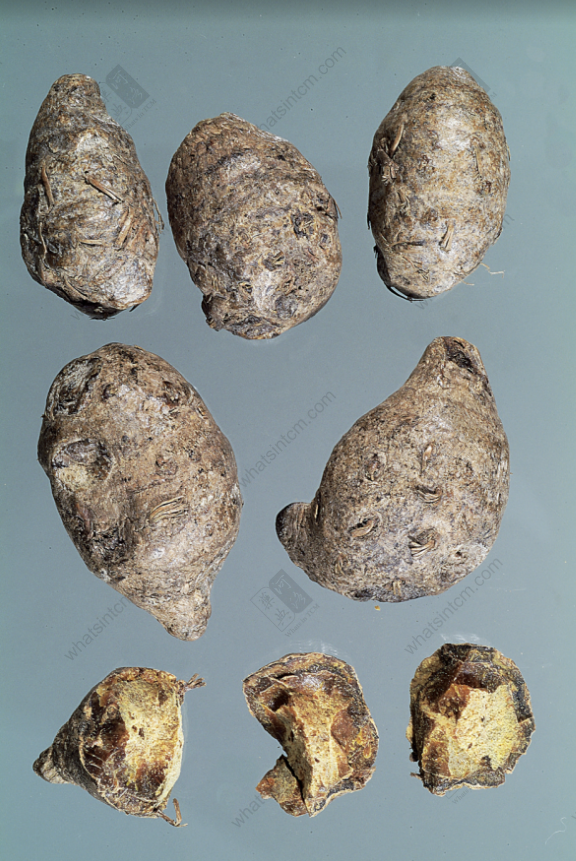 Curcuma zedoaria as a fake Sanqi (Notoginseng)
【Naming】
【Source】
Compendium of Materia Medica
【Common Use Level】
B
【Botanical Origin】
The dried root of Panax pseudo-ginseng Wall. var. notoginseng (Burk) Hook et Tseng, of the Araliaceae family.
【Characteristics】
This product is irregularly cylindrical or fusiform in shape, approximately 3-5 cm long and 0.3-3 cm in diameter. The upper part is surrounded by several nodular protrusions (lion’s head, monkey’s head, nipple-like protrusions) of branch roots. The lower end gradually narrows and is rarely branched. The outer surface is greyish-yellow (copper skin) or brownish-black (iron skin), with a copper skin and iron bone body. The nodular protrusions are lumpy and often rubbed to a brown or black color, and have a waxy luster. It is firm and not easily broken. The cross-section has obvious wood grain. Copper skin is the original color, while iron skin is blackened with charcoal in a tumbler and polished with wax to give it a glossy appearance.
Prepared slices: 1-2 cm long, 2 mm thick, with a brownish-black or greyish-yellow skin, with small brown resin duct spots. The cambium ring is obvious, the xylem is smooth and horny, and the vessels are radially arranged, exhibiting a radiating texture. They are yellowish-green or greyish-white in color and have a slightly sweet taste at first, followed by bitterness.
Sanqi (Notoginseng) powder is a greyish-white or greyish-yellow powder with a bitter and slightly sweet aroma. It is considered genuine if it can turn pig’s blood into water when added to it.
【Processing】
1. Grind into fine powder 2. Processed Sanqi (Notoginseng) slices.
【Identification】
Collection of Proven and Effective Formulas: “Sanqi (Notoginseng) tastes sweet. It is genuine if the powder turns pig’s blood into water.” Simple Formulas of Materia Medica: “Wild is better.” Supplement to Drug Differentiation: “Fake Tian Sanqi (Notoginseng) is made by counterfeiting with Curcuma zedoaria.”
Good quality has been aged for a long time, is large and solid, has a fine outer skin, a deep color, nodular protrusions, long “nail heads”, a greyish-black cross-section, no cracks, is heavy, and tastes sweet.
【Identification Terminology】
1. Nail head: Specifically refers to the branch root scars with several nodular protrusions on the upper part of Sanqi (Notoginseng) medicinal material.
2. Seven roots: Generally refers to the fibrous roots and fine branch roots of Sanqi (Notoginseng).
Winter Sanqi (Notoginseng): Refers to Sanqi (Notoginseng) medicinal material harvested around November each year after the seeds mature. It is thin and of lower quality.
3. Skin: Customarily refers to the part of root and rhizome medicinal materials that corresponds to the “flesh.” “Skin” generally refers to the outside of the root and rhizome, while “flesh” generally refers to the inside of the root or rhizome. Color, thickness, thinness, tightness are used to describe the characteristics of the “skin.” Different colors of the skin are sometimes referred to as “copper skin” and “iron skin.” For example, Aconitum carmichaelii with a yellow and bright skin is called “copper skin,” and black skin is called “iron skin.” Sanqi (Notoginseng) with a bluish-black outer skin is called “iron skin,” and those with yellow or purplish-brown outer skin are called “copper skin.”
4. Lion’s head (monkey’s head, nipple-like protrusions): Specifically refers to the nodular protrusions on the surface of Sanqi (Notoginseng) medicinal material. It is a major identifying feature of Sanqi (Notoginseng) medicinal material.
5. Spring Sanqi (Notoginseng): Refers to Sanqi (Notoginseng) medicinal material harvested around July each year before flowering. The roots are full and plump and of high quality.
6. Cut Mouth Sanqi (Notoginseng): Refers to the rhizome head of Sanqi (Notoginseng) medicinal material that has been cut off.
7. Solid: Sanqi (Notoginseng), Curcuma longa, Sparganium stoloniferum, Curcuma zedoaria are firm and heavy.
8. Tendon strips: Refers to the thicker root strips of Sanqi (Notoginseng) used as medicine.
9. Fluffy roots: Refers to the finer branch roots and fibrous roots cut from Sanqi (Notoginseng) medicinal material.
10. Copper skin: Refers to the outer skin of Sanqi (Notoginseng) medicinal material being greyish-yellow, similar to the color of metallic copper. The color of the surface of Aconitum kusnezoffii is also described in this way, with yellow and bright ones called copper skin and black ones called iron skin.
11. Nodular protrusion: Refers to irregular, circular, or semi-circular protrusions on the surface of the medicinal material, such as Sanqi (Notoginseng), Atractylodes macrocephala, etc.
12. Iron skin: Refers to the outer skin of Sanqi (Notoginseng) medicinal material being greyish-black or blackish-brown and shiny, similar to the color of metallic iron.
13. Iron bone: Refers to the inside (center) of the medicinal material being similar to the color of iron, hard as bone, heavy, firm, and not easily broken, commonly known as iron bone. Sanqi (Notoginseng) with iron skin and iron bone is considered the best.
14. Body: Refers to the entire medicinal material, generally referred to as the “body.” For example, to describe the shape, there are “the entire body of Sanqi (Notoginseng) has raised scars,” or it is described as large or small, horizontal or vertical (smooth), patterned, armed, smart, uniform, etc.
【Category】
Roots