



Yam
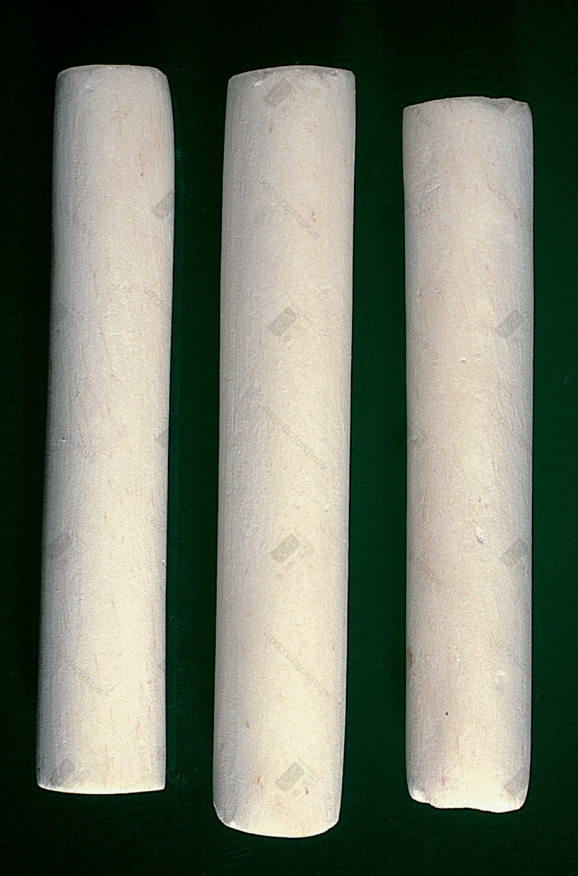 Huai Yam (Smooth Yam, Iron Rod Yam) (Cylindrical, smooth, yellowish-white, firm, powdery, sound indicates quality when tapped)
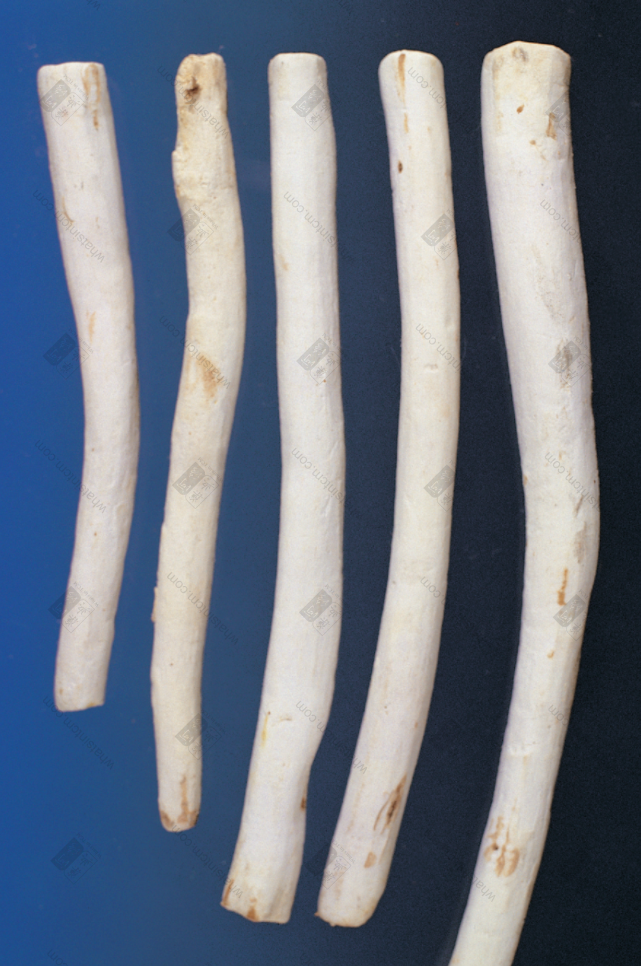 Guangdong Yam
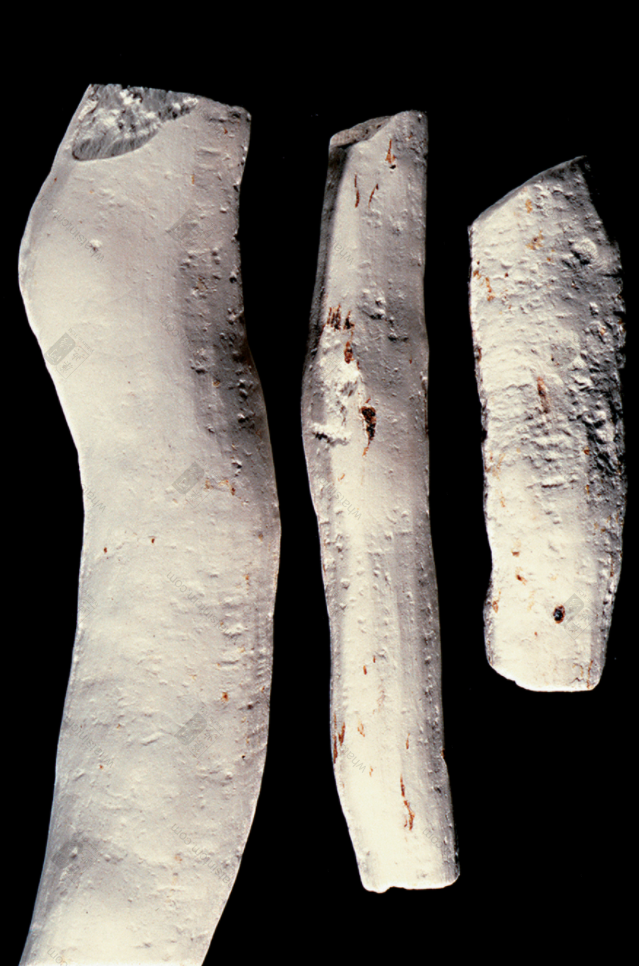 Hairy Yam (Curved and slightly flattened, longitudinal wrinkles and residual corky layer)
 Hairy Yam
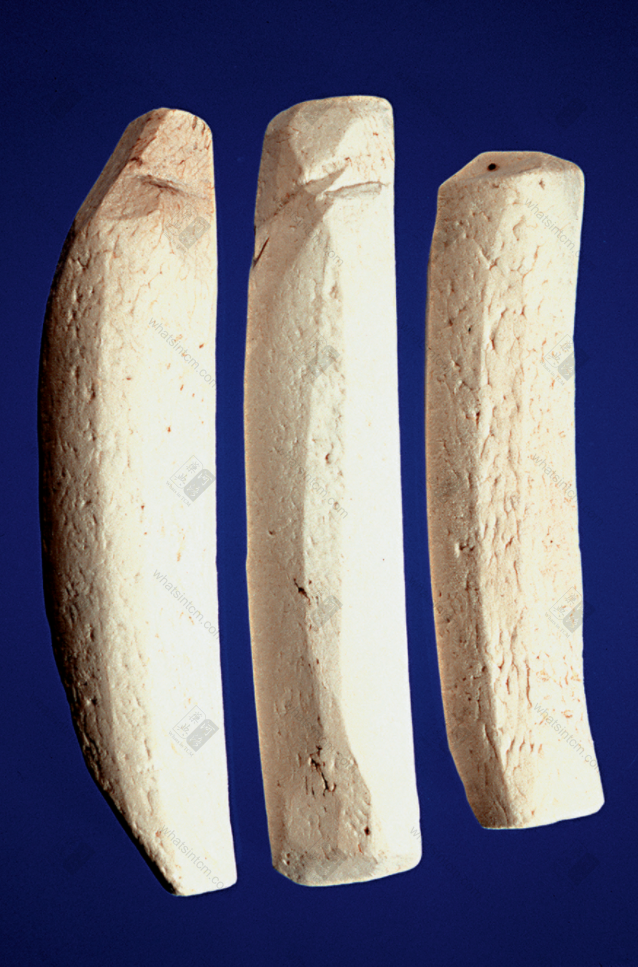 Yam (Plant: Winged Yam)
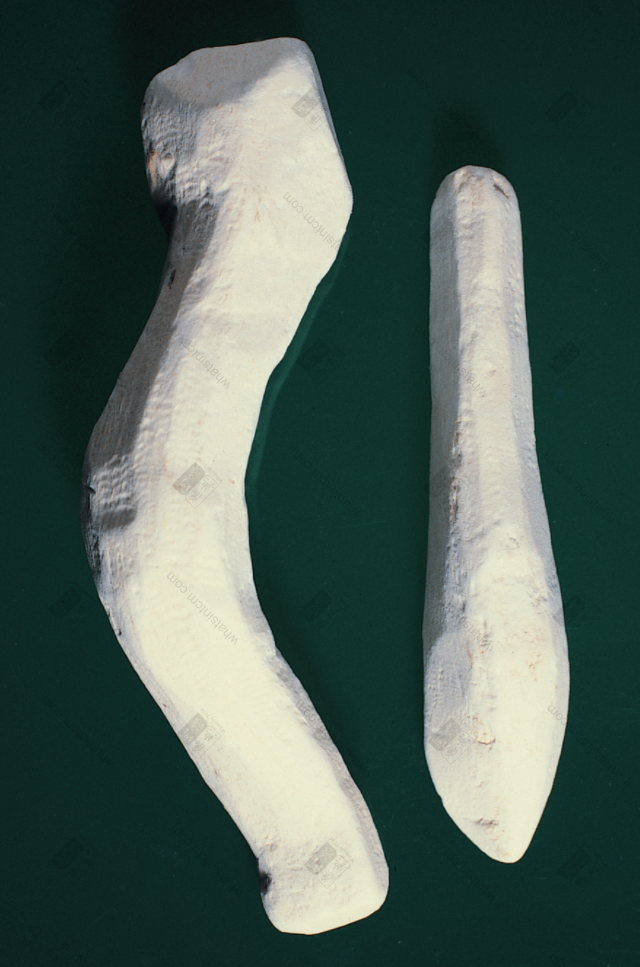 Hengchun Chicken Bone (Iron Rod) Yam (1975s)
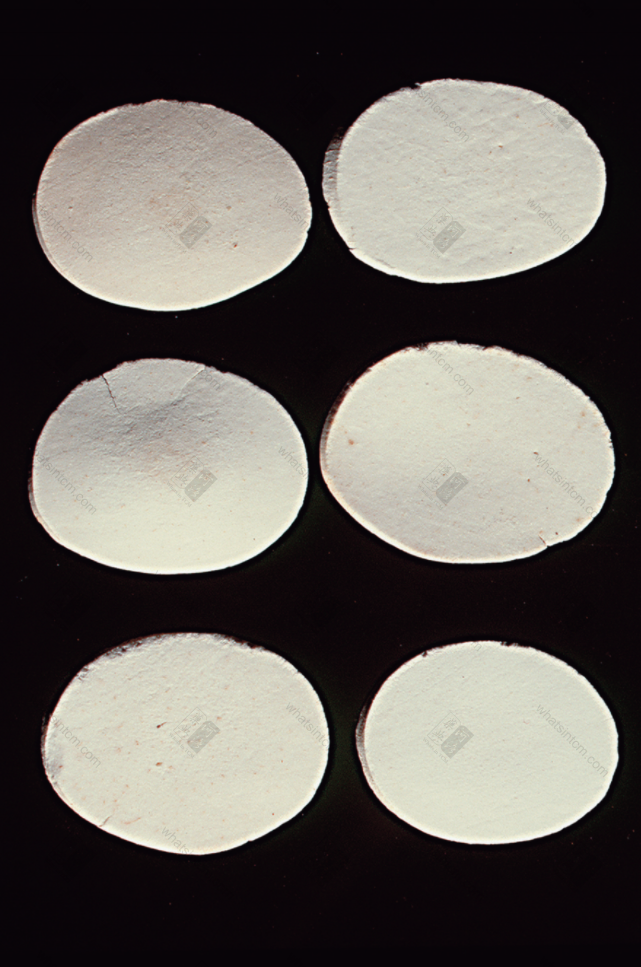 Yam Slices (Powdery) (Dust scatters)
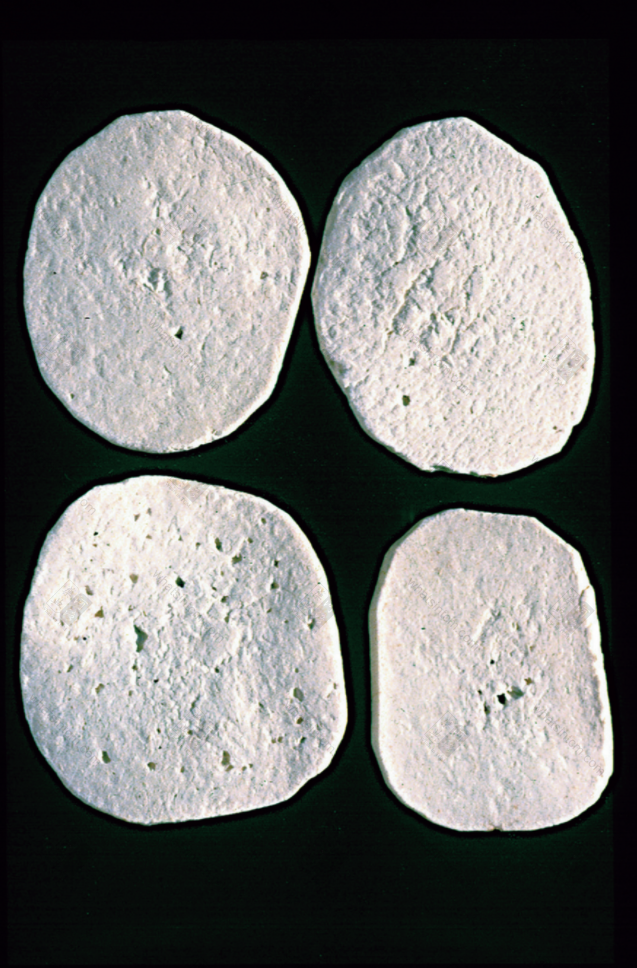 Yam Slices (Winged Yam) (Granular)
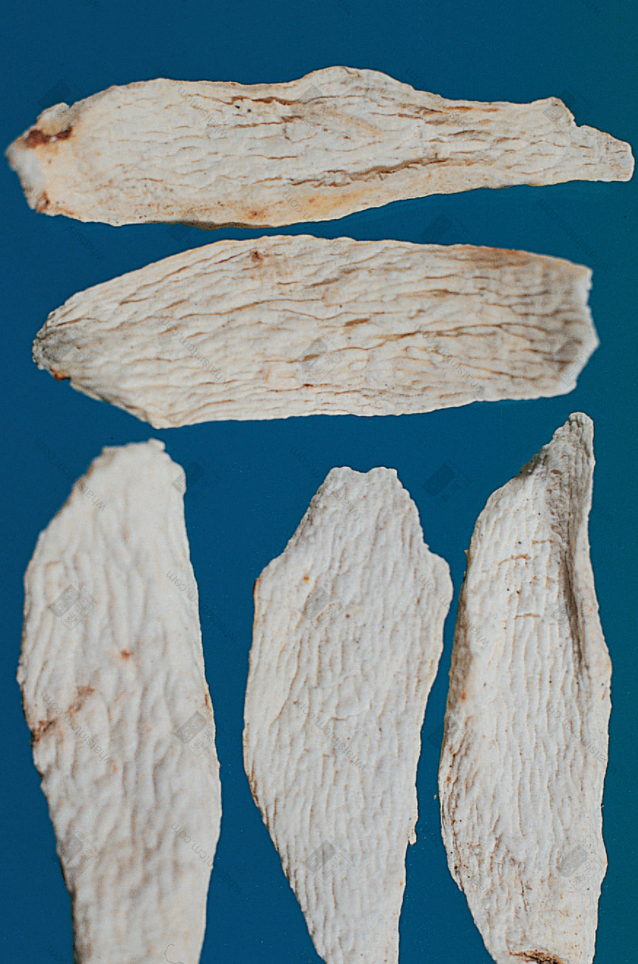 Yam Slices (Directly sun-dried without sulfur fumigation)
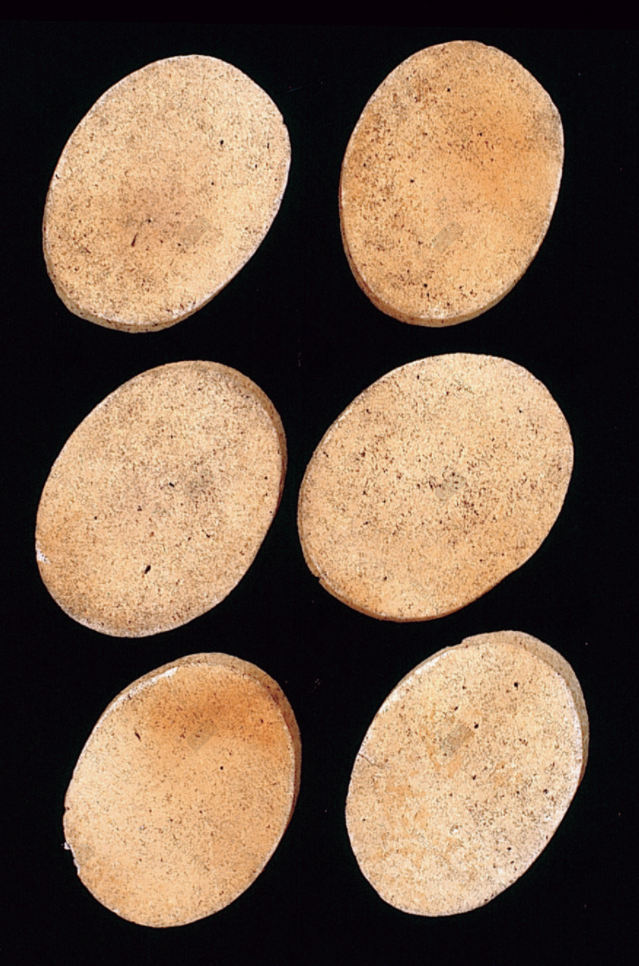 Wheat Bran-fried Yam Slices
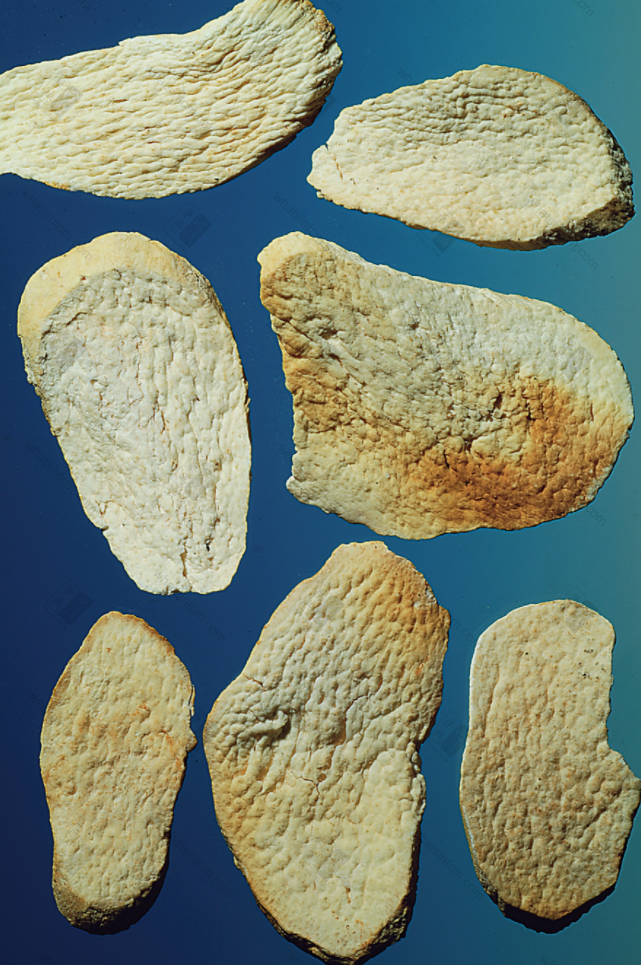 Wheat Bran-fried, Non-sulfur Fumigated Yam Slices
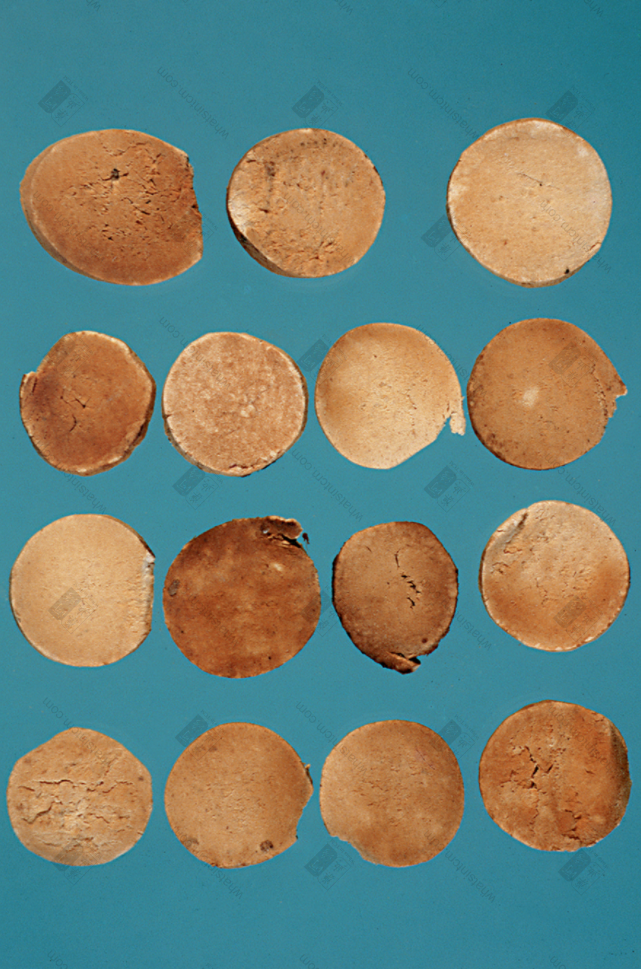 Soil-fried Yam Slices
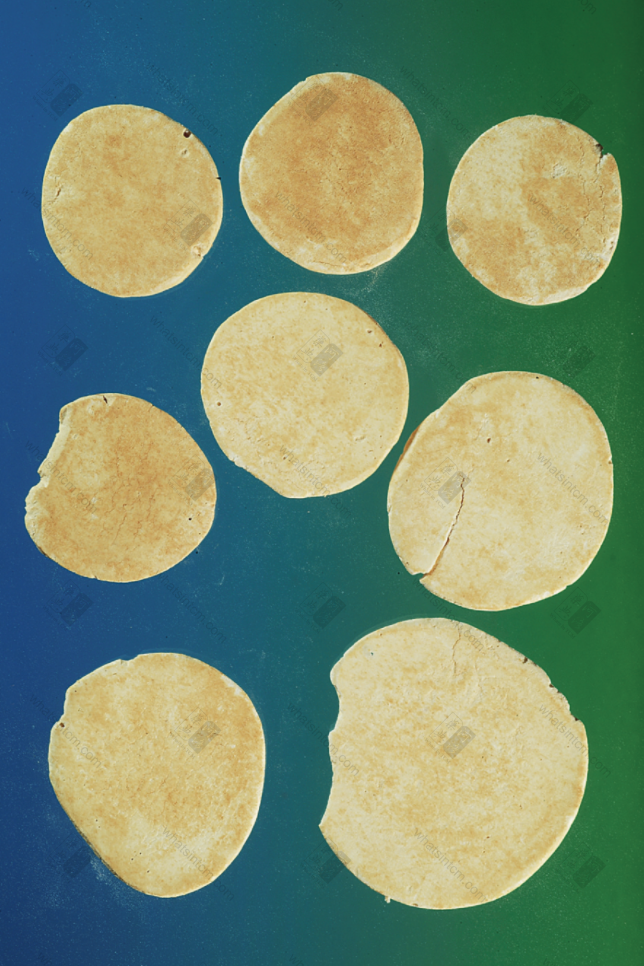 Soil-fried Yam Slices
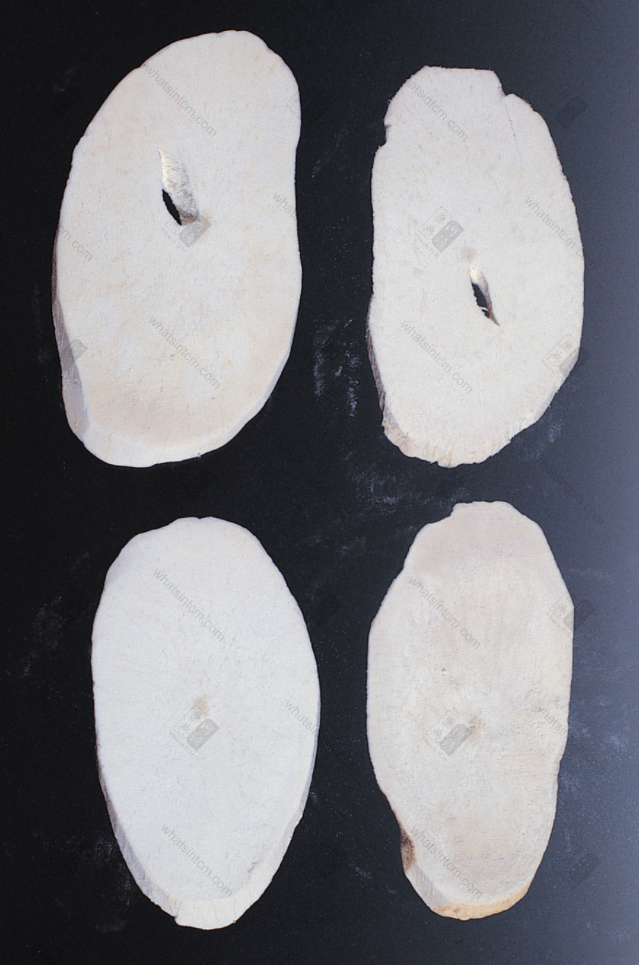 Cassava, a Fake Yam Slice (Has holes)
【Naming】
【Source】
Shen Nong’s Herbal Classic, Upper Class
【Frequency of Use】
A
【Botanical Origin】
The rhizome of several plants of the genus *Dioscorea* in the Dioscoreaceae family, mainly Huai Yam *Dioscorea opposita* Thunb. or Winged Yam (Water Yam) *Dioscorea alata* L.
【Characteristics】
(1) Smooth Yam: Cylindrical, smooth, 10~20cm long, 2~4cm in diameter, with flat ends and a pit-like depression in the center. The surface is light yellowish-white, smooth, slightly glossy, with fine brown vascular bundle lines and twisted lines. It is heavy and hard, not easy to break. The fractured surface is granular. It is not easy to scrape off with a fingernail. Raw Yam slices are round or oblique, with a clean white appearance and a smooth, powdery texture. Unpeeled slices have light brown spots. They are hard and brittle, 2~3mm thick, 2~3cm in diameter, and do not disintegrate after prolonged boiling. They have no odor and taste sweet, slightly sour, and sticky when chewed. Stir-fried Yam is light yellow in color with a sweet and fragrant odor.
(2) Hairy Yam: Irregular, flattened cylindrical or flattened block shape, curved and slightly flattened, about 15~30cm long, 1.5~6cm in diameter, yellowish-white or brownish-yellow on the surface, with obvious longitudinal wrinkles and residual corky layer.
【Processing】
【Identification】
“The white one when scraped is the best” (Zheng Lei Ben Cao). “The white, firm, and insect-free ones are good” (Ben Cao Pin Hui Jing Yao). “The large, fat, and white dried Yam is good” (Ren Shu Bian Lan). “Mix with rice flour and lime to dry it, wash with water containing alkali, the white color indicates a good quality” (Pao Zhi Quan Shu). “Yam that is firm, solid and finely white is genuine” (Jing Yan Dan Fang Hui Bian). “The one produced in Huai, which is white and firm, is good” (Ben Cao Qiu Zhen). “The one that is white and smooth, heavy and large, is the best” (Liang Lie Jian Bie).
The best ones are thick, firm, heavy, powdery, clean white, and free of insect damage. Those that are uneven in thickness, with a large head and thin tail, yellow in color, light in weight, and have hollow sections are of secondary quality.
【Identification Terminology】
1. Smooth Yam: Refers to Yam material that has been processed, trimmed, and rounded, clean white and smooth, powdery, and sticky when chewed.
2. Hairy Yam: Refers to peeled Yam material that has not been rounded during processing. Mostly made from small or substandard goods.
3. Powdery (starchy, powder-like): A description of the internal or fractured texture of medicinal materials, mainly referring to medicinal materials with a high starch content in the cells. After drying, it is granular or sandy, and powder flies out after fracturing. Many medicinal materials are powdery, such as Yam, Zhejiang Fritillaria, Angelica, Licorice, Euphorbia Kansui, etc. The fractured surface of strong powdery medicinal materials is white and delicate, similar to starch, such as Angelica. Some medicinal materials, such as Kudzu Root, are considered better if they are sufficiently powdery.
4. Granular: Refers to a fractured surface of medicinal material that is finely granular, composed of larger clusters of stone cells. Such as Yam, Trichosanthes Root, etc.
5. Duan Shan (Cun Shan): Refers to the end pieces cut off during the processing of Yam, mostly about an inch long.
6. Iron Rod Yam: Hard, produces a loud sound when two pieces are tapped together, indicating good quality.
7. Chicken Bone Huai: In the past, the wild *Dioscorea cirrhosa* of Hengchun, Taiwan, shaped like chicken bones, with a loud tapping sound and good quality, was called Chicken Bone Huai.
If it is made from *Dioscorea alata* (Winged Yam), the main differences in its characteristics from Huai Yam are: (1) White surface, slightly coarse reticulated pattern, slightly rough, not glossy, no twisted lines. (2) Because the rhizome of Winged Yam is very thick, it is longitudinally cut into quarters or thirds, and then planed into a cylindrical shape with a planer like smooth Yam, so you can clearly see the scraping marks. (3) The pit-like depression on both cut surfaces is not obvious, with nodular small protrusions. (4) The fractured surface is whiter, and the slices show slightly uneven coarse particles. The texture is lighter, and it is easy to scrape off with fingernails. It has the taste of Winged Yam, and the powdery nature when chewed is worse. (5) It is easy to disintegrate after prolonged boiling, and the quality is poor. If the Yam in Guangdong and Guangxi is processed with *Dioscorea persimilis* or *Dioscorea alata* var. purpurea, it also has the above-mentioned characteristics of Winged Yam.
Counterfeit: Counterfeited with cassava *Manihot utilissima* Pohl. of the Euphorbiaceae family. The distinguishing feature is that there is a hole in the center of the slices.
【Category】
Rhizomes
Related Products
