



Fritillariae Bulbus (Bei Mu)
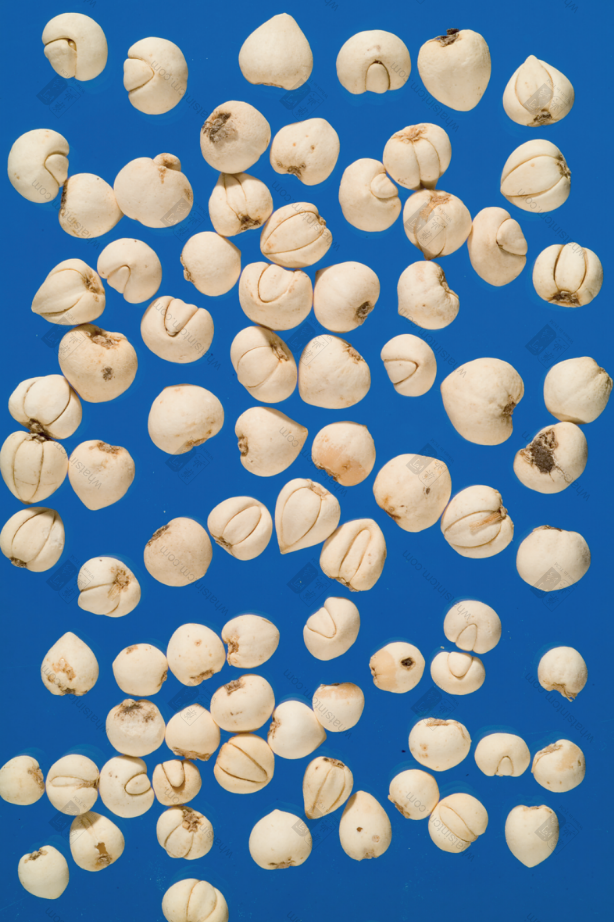 Fritillariae Bulbus (Bei Mu) (Original Color Songpan Bei) (Embracing the Moon)
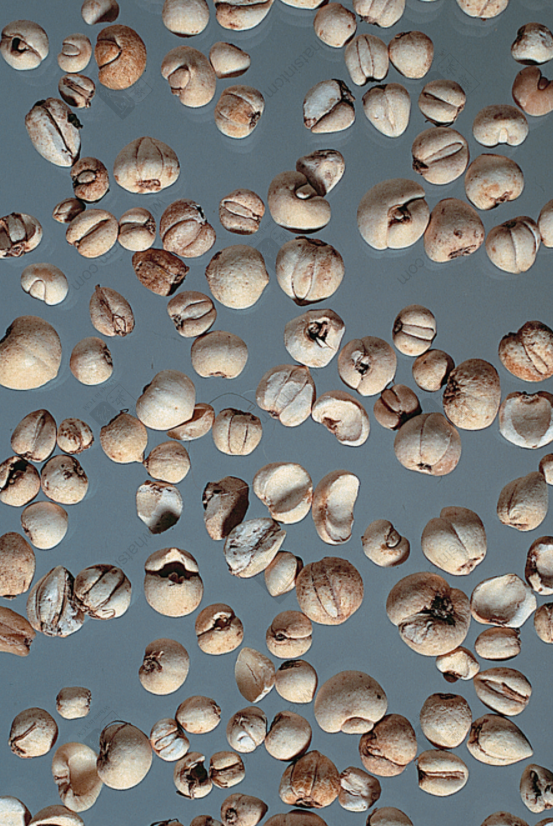 Songpan Bei
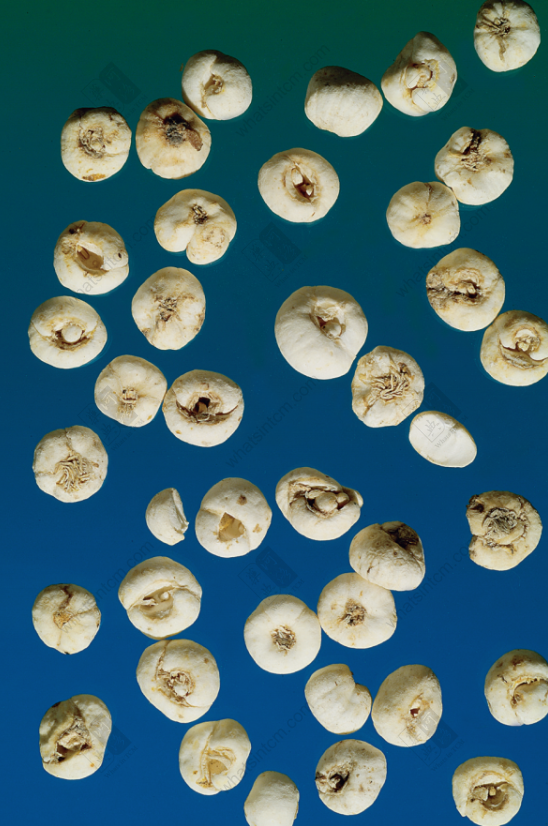 Ping Bei Mu (Wide Mouth)
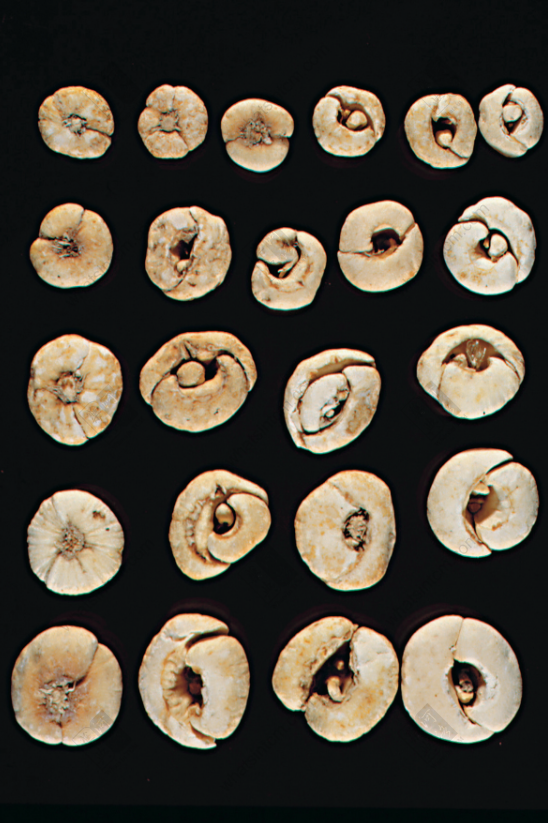 Ping Bei
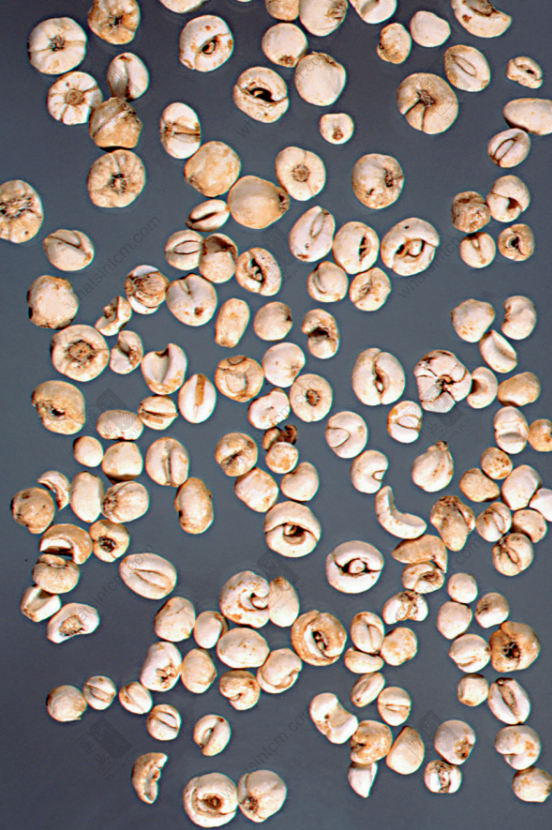 Xiao Ping Bei
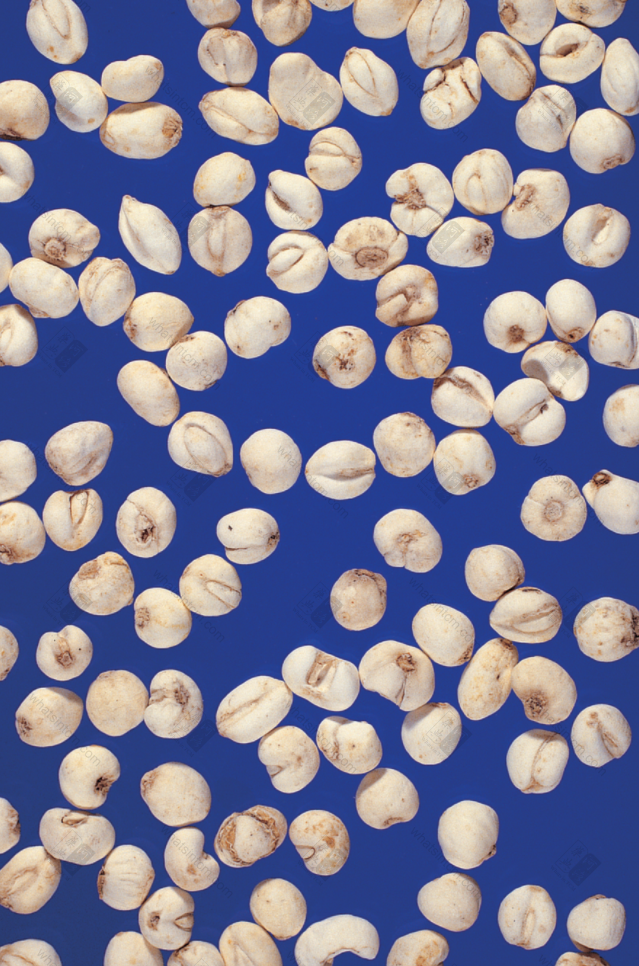 Songpan Bei Mixed with Xiao Ping Bei
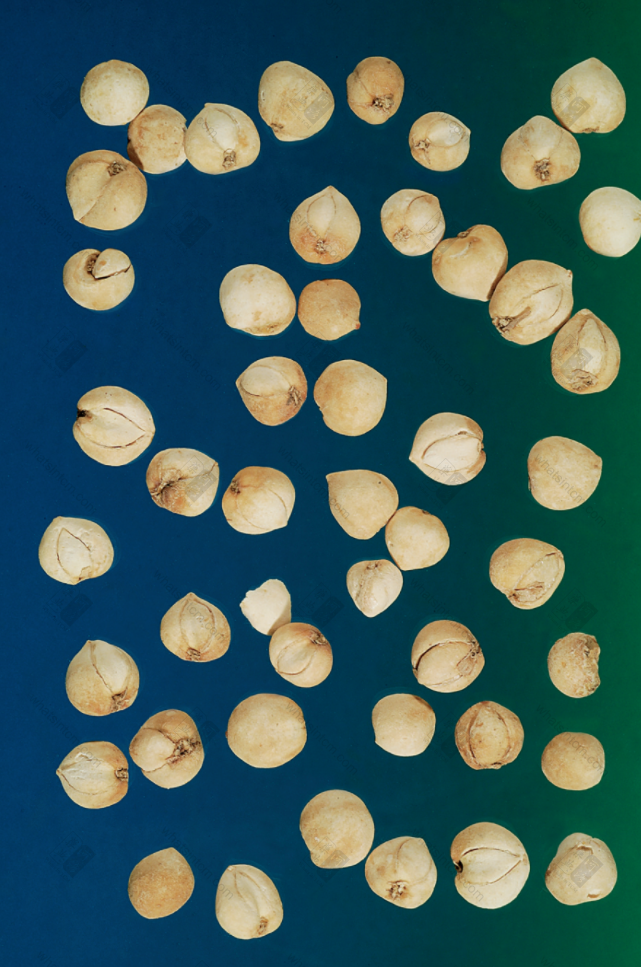 Hubei Bei Mu
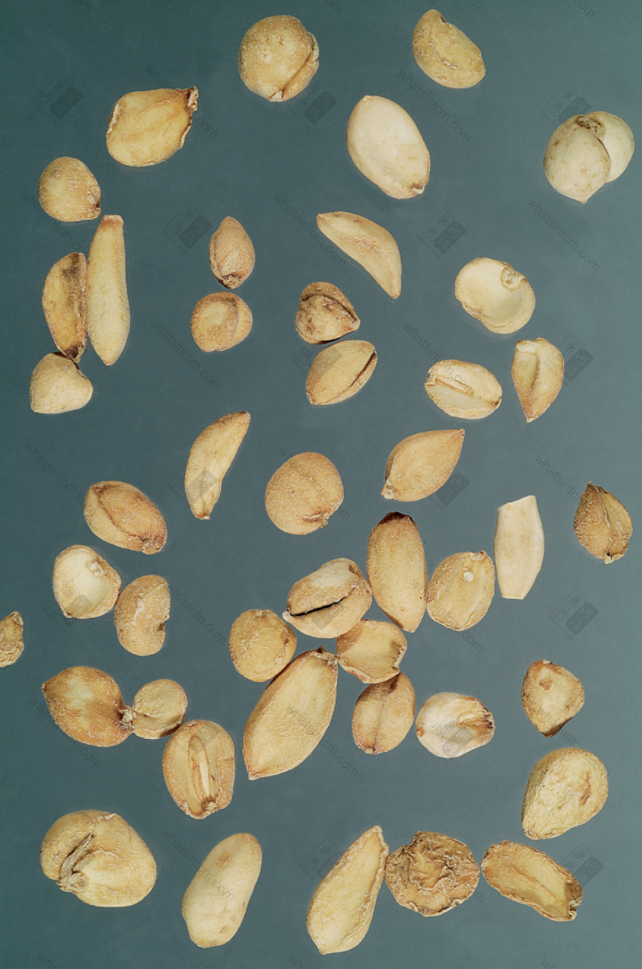 Wan Bei Mu
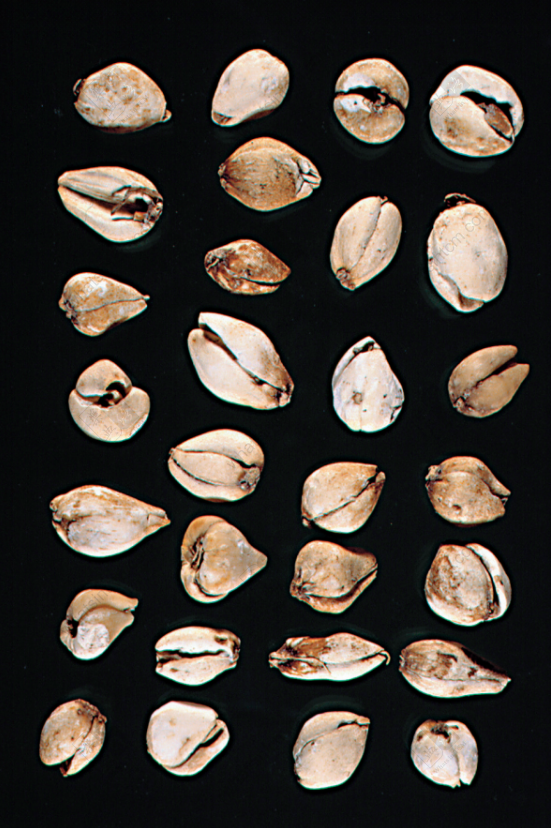 Lu Bei (Rhomboid heart-shaped, deep yellow spots, tiger stripes)
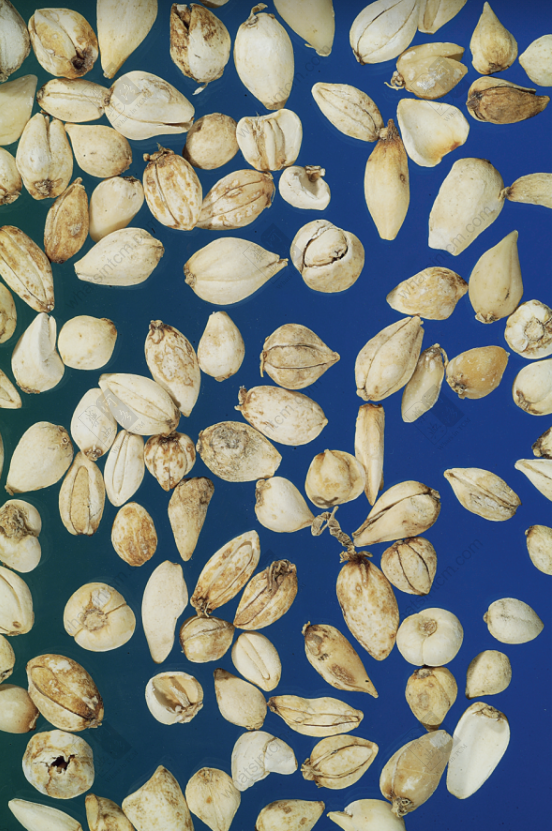 Imitation Lu Bei
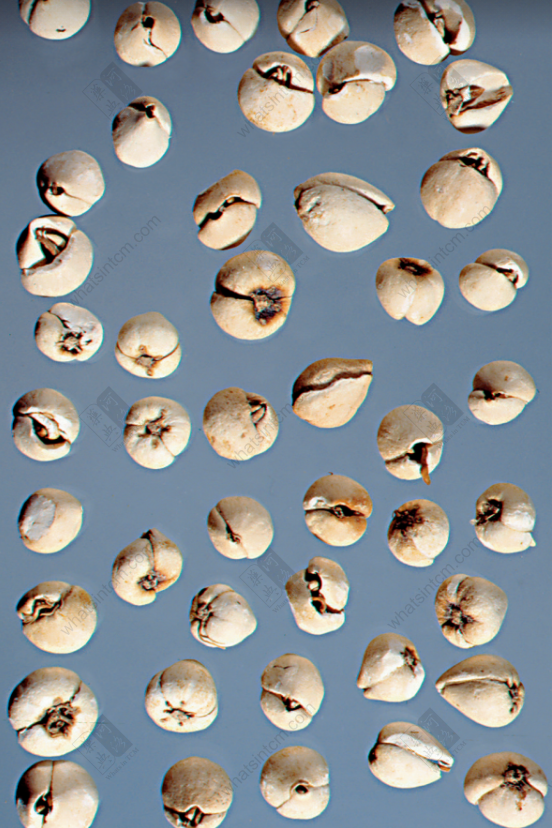 Yun Bei
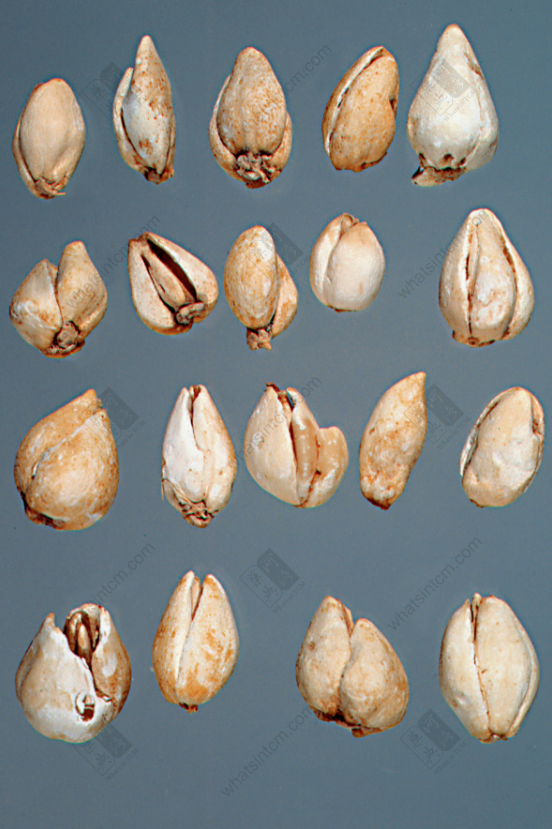 Qing Bei (Peach-shaped)
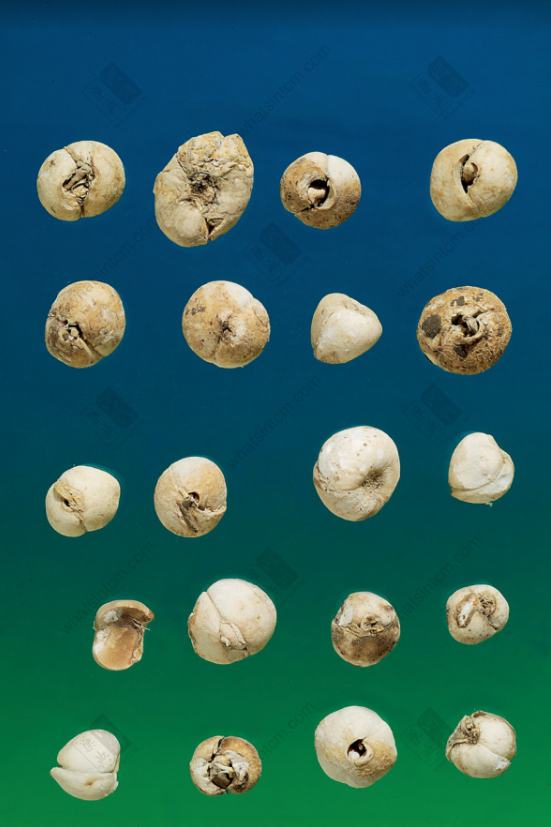 Yi Bei Mu (Yili)
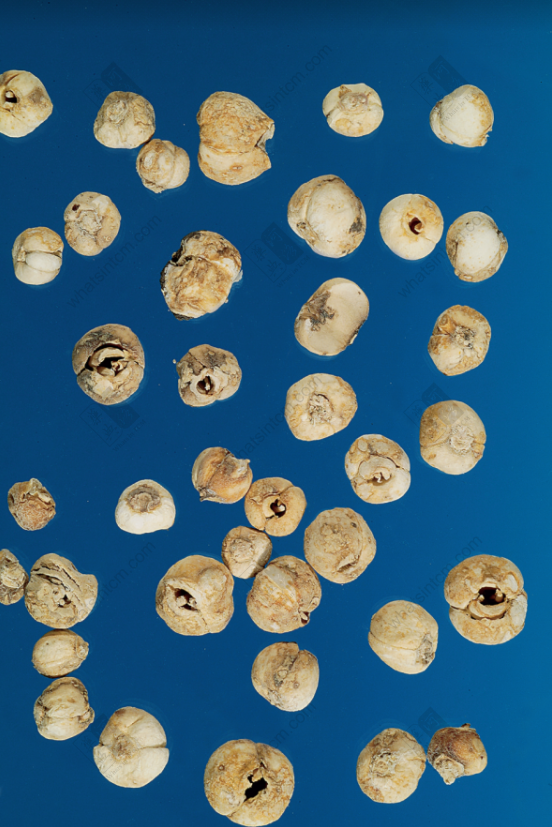 Yi Bei Mu (Xinjiang)
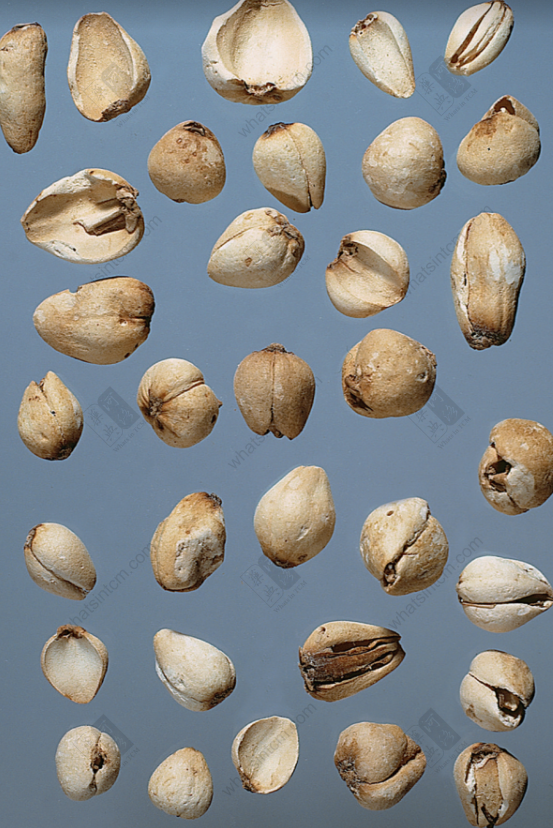 Leng Sha Bei
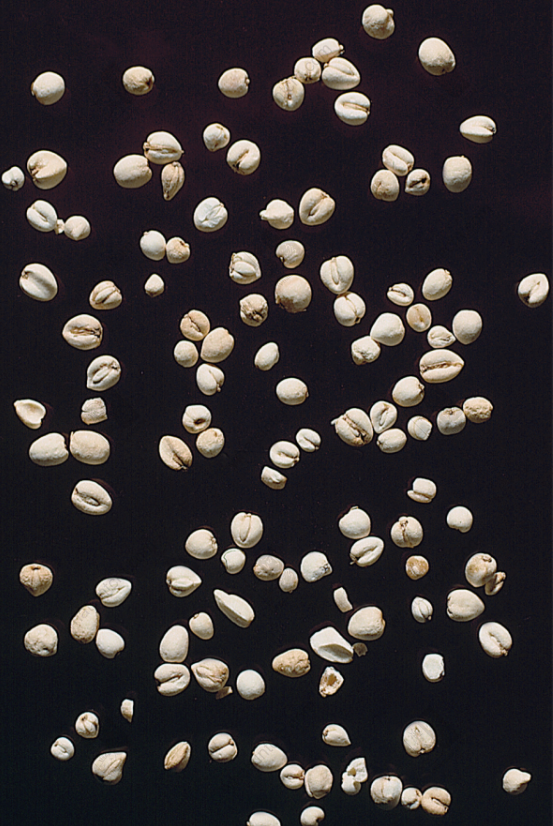 Xiao Mi Bei
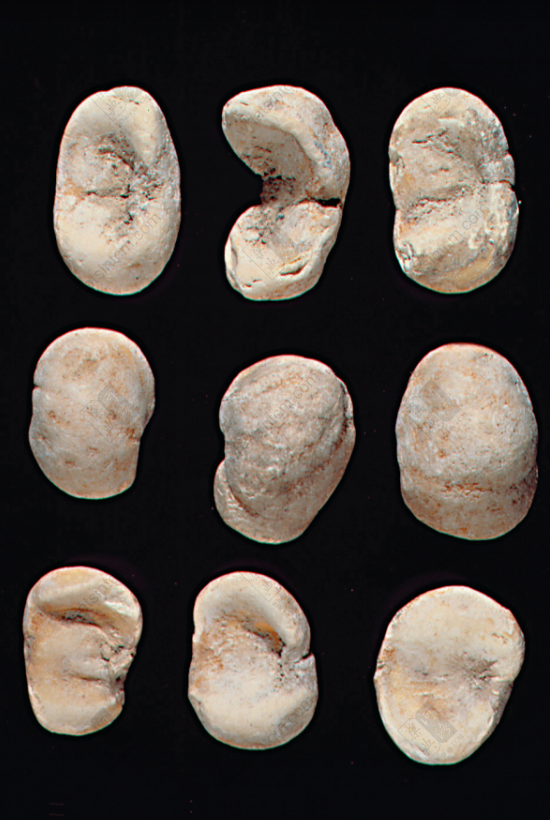 Zhe Bei (White pale yellow, single petal, sycee crescent shape)
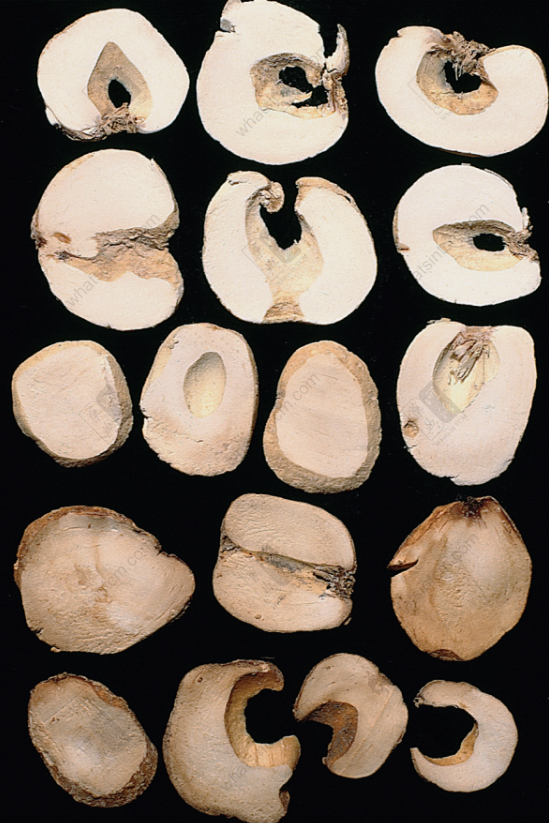 Zhe Bei Slices (Bottom 2 rows stir-fried) (Rich in starch)
【Name】
【Source】
Classified as medium grade in the Ben Jing
【Botanical Origin】
There are several original plants of Chuan Bei, mainly the bulbs of Fritillaria cirrhosa D. Don of the Liliaceae family. Zhe Bei is the bulb of Fritillaria thunbergii Miq. of the Liliaceae family.
【Characteristics】
(1) Chuan Bei: The whole is mostly oblate spherical or conical, with a pointed tip. The diameter of the bottom is mostly within 1.5cm. There are two outer petals, large and white, with a light yellow inner surface. There are 2-3 inner petals, small and light yellow, powdery, with a faint odor, slightly bitter in taste, and uniform in quality.
(2) Zhe Bei: It is a single petal scale from the outer layer of the bulb, like a small boat, convex on one side and concave on the other, shaped like a sycee. The petal is about 1.5~4cm long, 1~2cm high, and 0.5~1.5cm thick. The surface is white or pale yellow, covered with white powder. The texture is hard and brittle, easy to break, with an uneven cross-section, white or pale yellow, rich in starch, with a faint odor and bitter taste.
【Processing】
1. Chuan Bei 2. Zhe Bei
【Identification】
“Yi Fang Lei Ju”: “Bei Mu… the white and greasy ones are good”. “Ben Cao Meng Quan”: “The yellow-white and light ones are good”. “Ben Cao Meng Quan”: “They are planted everywhere, and the carmine red ones are good”. “Ben Cao Gang Mu”: “Its leaves are like garlic. Pick it when the garlic is ripe in April, it is good”. “Ben Cao Bei Yao”: “The ones produced in Sichuan with open petals are good, and the ones with single grains and no petals are useless”. “Jing Yan Dan Fang Hui Bian”: “Chuan Bei, the ones with a sweet and light taste are genuine”. “Ben Cao Qiu Zhen”: “The ones produced in Sichuan with open petals are good”. “Ben Cao Jian Yao Fang”: “Zhe Bei is good”. “Liang Lie Jian Bie”: “The smaller ones are the best”.
Both of the above two medicinal materials are best when the scales are thick, the surface and cross-section are white, and the starch content is sufficient. If the shape is particularly large and has a greasy odor, or the texture is light, and there are traces of insect bites and mold parasites, it is not good. Those that are too small should also be removed. Those with smaller individuals, grayish-white surface, and brownish-red center of the cross-section are of inferior quality.
【Identification Terminology】
1. Small abacus beads: The bulb of Ping Bei Mu is oblate spherical, with a flat top and an opening to see the heart, and the bottom is concave, shaped like a small abacus bead.
2. Sycee shell: The large shell in Zhe Bei is a single-petal scale leaf from the outer layer of the bulb, which is semi-circular, convex on the outside and concave on the inside, shaped like a sycee.
3. Pomegranate mouth: Refers to the Lu Bei in Chuan Bei Mu, where the two scale leaves are similar in size, gradually tapering at the top, often cracked, shaped like a trumpet, also known as pomegranate mouth.
4. Songpan Bei: It contains several small scale leaves inside, nearly lanceolate, and the exposed part is like a crescent shape, commonly known as “Eurasian wryneck mouth”.
5. Pointed Bei: It is the smaller grains in Chuan Bei, with a closed and pointed top.
6. Rice Bei: Refers to the first-class product of Min Bei produced in Gansu.
7. Song Bei: It is the larger grains in Chuan Bei.
8. Vase feet: Refers to the Lu Bei base in Chuan Bei Mu, which is slightly thinner and slightly flat or round, like vase feet, hence the name.
9. Tiger Skin Bei: Another name for Lu Bei in Chuan Bei. The medicinal material is mostly in the shape of a horse tooth, because the outer surface often has brown or yellowish-white spots like tiger skin, hence the name.
10. Tiger Skin Spots: Refers to the unique brown and yellowish-white mottled patches on the surface of Lu Bei scale leaves, resembling tiger skin.
11. Qing Bei: (1) Refers to the grains in Chuan Bei that are skewed; (2) Refers to the Bei Mu produced in Qinghai.
12. Pearl Bei: It is the small grains in Chuan Bei that are as small as beans and shaped like Job’s tears.
13. Peach Er Bei: Refers to the second-class product of Min Bei produced in Gansu.
14. Horse tooth mouth (horse tooth shape): Refers to Lu Bei (Leng Sha Bei Mu) The medicinal material is prism-shaped conical and long oval, shaped like a horse tooth, with a thinner and sharper top, all in an open shape.
15. Closed mouth: The top of Song Bei Mu does not open, which is called closed mouth.
16. Abacus beads: Refers to the pearl Bei bulbs that are irregularly oblate, slightly similar to “abacus beads”.
17. Garlic paste spots: Specifically refers to the fine fibrous root marks at the bottom of Chuan Bei Mu, shaped like “garlic paste spots”.
18. Lou Yi Hei Du: The base of Song Bei Mu is slightly concave, with black spots in between, leaving fibrous root marks, called Lou Yi Hei Du.
19. Jiang Ge: Refers to the Bei Mu, etc. that are affected during processing or growth, and the juice is withered and discolored.
20. Embracing the Moon: It is a special identification term for the bulbs of Chuan Bei Mu, Dark Purple Bei Mu or Gansu Bei Mu and other medicinal materials. The Song Bei bulb is composed of two scale leaves of different sizes. The large petal tightly hugs the small petal, and the non-fused part is crescent-shaped, just like a woman holding a crescent moon in her arms.
21. Lu Bei: It is a kind of Chuan Bei Mu. It is mainly produced in Sichuan, Qinghai and Yunnan. Sichuan products are mostly distributed in Kangding, which is said to be the place where Zhuge Liang marched south during the Three Kingdoms period, also known as “Dajianlu”, hence the name is derived from the distribution center.
22. Guanyin seat (Guanyin seated lotus, old god is present): The bottom of Song Bei is flat, placed flat, and each grain can stand upright and sit firmly.
23. Guanyin Palm: Refers to the outer layer of Qing Bei scales, where the two scale petals are almost equal in size, relatively folded, shaped like “Guanyin Palm”.
【Category】
Rhizomes
 
Related Products
