



Licorice Root
<img class="wp-image-12994 size-full" src="https://whatsintcm.com/wp-content/uploads/2020/07/p65-15-1-甘草.png” alt=”” width=”592″ height=”886″ /> Licorice Root (From right: Special grade licorice, A, B, C, D grade licorice)
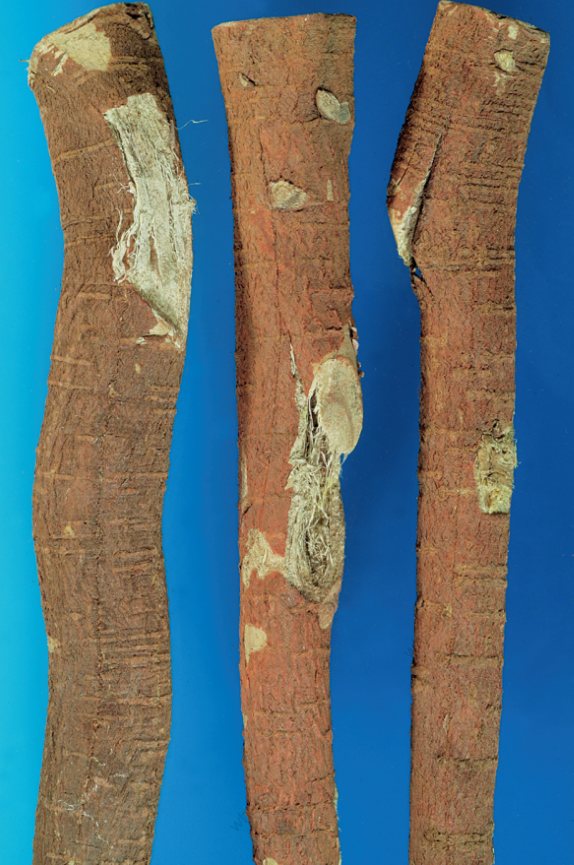 Liangwai Special Grade Licorice (Long cylindrical, reddish-brown)
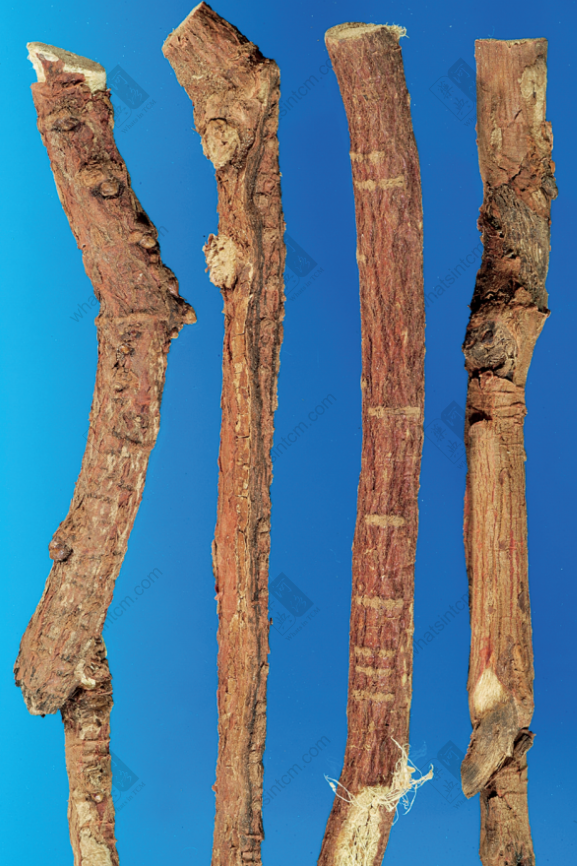 Liangwai D Grade Licorice (Both ends are flat, outer skin is tight)
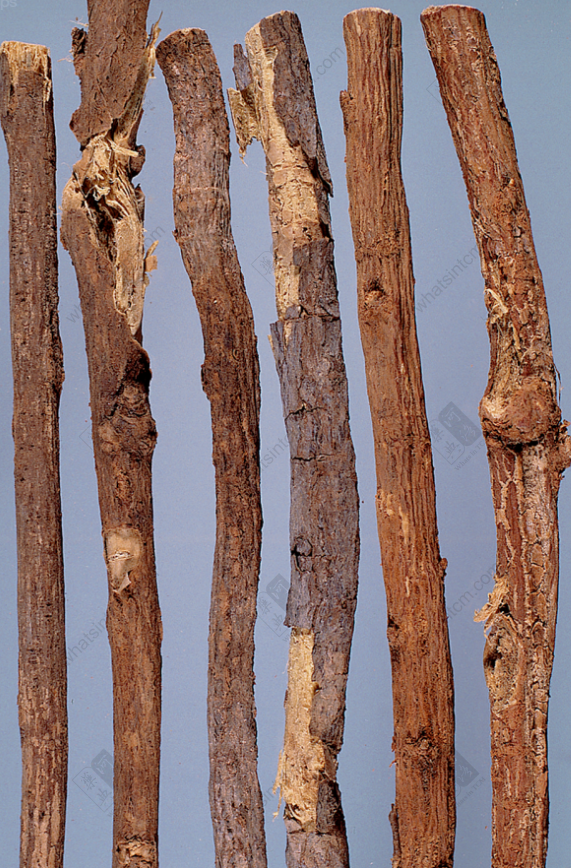 Xizhen Licorice Root (Left 4) Liangwai Licorice Root (Right 2)
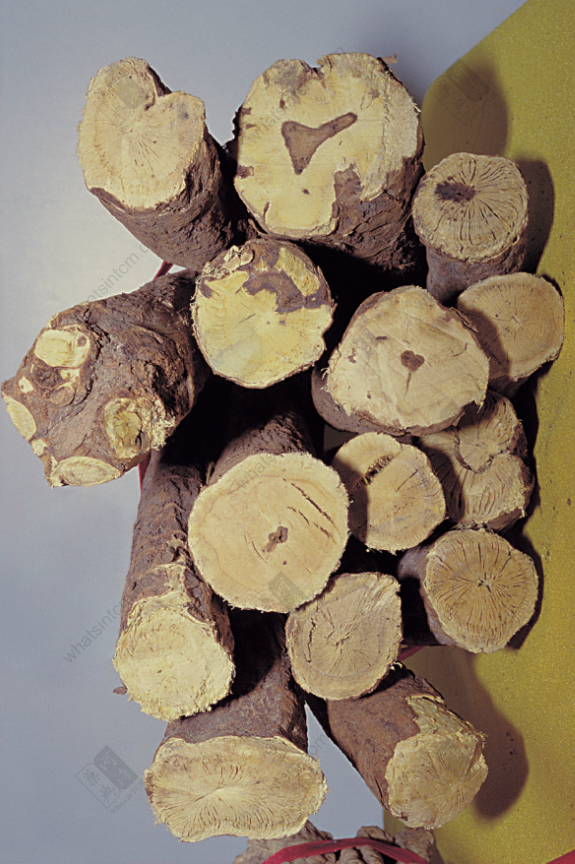 Licorice Root (Inverted skin revealing flesh, pepper eye)
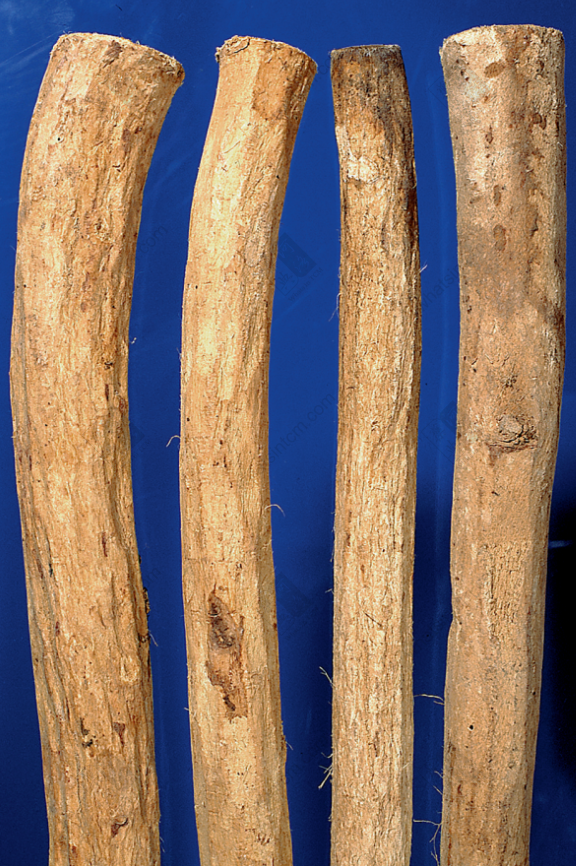 Powdered Licorice Root
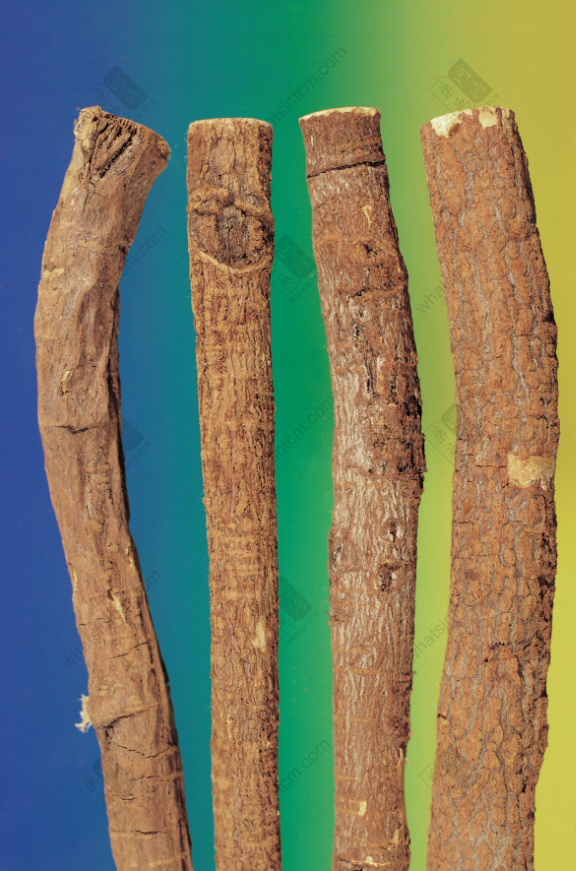 Domestically Cultivated Licorice Root from Inner Mongolia
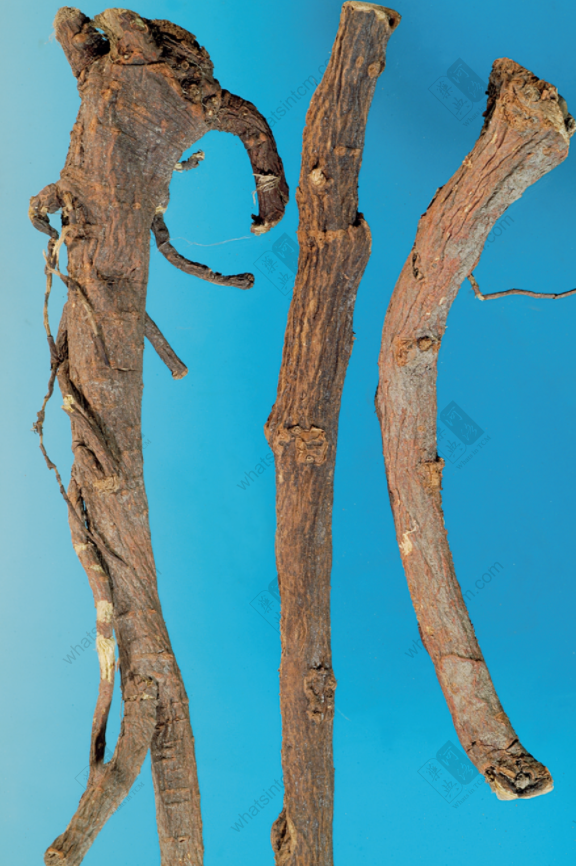 Domestically Cultivated Licorice Root
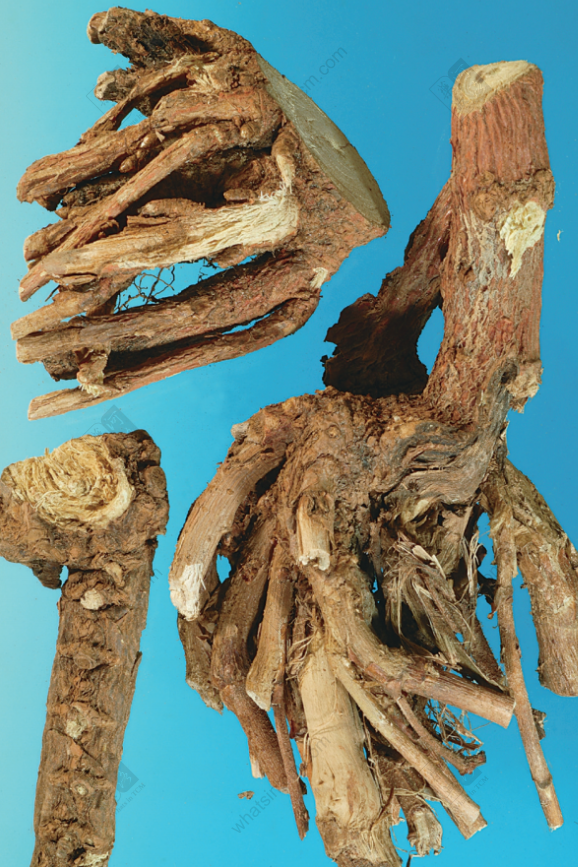 Licorice Root Head
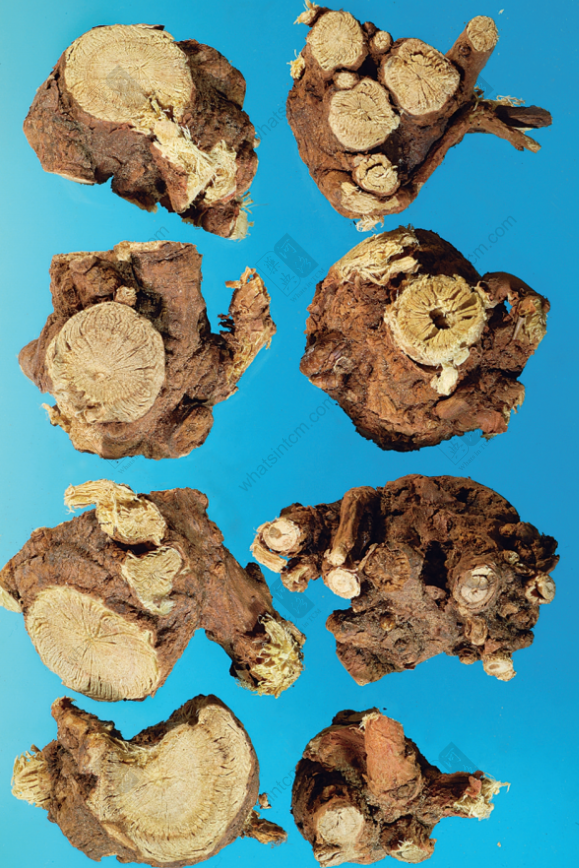 Licorice Root Head
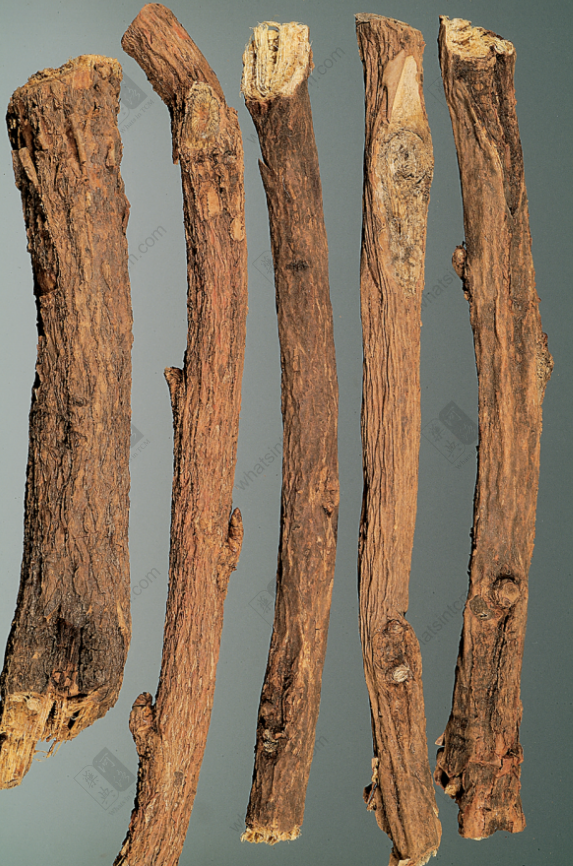 Xinjiang Licorice Root (Ural Licorice Root, Uyghur Autonomous Region)
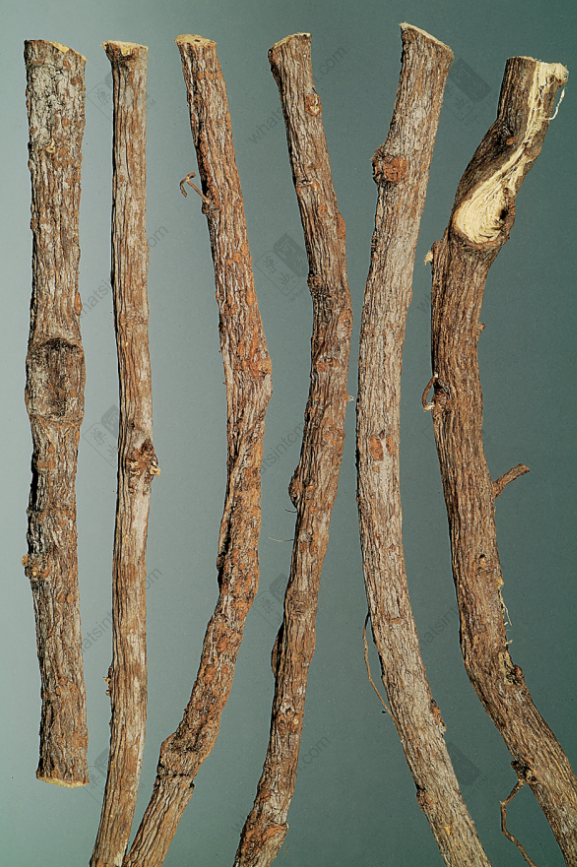 Xinjiang Licorice Root (Glycyrrhiza glabra, Uyghur Autonomous Region) (With alkaline skin, lower quality)
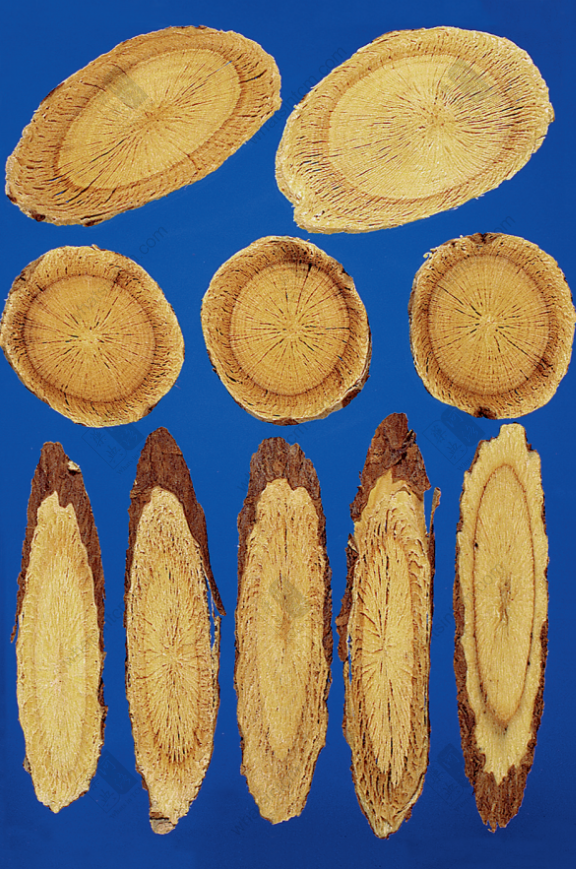 Licorice Root Slices (Special grade, A grade, B grade) (Chrysanthemum heart) (Sweet, powdery fracture with visible fibers)
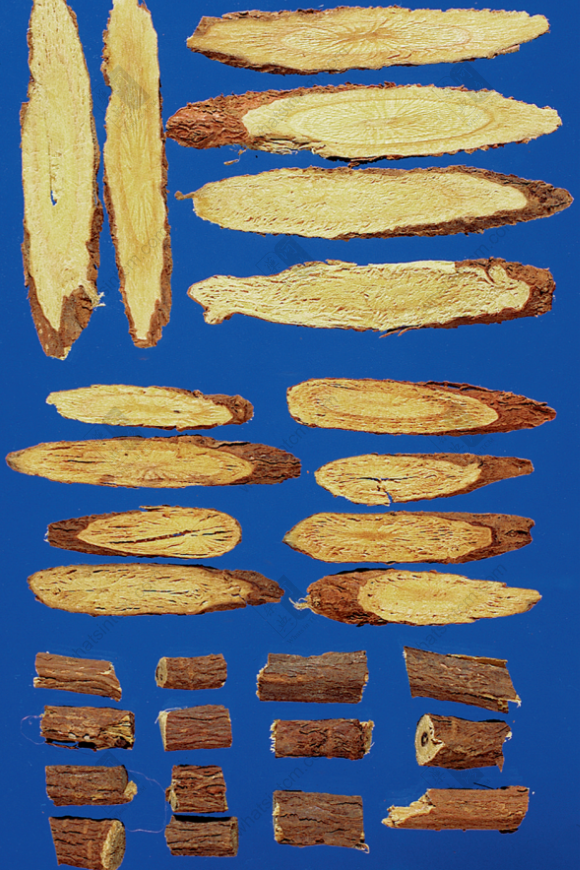 Licorice Root Slices (C grade, D grade, licorice root tip) (Powder falls when broken, powdery)
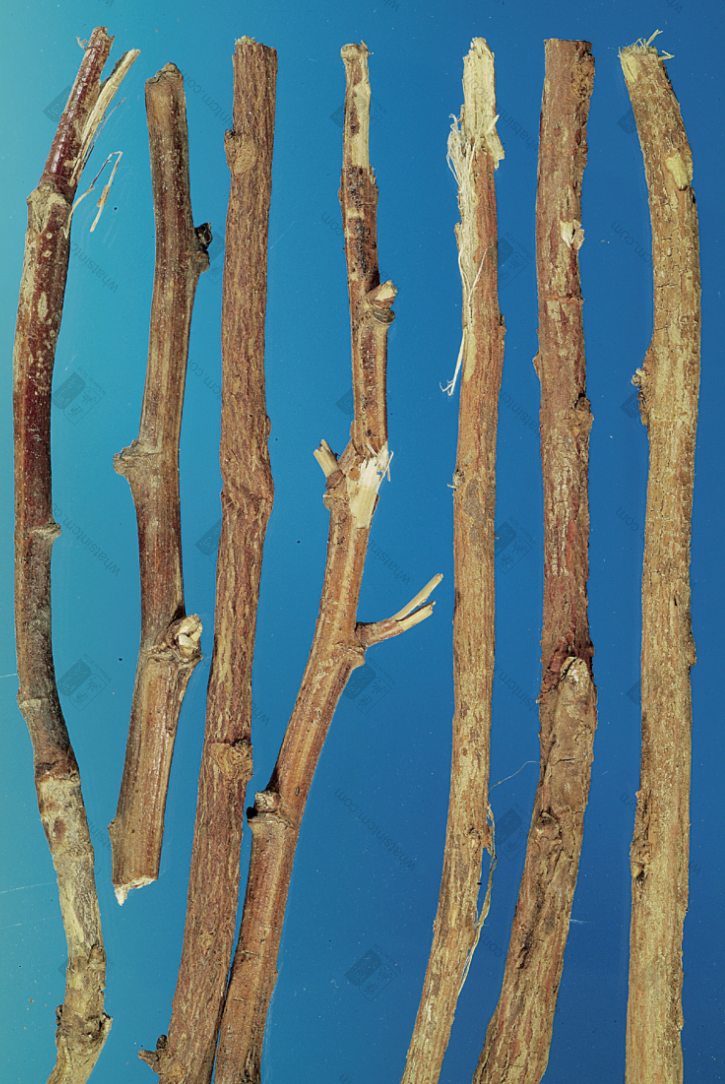 Licorice Root Tip (Left 4: aerial branches, Right 3: D grade licorice)
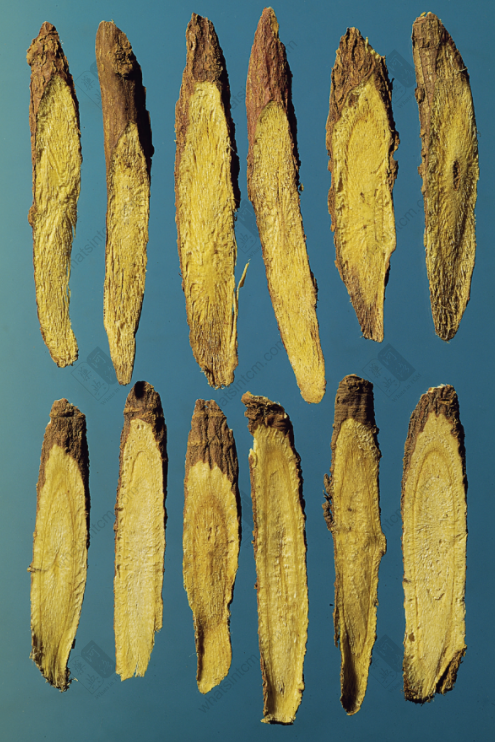 D Grade Licorice Slices (Top: wild, skin is more red; Bottom: domestically cultivated)
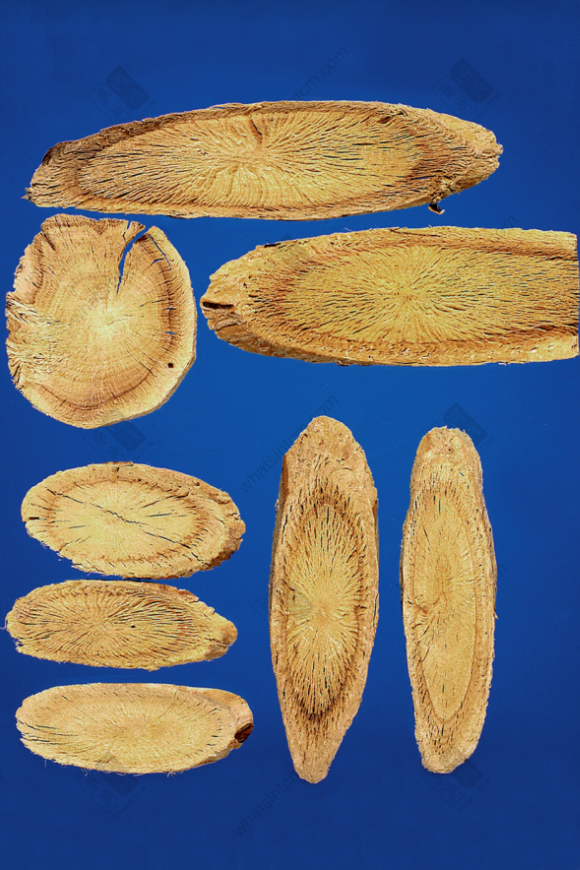 Powdered Licorice Root Slices (Top 3: special grade, Bottom 5: A grade)
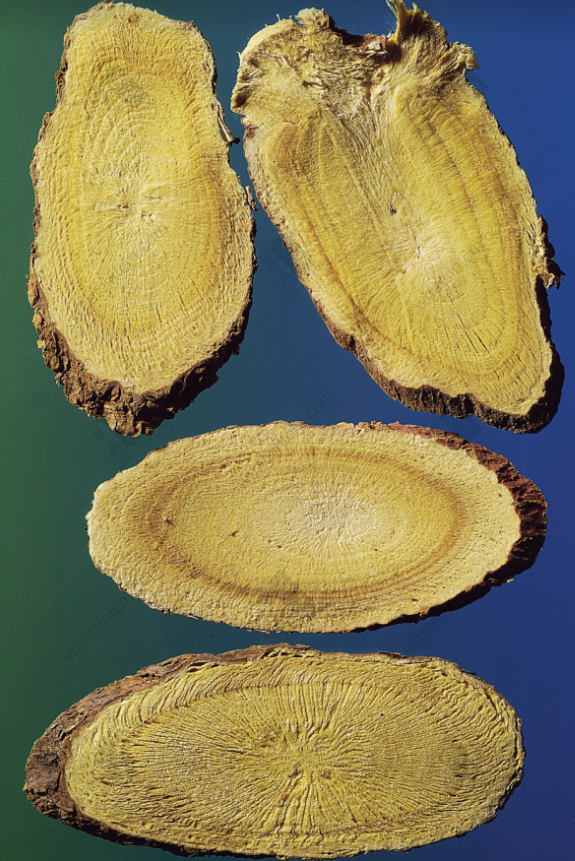 Wild, Ten-Year, Special Grade Licorice Root Slices
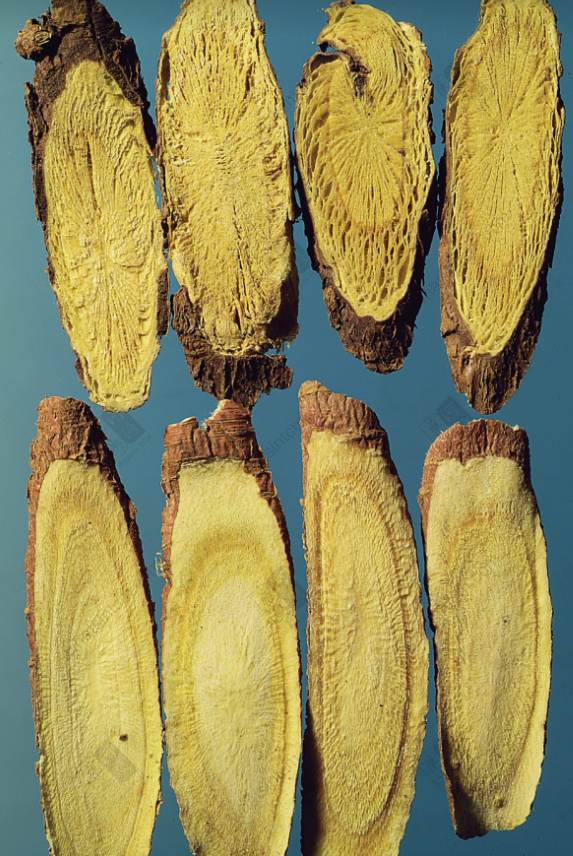 Licorice Root Liangwai A Grade Slices (Top: wild, Bottom: cultivated, radial fissures)
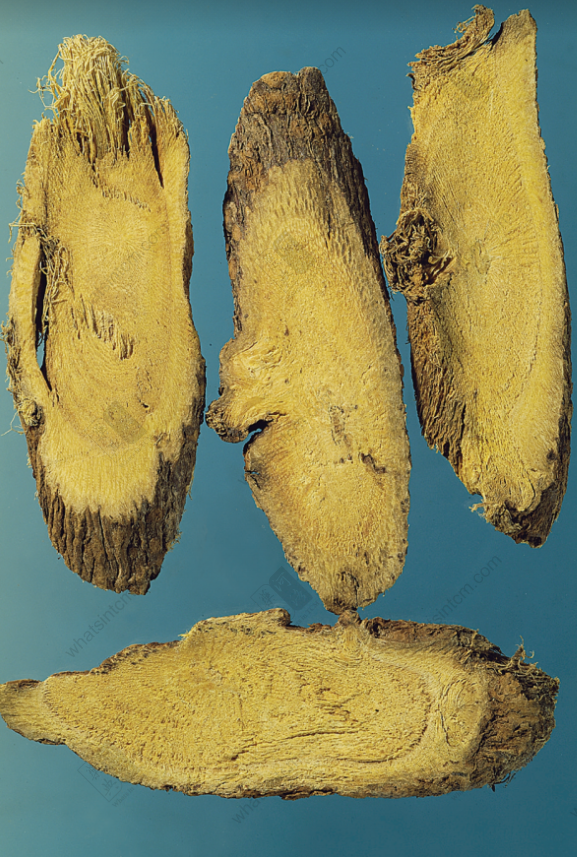 Wild Outer Mongolian A Grade Licorice Slices
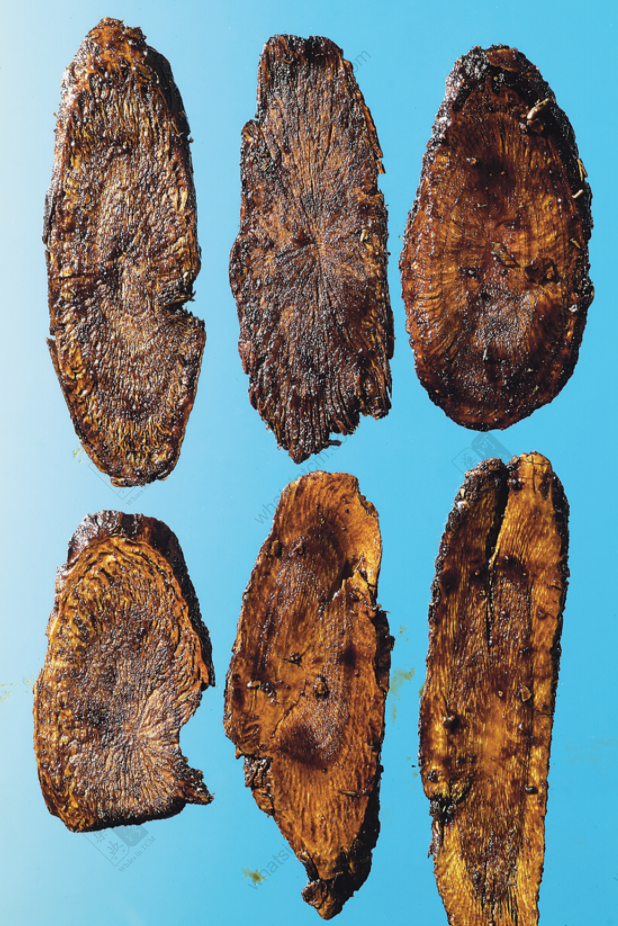 Honey-Prepared Licorice Root (Zhang Fei Licorice)
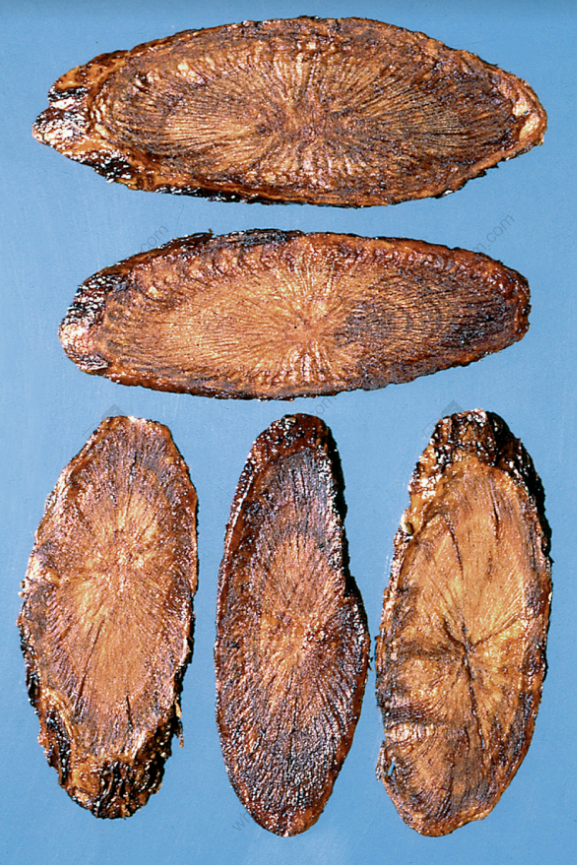 Honey-Prepared Licorice Root
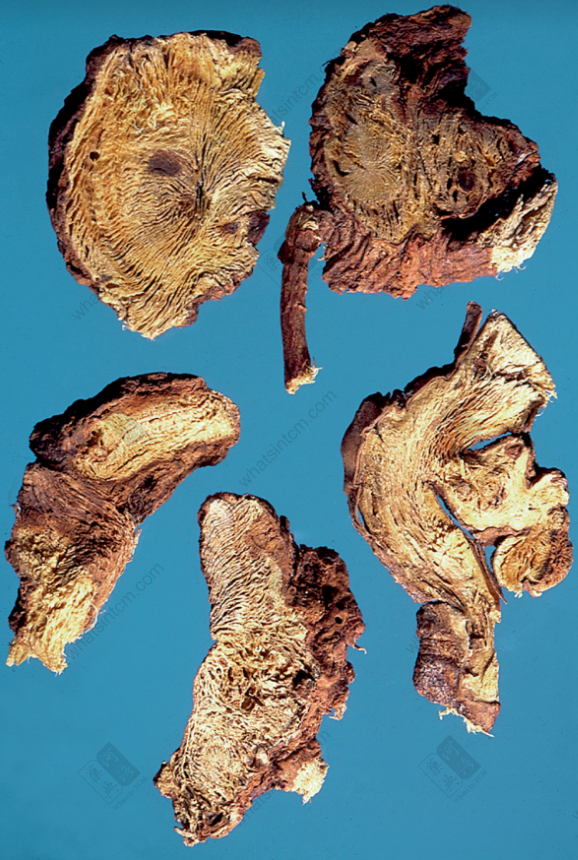 Licorice Root Head Slices
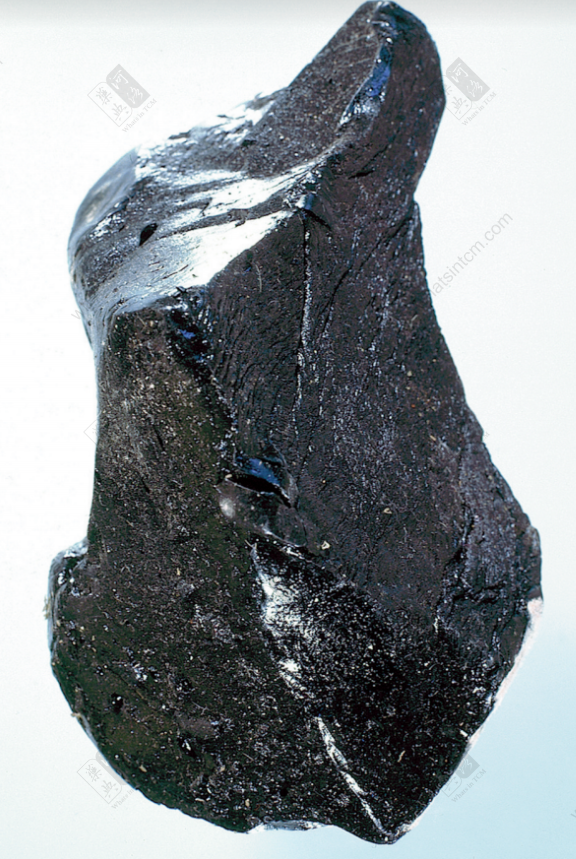 Licorice Root Paste
【Naming】
【Source】
Shen Nong’s Herbal Classic, Superior Class
【Common Use Level】
A
【Botanical Origin】
The roots and rhizomes of the legume plants Glycyrrhiza uralensis Fisch. (Licorice), G. inflata Bat. (Inflated Licorice), or G. glabra L. (Smooth Licorice or European Licorice). The outer cork layer removed is called Powdered Licorice Root.
【Characteristics】
It is in the shape of a long cylinder, unbranched, often cut into sections 30~120㎝ long, with a diameter of 0.6~3.5㎝. The licorice root with bark has varying degrees of tightness of the outer bark. It appears reddish-brown, brown, with significant wrinkles, grooves, and lenticels growing horizontally, slightly raised, and dark yellow in color. The outer bark sometimes peels off in scales to reveal the yellow inner bark. The texture is firm and heavy, with a fibrous fracture, yellowish-white, and powdery. Powdered licorice root has a smooth surface, pale yellow color, fibrous texture, and longitudinal cracks.
The prepared slices are thin slices cut transversely or obliquely, about 2㎜ thick, with a brownish-red outer surface and a yellowish-white cut surface. There is a clear cambium ring and a chrysanthemum heart. The radial part has radial fissures, and the xylem vessel pores are small. Sometimes annual rings are faintly visible. The prepared slices of the rhizome have a clear central pith. Honey-prepared licorice root is blackish-brown and sticky.
【Processing】
1. Raw Licorice Root 2. Honey-Prepared Licorice Root
【Identification】
Illustrated Classic of Materia Medica: “Today there are several types of licorice root, the best are those that are firm and have a solid fracture surface.” Classified Collection of Medical Formulas: “Regardless of the amount of licorice root, it is best to use those that are powdery.” Essential Compendium of Materia Medica: “The best roots are firm, powdery, and plump.” A Handy Guide to Benevolent Practice: “Large licorice root is good”, “Licorice root, use raw for slow-acting conditions, large ones are good.” Essentials of Materia Medica: “Large and firm ones are good.” Revisions Returning to the Original Classic: “It is best to use the purple variety with a pungent taste.” Identification of Good and Bad: “Those with a bright yellow fracture surface, firm and long, straight, and sweet in taste are of good quality… Those with a yellow diameter of about one inch, a tight shape, and a clear texture on the cross-section are called powdered licorice by Li Shizhen.”
Bark-covered licorice root with fine and tight outer bark, wrinkled grooves, reddish-brown color, firm texture, cut evenly on both ends, showing “inverted skin revealing flesh”, yellow fracture surface, bright yellow flesh color, sufficient powderiness, and sweet taste are considered good. Those with rough outer bark, grayish-brown color, loose texture, small powderiness, and dark yellow fracture surface are considered second-rate. Those with brown-black outer bark, hard texture, brown-yellow fracture surface, and bitter taste should not be used.
Powdered licorice root is better than bark-covered licorice root.
West licorice root is superior to East licorice root, and East licorice root is superior to Xinjiang licorice root. Among the West licorice, the best is the Liangwai licorice root, formerly produced in Hangjin Banner and Alxa League.
【Identification Terminology】
1. Da Cao (Te Cao) / Large Licorice (Special Grade): A commercial specification of licorice root. It has a thicker diameter, between 2.5~4㎝.
2. Mao Cao / Hairy Licorice: A commercial specification of licorice root. The root strips are not straight but curved, with a diameter of 0.5㎝ or more.
3. Pi Cao (Hong Cao) / Bark Licorice (Red Licorice): Refers to the commercial product of licorice root with a soil-red cork layer, as opposed to “powdered licorice root”.
4. Xi Cao / West Licorice: In the past, it generally referred to licorice root produced in western Inner Mongolia, Shaanxi, Gansu, Qinghai, Xinjiang, etc., and was considered to be of higher quality than “East Licorice”. Today, it is not strictly divided according to origin, and in commercial terms, those of higher quality are called “West Licorice”.
5. Chou Gou Wa Long / Grooved Ridges: Specifically refers to the obvious longitudinal wrinkles and grooves formed on the surface of the licorice root after drying.
6. Dong Cao / East Licorice: In the past, it generally referred to licorice root produced in eastern Inner Mongolia, Northeast China, Hebei, Shanxi, etc., and was considered to be of lower quality than “West Licorice”. Today, it is not strictly divided according to origin, and in commercial terms, licorice root of lower quality is collectively referred to as “East Licorice”.
7. Hada Cao / Hada Licorice: Refers to licorice root produced in Hebei and Northeast China, which is of lower quality.
8. Chun Cao / Spring Licorice: Refers to licorice root harvested in the spring, which has a bran-like body, small powderiness, and slightly lower quality.
9. Qiu Cao / Autumn Licorice: Refers to licorice root harvested in the autumn, which is firm, heavy, has sufficient powderiness, and is of good quality.
10. Fen Cao / Powder Licorice: Refers to the commercial product of licorice root with the cork layer removed, as opposed to “bark licorice”. Also known as “White Licorice” or “White Powder Licorice”.
11. Cao Jie Zi / Licorice Segments: A commercial specification of licorice root. It is cut into segments from a single branch, with a diameter between 0.7~1.5㎝, but without fibrous roots and lumps.
12. Gu Qi / Substance: Describes the quality of medicinal materials as firm and heavy, such as licorice root, notoginseng, etc.
13. Tiao Cao / Strip Licorice: A commercial specification of licorice root. Its characteristic is that it is straight in a single branch, with a diameter between 0.7~1.5㎝.
14. Si Gua Leng / Loofah Ridges: Refers to the grooves on the surface of licorice root, shaped like “loofah ridges”.
15. Ju Hua Wen (Ju Hua Xin) / Chrysanthemum Pattern (Chrysanthemum Heart): (1) Refers to the radial pattern formed in the xylem after the wood rays or wood parenchyma cells dry up and shrink to form fissures, shaped like a chrysanthemum, which is composed of alternating xylem rays and phloem rays. Such as licorice root, sophora flavescens, astragalus, saposhnikovia, platycodon, etc., and top-quality ginseng slices. (2) Refers to the pattern formed by the interlacing of wood rays and the cambium layer or annual rings, such as lindera, white peony root, dong quai, notoginseng, etc.
16. Fan Pi Tu Rou / Inverted Skin Revealing Flesh: Licorice root is firm, cut evenly on both ends, showing the outer skin inverted and the flesh protruding, with a yellow fracture surface.
17. Suo Pi Gu (Hu Jiao Yan) / Shrunken Buttocks (Pepper Eye): One of the identifying characteristics of authentic licorice root. Refers to the small, sunken holes in the center of the original fracture surface at both ends of the licorice root (West Licorice) medicinal material, where the pith is slightly sunken. Also known as “Pepper Eye”.
18. Jian Pi / Alkaline Skin: The white frost on the surface of Xinjiang licorice root is called alkaline skin.
【Category】
Roots
 
Related Products


